
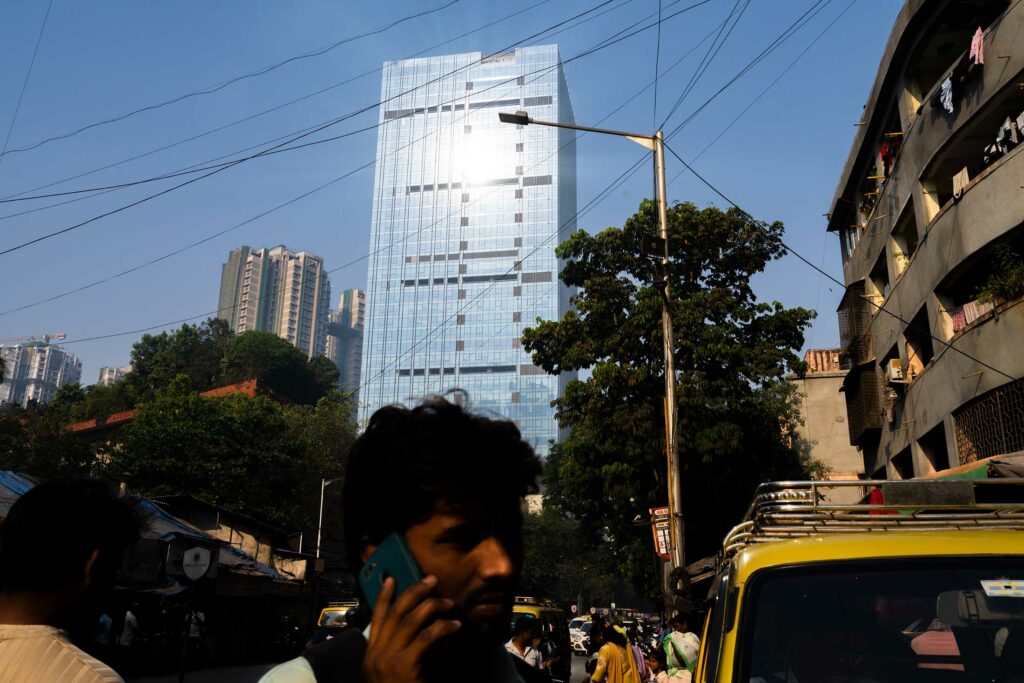
Mumbai, a city that never sleeps, is experiencing a transformative shift in its real estate landscape, driven by a surge in market activity and an influx of foreign investment. This bustling metropolis, home to over 21 million residents, is a tapestry of stark contrasts, where luxury high-rises sit side by side with sprawling slums. As the financial district evolves, a new narrative is emerging that intertwines the aspirations of the affluent with the hopes of the less fortunate.
At the heart of this transformation is the Altimus tower, a 41-story architectural marvel in the Worli neighborhood. This glass-clad structure not only offers panoramic views of the Arabian Sea but has also become a hub for major global financial institutions. Firms like Barclays, BlackRock, KKR, Morgan Stanley, and UBS Group have established their presence here, signaling a robust confidence in Mumbai’s future as a key player in the global financial arena.
However, not far from this glittering edifice, local residents like taxi driver Ramu Virmale are navigating the complexities of a changing urban landscape. Virmale and his neighbors are exploring potential agreements with developers who wish to replace their informal dwellings with modern apartments or commercial spaces. This scenario is indicative of a broader trend across Mumbai, where the intersection of wealth and poverty raises critical questions about urban development and social equity.
The rapid expansion of Mumbai’s real estate market is attributed to various factors, including the growing demand for office and residential spaces. Niranjan Hiranandani, a prominent property developer, predicts an “exponential” increase in demand, particularly as the city grapples with the pressing need to rehouse an estimated 5 million residents currently living in inadequate conditions. As prices for apartments in prime areas like Worli soar to levels comparable to New York City, the competition for real estate is intensifying.
Real estate developers are responding to this demand with an array of luxurious amenities designed to attract a skilled workforce. Features such as infinity pools, pickleball courts, and state-of-the-art office spaces are becoming standard in new constructions, reflecting the aspirations of both employees and employers. Anshuman Magazine, CEO of CBRE Group’s operations in the region, emphasizes that attracting top talent requires an appealing work environment. In a city notorious for its traffic congestion, proximity to modern offices is a crucial factor for employees.
The numbers speak volumes about the vitality of Mumbai’s commercial real estate sector. Office rents in prime locations have surged by 23% in the past year, a stark contrast to the modest 3% increase seen in Manhattan. The Bandra Kurla Complex, Mumbai’s central business hub, is nearing full occupancy, housing prominent tenants such as Apple Inc. and the Carlyle Group. Analysts project that the city will see the emergence of 350 new skyscrapers in the coming years, further transforming its skyline.
However, this rapid development comes with challenges. The need for space has created a competitive market, with companies often facing delays of three to five years for securing new office leases. The demand for commercial real estate is not just driven by the desire for space but is also a reflection of the strategic importance of Mumbai as a global financial center. Firms are actively seeking hundreds of thousands of square feet to accommodate their expanding operations, demonstrating the urgency for businesses to secure their foothold in this vibrant city.
In light of these developments, there are several key takeaways for investors and traders looking to navigate Mumbai’s real estate market:
1. **Understanding Local Dynamics**: The relationship between luxury developments and the needs of local communities is critical. Investors should be aware of potential social implications and the necessity for inclusive development.
2. **Focus on Emerging Areas**: With demand for office space soaring, areas like Worli and Bandra Kurla are prime targets for investment. Understanding the growth trajectory of these neighborhoods can yield significant returns.
3. **Long-term Vision**: Given the complexities of urban development, investors should adopt a long-term perspective, keeping in mind potential regulatory changes and the evolving needs of the market.
4. **Emphasizing Amenities**: Properties equipped with modern amenities are increasingly in demand. Developers who can offer attractive features will likely see higher occupancy rates and rental prices.
In conclusion, Mumbai’s real estate market is a microcosm of the city’s broader economic narrative—a juxtaposition of wealth and need, aspiration and reality. As foreign investments pour into the city, the challenge remains to ensure that development is inclusive. For traders and investors, understanding these dynamics is crucial to navigating this vibrant yet complex landscape. As the tides of Mumbai’s market continue to rise, the potential for growth and opportunity is undeniable, provided that the needs of all its residents are considered in the process.