
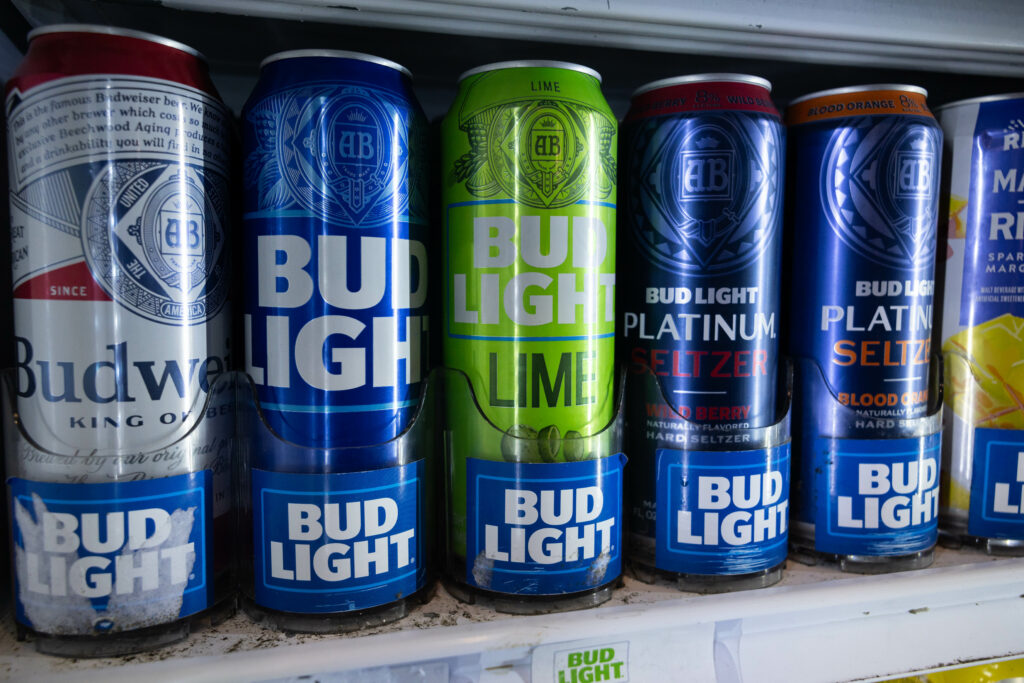
In a surprising turn of events, Anheuser-Busch InBev has reported an uptick in beer sales, defying expectations amid a challenging global market landscape. As the world’s largest brewer, AB InBev’s performance is often seen as a barometer for the beverage industry, and its recent results reveal a complex interplay of regional demand, shifting consumer preferences, and strategic diversification efforts.
In the first quarter of the year, AB InBev recorded a 0.8% increase in organic volume growth, a figure that stands in stark contrast to analysts’ forecasts predicting a decline of 0.3%. This unexpected growth was largely driven by robust demand for beer in Latin America, particularly in Mexico, Colombia, and Peru, where volumes surged by 4.8%. This regional success helped to offset declines in North America and China, where beer consumption fell by 3.1% and 0.4%, respectively.
The resilience shown by AB InBev can be attributed to a combination of factors. Firstly, the demand for beer in Latin America has proven to be particularly strong, as consumers in these markets continue to embrace traditional beer consumption despite global economic uncertainties. In contrast, other regions, notably the United States and China, are facing challenges due to a broader reduction in alcohol consumption driven by health concerns and rising costs.
In addition to its core beer offerings, AB InBev has strategically diversified its portfolio to include non-alcoholic options and ready-to-drink beverages (RTDs). This diversification is critical as it allows the company to capture a wider audience and adapt to shifting consumer preferences. The growth in non-alcohol beer and other segments has contributed positively to overall revenue, indicating that AB InBev is well aware of the changing landscape of beverage consumption.
Market analysts have reacted positively to AB InBev’s first-quarter performance. Edward Mundy and Sebastian Hickman from Jefferies highlighted the company’s strong results across various metrics, including volume, revenue, and earnings before interest, tax, depreciation, and amortization (EBITDA). Their commentary reflects a growing consensus that AB InBev’s business model is robust enough to withstand external pressures, including those stemming from geopolitical tensions and rising costs of energy and raw materials that have impacted other players in the industry, such as Heineken and Carlsberg.
Geopolitical factors, notably the ongoing conflict in the Middle East, have introduced uncertainties that could affect production and supply chains for many companies in the beverage sector. However, Citigroup analyst Simon Hales noted that AB InBev is somewhat insulated from these challenges due to its significant focus on the Americas. This advantage allows the company to maintain its medium-term growth outlook, projecting an increase in EBITDA between 4% and 8%, despite the broader market’s volatility.
For traders and investors, AB InBev’s recent performance offers several key takeaways. Firstly, the company’s ability to adapt and thrive in diverse markets is a positive signal for potential investors. The strong sales in Latin America demonstrate that there is still robust demand for traditional beer in certain regions, which may present opportunities for growth. Additionally, AB InBev’s strategic focus on diversifying its product range could be a critical factor in navigating future market challenges.
Moreover, the positive sentiment surrounding AB InBev’s stock could inspire investor confidence, especially given the company’s commitment to maintaining a solid growth trajectory. Investors may want to monitor the company’s continued performance in emerging markets and its ability to execute its diversification strategy effectively. The potential for growth in non-alcoholic beverages and RTDs could be a lucrative area for future investment, particularly as health-conscious consumer trends continue to rise.
In conclusion, Anheuser-Busch InBev’s unexpected volume growth amidst a challenging global market serves as a testament to its resilience and adaptability. The company’s strong performance in Latin America, coupled with its strategic diversification efforts, positions it favorably for future growth. As the beverage industry continues to evolve, AB InBev’s ability to navigate market fluctuations and consumer preferences will be key to its sustained success. For investors, the recent results highlight a potentially lucrative opportunity within a complex and changing landscape.