
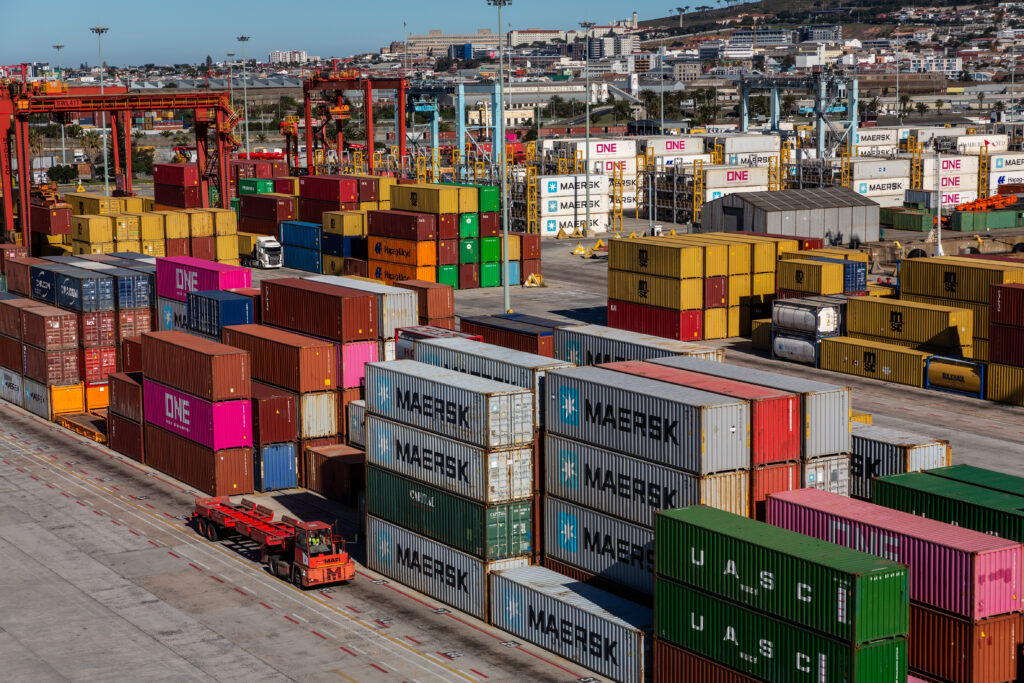
In the ever-evolving landscape of global trade, shipping routes and port activity play a pivotal role in shaping economic fortunes. Recently, a significant shift in maritime navigation has emerged, particularly in Southern Africa, as vessels are rerouted due to geopolitical tensions. While the closure of the Strait of Hormuz has redirected traffic towards the Cape of Good Hope, raising expectations of economic benefits for African ports, the reality may not be as straightforward as one would hope. In this blog post, we will delve into the complexities of this situation, examining the disparity between increased shipping traffic and actual economic activity in Southern African ports.
The recent geopolitical developments have resulted in a substantial increase in vessel traffic around the Cape of Good Hope. Reports indicate that some ports in the region have seen traffic volumes surge by nearly 90%. This surge, at first glance, seems like a golden opportunity for Southern African economies, particularly for countries with ports that could benefit from the rerouted shipping lanes. However, as financial analysts and industry experts have pointed out, such a significant increase in traffic does not always translate into economic prosperity or enhanced port operations.
Dr. Jacob van Rensburg, the head of research and development at the Southern African Association of Freight Forwarders, sheds light on this intriguing paradox. He notes that while vessel traffic has increased, there is a notable disconnect between this uptick and the corresponding economic activity. The crux of the issue lies in the nature of international shipping, which operates on established schedules. Typically, a vessel’s journey involves multiple ports within a defined route, spanning anywhere from 50 to 70 days. This means that while some ports may see more ships passing through, it does not necessarily result in increased port calls or economic transactions at those ports.
To illustrate this point, Dr. van Rensburg provides insights from the South African context. Despite a 90% increase in shipping traffic, the actual growth in port calls has been marginal. In the previous year, South Africa’s containerized trade saw a throughput increase of approximately 4%, with bulk throughput reflecting a similar rise. However, the increase in vessel calls was only about 2%. This data highlights the complexity of the situation: even with heightened activity, the economic gains have not been as pronounced as expected.
One of the critical factors contributing to this phenomenon is that many vessels utilizing these routes are classified as transitory. These ships are not making South African ports their final destination; instead, they are merely stopping along the way to their ultimate ports of call. This situation raises questions about how ports can effectively position themselves to capitalize on this transitory traffic.
Ports must adopt strategic measures to attract vessels that might not otherwise stop for extended periods. This can involve enhancing facilities for refueling, provisions, and maintenance, thereby creating a commercial incentive for vessels to dock, even if briefly. Additionally, ports can explore partnerships with shipping companies to offer value-added services, such as expedited customs processing or efficient logistics solutions, which can make them more appealing to vessels that are merely passing through.
For traders and investors, understanding the dynamics of port activity and shipping traffic is crucial. As the global trade environment continues to shift, those involved in logistics and supply chain management should remain vigilant of geopolitical developments and their potential ramifications on shipping routes. Moreover, investors should consider the long-term implications of increased traffic on port infrastructure and economic development. While the immediate returns may not be evident, the sustained growth in shipping traffic could pave the way for future investment opportunities in port facilities and related services.
In conclusion, while the increased shipping traffic around the Cape of Good Hope presents a tantalizing prospect for Southern African economies, the reality is that this surge does not automatically equate to immediate economic benefits. The complexities of international shipping schedules and the nature of vessel traffic create a landscape that requires careful navigation. As ports strategize to leverage the opportunities presented by this increased traffic, a focus on enhancing services and infrastructure will be essential. For traders and investors, staying informed about these developments will be key to making sound decisions in a rapidly changing economic environment.