
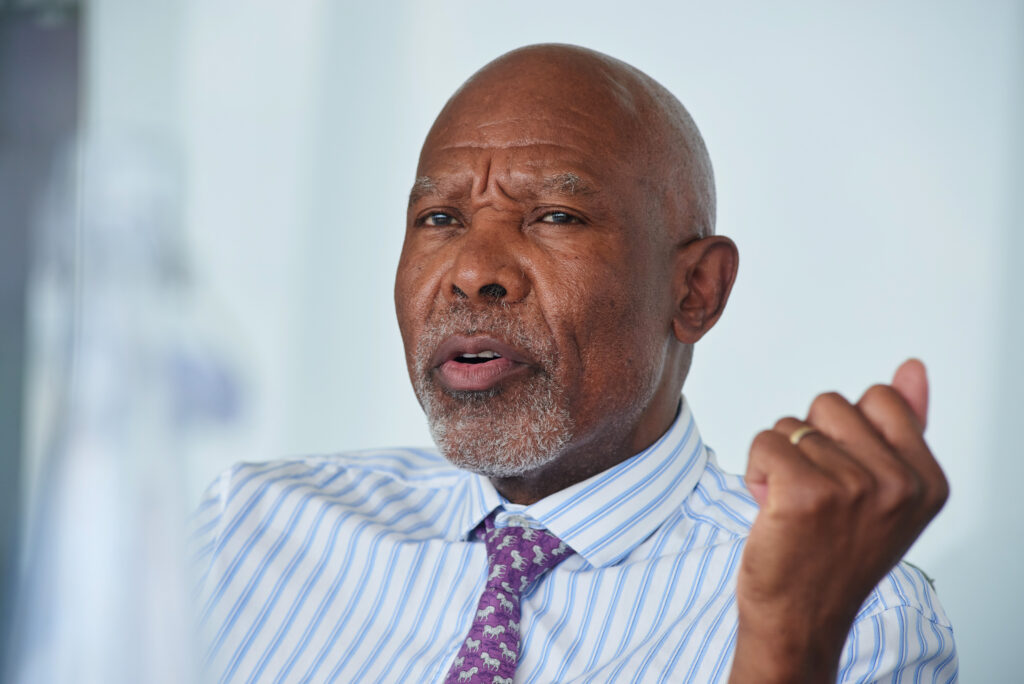
In an era marked by geopolitical tensions and economic uncertainty, South Africa’s central bank is steadfast in its commitment to maintaining an inflation-targeting framework. Lesetja Kganyago, the governor of the South African Reserve Bank (SARB), recently addressed these pressing issues during a conference hosted by PSG Financial Services. His insights shed light on the challenges facing the nation’s economy and the critical strategies being employed to navigate a complex global landscape.
The current economic climate is undeniably tumultuous. War, rising debt levels, and increasing global financial instability are creating a backdrop that complicates monetary policy. Kganyago emphasized that the SARB is engaged in a continuous struggle to stabilize the economy against these external shocks. As he articulated, policymakers are confronted with “one battle after another,” highlighting the relentless nature of the challenges they face.
One of the key takeaways from Kganyago’s remarks is the central bank’s approach to inflation. While external shocks, such as those stemming from geopolitical conflicts, may be beyond the SARB’s control, the institution remains focused on ensuring that inflation returns to target levels once these shocks subside. Kganyago pointed out that while the central bank cannot influence global oil prices, it is still responsible for managing domestic inflation effectively. This balancing act becomes particularly challenging during periods of supply-driven inflation, which tends to complicate monetary policy decisions.
In his address, Kganyago noted that supply shocks often demand more nuanced policy responses than demand-driven pressures. This is primarily because rising prices due to external factors can have immediate and severe impacts on consumers, making it difficult for central banks to react appropriately without stifling economic growth. He stressed the importance of timely interest rate adjustments, indicating that while the goal is to control inflation, it is equally vital to avoid placing undue pressure on the economy.
The ongoing geopolitical tensions, particularly the war in Ukraine and recent conflicts in the Middle East, have exacerbated inflation risks globally. Kganyago described geopolitical risk as a “euphemism for war,” underscoring its significant impact on fuel and food prices. These increases in costs are especially detrimental to emerging markets like South Africa, where higher prices directly translate to reduced purchasing power for consumers. The governor lamented, “Higher fuel and food costs are making us all poorer,” a sentiment that resonates with many citizens grappling with the rising expenses of daily life.
Despite these challenges, Kganyago expressed optimism about South Africa’s progress in addressing its fiscal issues. He reflected on the substantial fiscal deterioration the country endured following the global financial crisis, which resulted in government debt approaching 80% of GDP and a loss of the nation’s sovereign credit rating. However, he highlighted that South Africa is now “pursuing adjustment with determination,” a sentiment that has begun to restore market confidence.
Key to this recovery is the SARB’s commitment to credible macroeconomic policies. Kganyago argued that in a faltering global economy, the returns on domestic reforms become increasingly significant. He stressed that South Africa must take ownership of its economic challenges rather than relying on external safety nets. This proactive approach is crucial not only for stabilizing the economy but also for fostering investor confidence, which is vital for long-term growth.
For traders and investors, Kganyago’s insights provide a clear understanding of the current economic landscape and the SARB’s strategic priorities. Those looking to invest or trade in South Africa’s markets should be aware of the potential volatility stemming from global events, as well as the central bank’s commitment to addressing inflation. Investors may also find opportunities in sectors that could benefit from a stabilizing macroeconomic environment as South Africa embarks on its path to recovery.
In conclusion, South Africa’s economic resilience amid global turbulence is a testament to the proactive measures being taken by the SARB. Governor Kganyago’s commitment to inflation-targeting and fiscal responsibility highlights the importance of addressing domestic challenges in an increasingly uncertain world. As the country navigates these complexities, maintaining a focus on sound economic policies will be critical to restoring growth and fostering investor confidence. The road ahead may be fraught with challenges, but with determination and strategic foresight, South Africa aims to emerge stronger from the current global upheaval.