
The landscape of science and technology in Africa is on the brink of transformation, and the metaphor of a bridge might be one of the most fitting ways to describe the potential that lies ahead. As we explore the role of applied sciences in this context, it becomes clear that there is a pressing need for these disciplines to serve as conduits between knowledge creation and real-world application. With a robust framework and a strategic focus, Africa can harness its unique challenges and opportunities to innovate and thrive.
In recent years, the educational landscape in South Africa has seen substantial investment, reflecting a national commitment to prioritizing science and technology. Education is a significant economic contributor, accounting for approximately 6.9% of the nation’s GDP, markedly higher than the OECD average of 4.7%. However, the ratio of graduates in science, technology, engineering, and mathematics (STEM) fields remains a point of concern. Only 15% of graduates emerge from these disciplines, compared to 23% in other OECD countries. Furthermore, the percentage of young adults holding master’s degrees is alarmingly low at just 1%, far below the OECD benchmark of 16%. This shortfall presents a challenge for the country as it seeks to convert educational investment into tangible innovations that can address pressing societal issues.
The crux of the matter lies in a crucial distinction: the difference between consuming knowledge and generating it. Minister of Science, Technology and Innovation, Blade Nzimande, has articulated this challenge, emphasizing that while South Africa is adept at consuming global knowledge, it falls short in producing a commensurate amount of its own. This reality poses a barrier to advancements in various sectors, particularly in healthcare, where the need for locally relevant solutions is imperative.
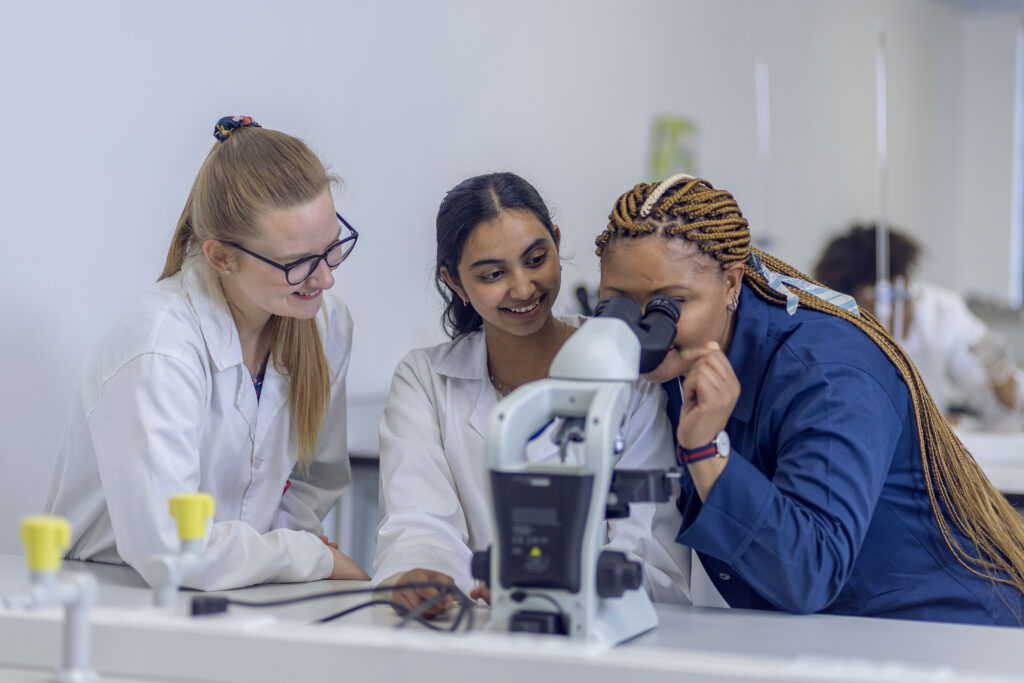
In the context of applied sciences, the bridge analogy becomes particularly relevant. Dr. Siva Danaviah, head of the Applied Sciences program at Eduvos, highlights the essential nature of applied scientists as bridge-builders—individuals who take theoretical knowledge from laboratories and academic journals and translate it into practical applications that resonate with the realities of local communities. For true impact, innovations must be relevant to African contexts, addressing specific health burdens and infrastructural challenges.
One area where this need for localized innovation is evident is in healthcare. South Africa’s historical experience with diseases such as tuberculosis and HIV has fostered a wealth of practical expertise in managing and treating these conditions. This body of knowledge proved instrumental during the COVID-19 pandemic, as South Africa’s healthcare professionals leveraged their experience to navigate the crisis effectively. Importantly, the continent is beginning to challenge the narrative that it is solely dependent on external resources for medical solutions. The recent strides in vaccine development are a prime example—the ability to produce complex solutions locally is indicative of both the intellectual capacity and the innovative spirit that exists within the continent.
Looking beyond South Africa, the global landscape of applied sciences is dominated by countries like China, which accounts for a staggering 56% of global applied science output. The United States, although trailing, contributes around 10%. This international dynamic underscores the importance of Africa carving out its niche within this competitive environment. By capitalizing on its unique strengths and challenges, Africa has the potential to become a formidable player in the global scientific community.
Key Takeaways:
1. Education investment in South Africa is high, yet the output of graduates in STEM fields is significantly lower than international averages.
2. There is a critical need for Africa to shift from being a consumer of knowledge to a producer of innovative solutions tailored to local contexts.
3. Applied sciences can serve as a vital bridge, facilitating the translation of theoretical knowledge into practical applications.
4. South Africa’s healthcare experience offers a wealth of knowledge that can be leveraged to develop local solutions, particularly in light of recent global health crises.
5. Africa has the potential to innovate and contribute to the global scientific landscape by addressing its unique challenges.
For traders and investors, the implications of these trends are significant. There is an increasing opportunity to invest in sectors that prioritize local innovation, particularly in healthcare technology and education. Companies that focus on developing solutions tailored to the African context may not only experience growth but also contribute to a larger mission of self-sufficiency and resilience in the face of global challenges.
In conclusion, the future of applied science in Africa hinges on its ability to create robust bridges between knowledge and practical application. By focusing on innovation that is rooted in local realities, the continent can redefine its position on the global stage. As we continue to navigate the complexities of the modern world, it is imperative that Africa seizes the opportunity to not only consume knowledge but to become a leading producer of solutions that resonate with its unique challenges and aspirations.