
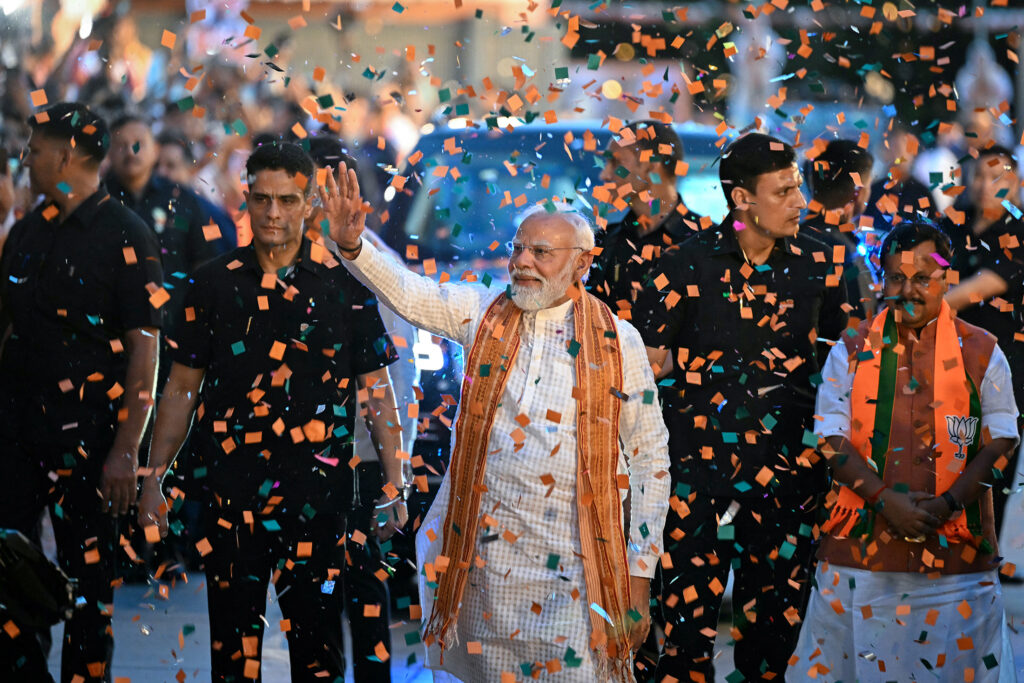
As the summer heat enveloped India in 2024, the political landscape witnessed a seismic shift that has significant implications for the country’s future. Prime Minister Narendra Modi, who has been at the helm for nearly a decade, faced a daunting national election that many believed could signal the twilight of his rule. However, recent victories indicate that he may be consolidating power in ways that could redefine Indian politics and the economy for years to come.
In the aftermath of Modi’s triumph in the West Bengal elections, political analysts have been quick to reassess his standing. Despite losing his single-party majority in a previous national vote, Modi’s Bharatiya Janata Party (BJP) has demonstrated a remarkable ability to rebound, particularly in the southern states where it has traditionally struggled. This resurgence has left opposition parties reeling and suggests a broader strategy to secure a parliamentary majority by the next national elections scheduled for mid-2029. Analysts like Michael Kugelman of the Atlantic Council assert that the BJP is now favored to win a fourth consecutive term, positioning Modi to become India’s longest-serving leader.
Modi’s political strategy is deeply rooted in consolidating the Hindu vote, which constitutes about 80% of the population. Historically, this demographic has been fragmented along caste and regional lines, but Modi’s leadership has sought to unite these groups under a singular Hindu identity. The recent election results, particularly in West Bengal and Tamil Nadu, show that this strategy may be working, despite earlier setbacks in the national elections. The BJP’s focus on religious identity, national security, and social welfare resonates with many voters, while they continue to paint their opponents as “minority appeasers.”
A salient aspect of Modi’s political maneuvering has been the ongoing efforts to streamline voter rolls, a move criticized for disproportionately affecting marginalized communities, including the poor and Muslims. This push to reshape voter demographics has the potential to influence future political outcomes significantly. With the BJP currently controlling approximately two-thirds of India’s states, Modi is poised to implement more business-friendly economic policies and further his agenda of Hindu nationalism.
Key points emerging from Modi’s political resurgence include:
1. **Consolidation of Power**: Modi’s recent electoral wins have solidified the BJP’s dominance across various Indian states, enabling the party to expand its influence into traditionally less favorable regions.
2. **Strategic Messaging**: The BJP’s campaign focuses on religious identity and national security, effectively rallying Hindu voters while undermining opposition credibility.
3. **Economic Opportunities**: With a firm grip on power, Modi has the opportunity to pursue policies that could foster economic growth, including initiatives aimed at increasing business investment and reforming regulatory frameworks.
4. **Potential Risks**: The targeted purging of voter lists could alienate specific voter blocs, potentially destabilizing the BJP’s support base if not managed carefully.
For traders and investors, understanding the implications of Modi’s political strategies is crucial. A stable government under the BJP may lead to favorable economic policies, boosting investor confidence and potentially driving market growth. The government’s focus on enhancing business conditions could attract foreign direct investment, particularly in sectors aligned with Modi’s economic vision, such as infrastructure and technology.
However, the political landscape remains volatile. While Modi’s consolidation efforts may yield short-term gains, the long-term sustainability of his approach will depend on his ability to maintain broad-based support and navigate the diverse tapestry of Indian society. Any backlash from marginalized communities or shifts in voter sentiment could disrupt Modi’s plans and impact economic stability.
In conclusion, as India heads toward the next national elections, the political dynamics surrounding Modi and the BJP will be pivotal in shaping the country’s future. The Prime Minister’s recent victories indicate a potential long-term hold on power, but the effectiveness of his strategies in maintaining unity among diverse voter bases will be tested. For investors and traders, staying attuned to these developments will be essential in anticipating market movements and capitalizing on emerging opportunities within the Indian economy. The next few years will be critical in determining whether Modi’s vision will lead to sustained prosperity or whether it will provoke challenges that could disrupt the current political order.