
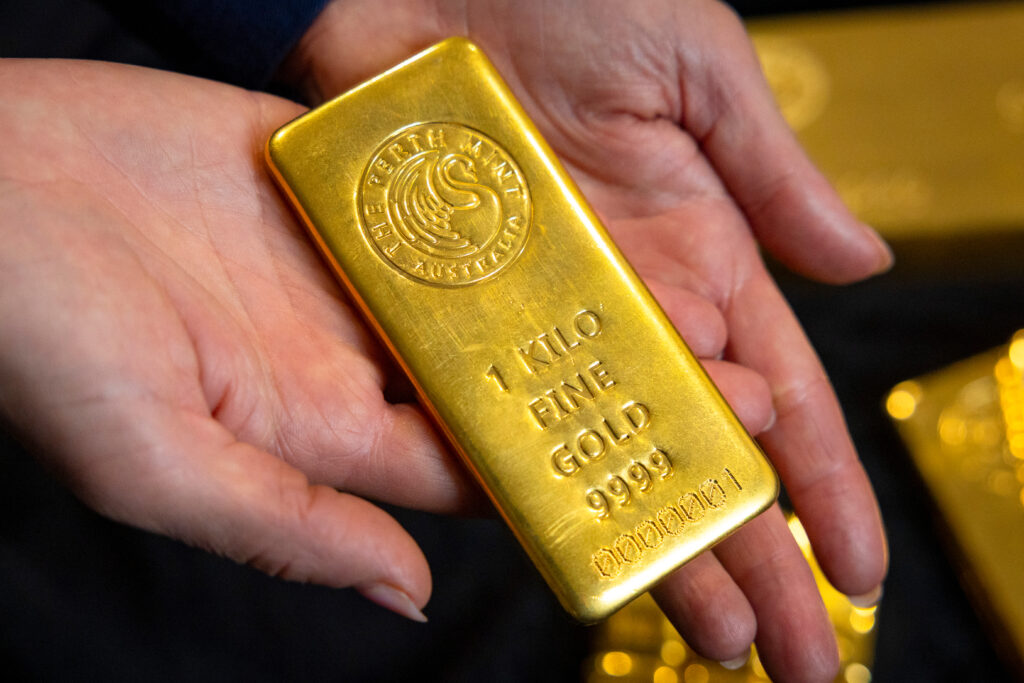
In the ever-evolving landscape of global finance, few assets have drawn as much attention as gold, particularly during times of geopolitical unrest and inflationary pressures. Recently, gold prices experienced a decline following President Donald Trump’s dismissal of Iran’s latest peace proposal, which has reignited concerns regarding inflation and interest rates. As the conflict in the Middle East remains precarious, investors are left to navigate the complexities of the market, weighing both geopolitical tensions and economic indicators.
The current state of gold trading has seen prices hover around $4,674 an ounce, dipping slightly after a notable increase of approximately 2% the previous week. The volatility in the gold market is largely attributed to President Trump’s rejection of Iran’s response to his peace initiative aimed at resolving ongoing tensions in the region. The President branded the Iranian proposal as “totally unacceptable,” indicating a likely continuation of hostilities. This development has the potential to exacerbate inflationary fears, particularly as the prospect of rising interest rates looms over non-yielding assets like gold.
The fragile ceasefire established earlier this month has already faced challenges, with recent drone attacks in the region underscoring the risks associated with geopolitical instability. A drone strike on a cargo vessel off Qatar and reports of intercepted drones by the United Arab Emirates and Kuwait serve as stark reminders of the volatility inherent in Middle Eastern geopolitics. Consequently, these events contribute to a climate of uncertainty, which has implications for inflationary trends and market sentiment.
Looking ahead, investors are anticipating consumer price data that is set to be released shortly. This data is expected to reinforce the notion that inflation remains a significant concern within the U.S. economy, particularly following March’s substantial monthly advance—the largest since 2022. Analysts, including Priyanka Sachdeva from Phillip Nova Pte Ltd., have suggested that Trump’s prioritization of U.S. efforts to curb Iran’s nuclear ambitions may lead to either further escalation in the Middle East or, at best, a stagnation of diplomatic talks. This ongoing tension is likely to keep gold prices in a state of flux, reflecting a broader pattern of sideways consolidation influenced by both geopolitical anxiety and inflation concerns.
As the Federal Reserve approaches a crucial juncture with Chairman Jerome Powell’s term set to conclude, the implications for monetary policy and interest rates become increasingly pertinent. Powell’s tenure has been characterized by his resistance to political interference, which has historically played a role in shaping gold prices. Recent labor market data indicates that U.S. employers have added jobs for two consecutive months, marking the first such advance in nearly a year, while the unemployment rate remains stable at 4.3%. This data provides the Federal Reserve with the flexibility to maintain current interest rates as it navigates the potential inflationary impacts stemming from the ongoing conflict with Iran.
As of 1:40 p.m. Singapore time, spot gold had fallen 0.9% to $4,673.92, while silver experienced a modest increase of 0.2% to $80.50. Other precious metals, such as platinum and palladium, saw declines. Additionally, the Bloomberg Dollar Spot Index, which measures the performance of the U.S. dollar, rose by 0.2%, further indicating the complex interplay between currency strength and gold prices.
For traders and investors, the current market environment presents both challenges and opportunities. The persistent geopolitical tensions in the Middle East, paired with inflationary pressures, create a climate of uncertainty that can lead to increased volatility. Investors should remain vigilant, monitoring developments in both the political and economic arenas. The potential for further escalation in geopolitical conflicts could drive demand for safe-haven assets like gold, while economic indicators will play a crucial role in shaping monetary policy and interest rate expectations.
In conclusion, the gold market is currently navigating a complex web of geopolitical tensions and inflationary concerns. As President Trump’s rejection of Iran’s peace proposal casts a shadow over the region, investors must remain adaptable and informed. The interplay between rising inflation, interest rates, and geopolitical instability will continue to shape the trajectory of gold prices, making it essential for traders to stay attuned to market developments and economic indicators that could influence their investment strategies.