
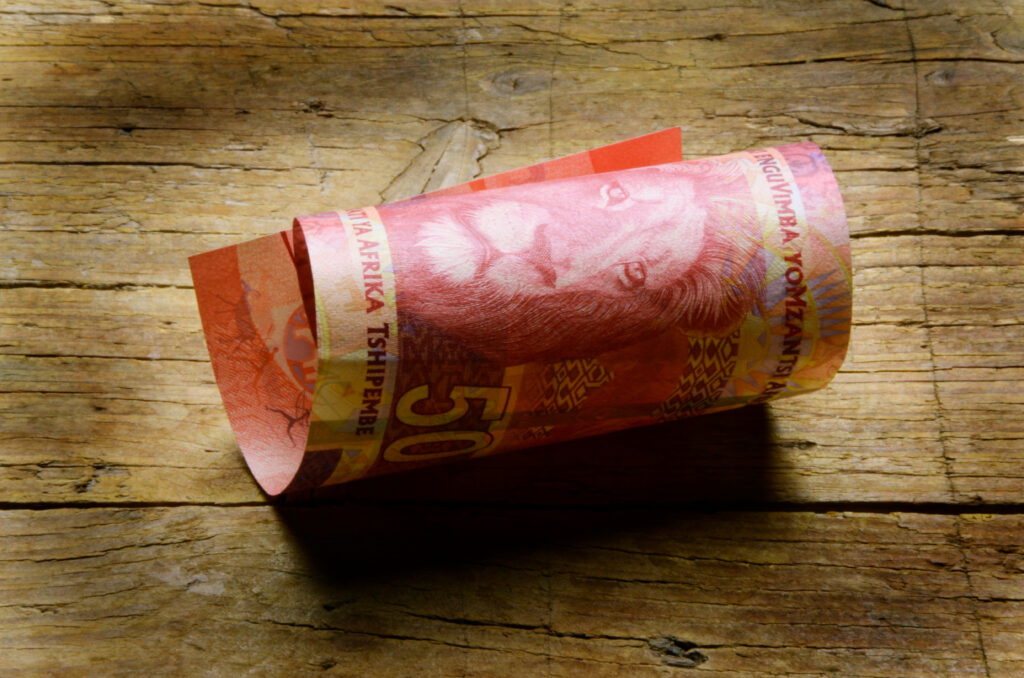
In the face of political upheaval, South Africa’s rand is demonstrating remarkable resilience, raising eyebrows among investors and analysts alike. The currency not only seems to be weathering the storm surrounding President Cyril Ramaphosa’s potential impeachment but is also reflecting a broader confidence in the ongoing economic reforms he has championed. This situation presents an intriguing case study for traders and market watchers, as it reveals the complex interplay between political stability and economic performance.
Cyril Ramaphosa, a seasoned political figure, recently addressed the nation, firmly rejecting calls for his resignation. This comes in the wake of a scandal involving a theft from his Phala Phala game farm, a saga that first surfaced in 2022 but has been reignited by a recent court ruling. The Constitutional Court’s decision on May 8 mandated that parliament establish an impeachment committee to investigate the matter, yet the rand has so far shown little reaction to these developments. In fact, the currency is hovering just 0.2% below its value against the dollar prior to the court’s ruling. Instead of local political dynamics dictating its movement, the rand seems to be more influenced by global events, particularly the ongoing conflict in Iran.
Analysts suggest that the rand’s stability can be attributed to the broader context of the government of national unity (GNU) that Ramaphosa has led. Despite facing a parliamentary minority after the 2024 elections, Ramaphosa has successfully forged a coalition that has started to implement significant economic reforms. This shift has helped restore investor confidence, particularly after years of grappling with corruption and mismanagement that had previously tarnished South Africa’s economic reputation.
One key point to consider is the changing political landscape within the African National Congress (ANC). Ramaphosa’s leadership has seen a reduction in the influence of leftist factions within the party, some of whom have defected to the uMkhonto weSizwe party, led by former President Jacob Zuma. This realignment has positioned the radical Economic Freedom Fighters as the primary opposition to Ramaphosa’s coalition, further complicating the political scenario. Fixed-income analyst Sebastian Holzbach highlights the risks associated with Ramaphosa’s potential removal, noting that a coalition between leftist factions and opposition parties advocating nationalization could destabilize the GNU framework. Therefore, maintaining the coalition’s integrity becomes paramount, not only for political survival but for the economic health of the nation.
Traders and investors are keenly aware of the implications should Ramaphosa leave office prematurely. The current political environment suggests that even if he were to step down, the foundations of the economic reforms he has initiated could continue. This is a sentiment echoed by Devon Pearman, head of Africa at TP ICAP Group Plc, who asserts that the progress being made under the GNU supports the rand’s strength. The belief is that, although the leader may change, the essential structure underpinning these reforms is likely to remain intact.
Another factor contributing to the rand’s resilience is the broader international economic climate. While local politics are critical, global events, such as geopolitical tensions and economic indicators from major economies, also play a significant role in currency fluctuations. In this case, the rand’s performance appears more correlated with international developments than the domestic political saga surrounding Ramaphosa.
For investors, the current climate presents both challenges and opportunities. The rand’s stability amidst political uncertainty could encourage a cautious but optimistic approach. Investors should monitor the unfolding political drama closely, as any significant shifts could alter market dynamics. However, the existing coalition’s commitment to reform provides a sense of security in an otherwise volatile landscape.
In conclusion, the South African rand’s ability to remain resilient in the face of potential political upheaval is a testament to the underlying strength of the economic reforms instituted by President Cyril Ramaphosa. While the threat of impeachment looms, the broader context of coalition governance and a commitment to stability appears to be reassuring investors. For traders, the current environment underscores the importance of understanding the intricate relationship between political events and economic performance, as well as the potential for continued growth in South Africa’s financial landscape. As we move forward, the unfolding drama will undoubtedly shape the trajectory of the rand and the country’s economy, making it a crucial area for ongoing observation and analysis.