
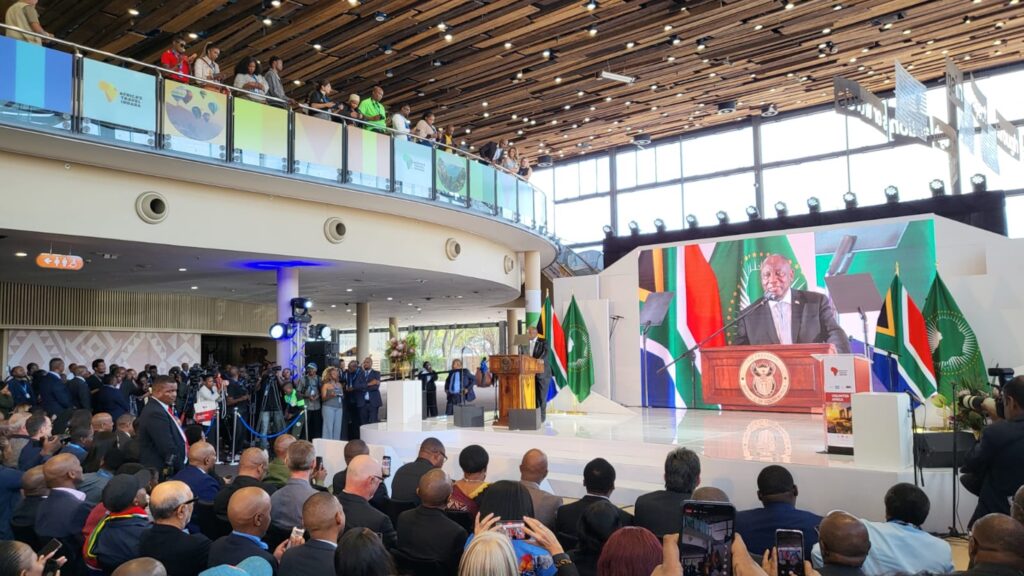
In an impressive display of resilience and growth, South Africa has become a beacon for international tourism, welcoming an astounding 10.5 million visitors last year alone. President Cyril Ramaphosa recently celebrated this milestone at the Africa’s Travel Indaba (ATI) in Durban, emphasizing the significance of this achievement as a clear indication that the world is once again looking to South Africa with fresh enthusiasm. This blog post delves deeper into the current state of South Africa’s tourism industry, the strategies being implemented to enhance its global standing, and what this means for investors and travelers alike.
The recent record in international tourist arrivals is not simply a statistic; it reflects a robust recovery following years of challenges, particularly due to the global pandemic. President Ramaphosa underscored the importance of diversifying tourism markets to ensure sustainable growth, focusing on regions like China, India, Southeast Asia, Mexico, and Brazil. These areas are witnessing an increase in outbound travel, indicating a ripe opportunity for South Africa to capture a larger share of this burgeoning market.
Ramaphosa’s remarks at the ATI highlighted the successful hosting of the G20 Leaders Summit in Johannesburg last year, which served as a platform to promote sustainable tourism and investments in infrastructure. The summit not only showcased South Africa to the world but also established a framework for engaging with the Global South—a demographic characterized by its growing middle class and an increasing desire to explore international destinations.
One of the key reforms that Ramaphosa pointed out was the introduction of the Electronic Travel Authorisation system. This initiative aims to streamline the travel process for visitors, making it easier for tourists to explore South Africa and the wider African continent. The government is aware that enhancing connectivity is crucial for tourism growth. Increased airline seat capacity in recent years, particularly on routes to and from Africa and Asia, has made traveling to South Africa more accessible than ever before.
Moreover, Ramaphosa emphasized that the new visa reforms, including the Digital Nomad Visa, are designed to attract not only traditional tourists but also remote workers looking for new experiences and settings. The recognition of digital nomadism as a legitimate form of travel represents an innovative strategy to tap into a demographic that values flexibility and adventure.
Key takeaways from Ramaphosa’s address include the importance of:
1. Diversifying source markets for tourists to include emerging economies.
2. Enhancing air connectivity to boost accessibility and competitiveness.
3. Implementing reforms that simplify visa processes to attract a broader range of visitors.
4. Fostering sustainable tourism practices that benefit both local communities and the environment.
For traders and investors, these developments signal a ripe opportunity in the tourism sector. The government’s commitment to reform and infrastructure investment presents favorable conditions for businesses involved in travel, hospitality, and related services. Companies that align themselves with the government’s vision—by promoting sustainable practices, enhancing visitor experiences, or tapping into emerging markets—stand to benefit significantly.
Investors should also consider the potential for growth in ancillary services such as transportation, guided tours, and local experiences that cater to the diverse needs of international visitors. As South Africa enhances its global tourism appeal, the demand for unique, authentic experiences will continue to rise, creating ample opportunities for companies willing to innovate and adapt.
In conclusion, South Africa’s tourism sector is poised for a remarkable transformation, driven by strategic reforms, an emphasis on connectivity, and a focus on attracting diverse visitor demographics. As the country continues to position itself as a premier travel destination, both investors and travelers should remain vigilant to the evolving landscape. The success of initiatives like the Electronic Travel Authorisation system and the Digital Nomad Visa, combined with a commitment to sustainable tourism, can only serve to strengthen South Africa’s position on the global stage. The future looks bright for the tourism sector, and those prepared to engage with these changes will find themselves at the forefront of this exciting journey.