
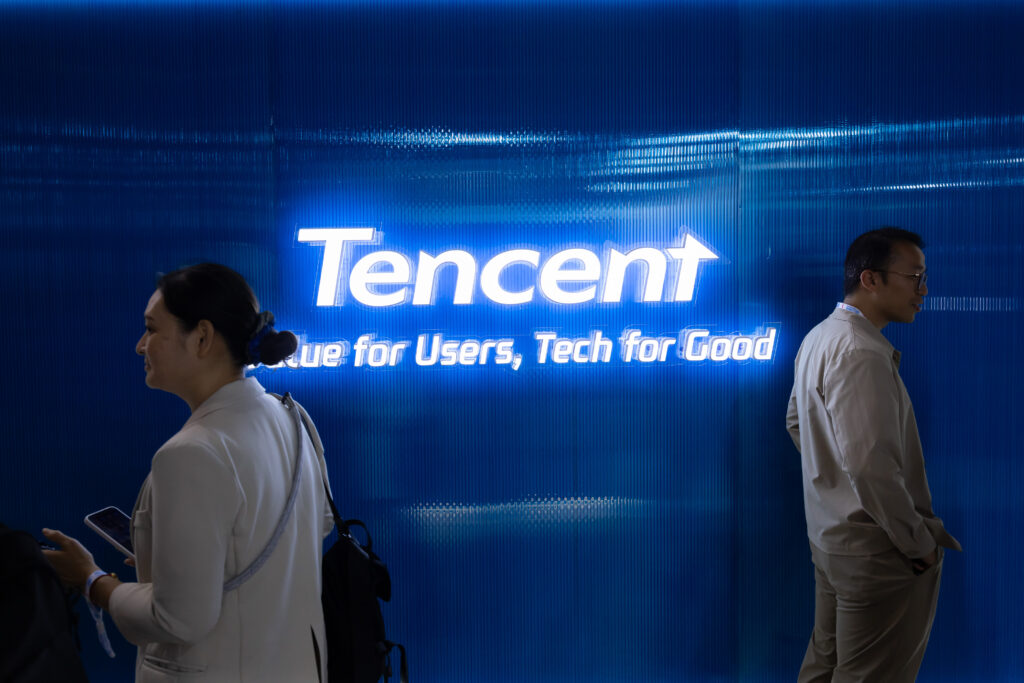
In the fast-paced world of technology and finance, few companies have managed to capture the limelight quite like Tencent Holdings. However, recent financial reports reveal that Tencent is grappling with its slowest revenue growth in over a year, raising questions about its ambitious pivot towards artificial intelligence (AI) amidst a backdrop of aging core businesses. As investors watch closely, the company’s ability to adapt and innovate will be critical in defining its future trajectory.
In its latest earnings announcement, Tencent reported a revenue increase of just 9% for the three months ending in March, totaling 196.5 billion yuan (approximately $28.9 billion). While revenue growth is still positive, it marks the most sluggish performance the company has seen in six quarters. A significant factor affecting Tencent’s revenue was the timing of this year’s Lunar New Year holiday, which traditionally boosts spending in online entertainment and gaming. Despite these challenges, Tencent’s net income climbed to 58.1 billion yuan, meeting analyst expectations.
Investor sentiment surrounding Tencent is increasingly clouded by uncertainty regarding its AI strategy. The company’s commitment to doubling its investments in AI to over 36 billion yuan this year highlights its recognition of the technology’s potential. However, Tencent finds itself trailing competitors like ByteDance and Alibaba in both user adoption and advancements in developing cutting-edge large language models (LLMs). This competitive disadvantage raises concerns about how effectively Tencent will monetize its AI initiatives.
In its earnings release, Tencent emphasized that its core businesses, particularly gaming and advertising, continue to generate engagement, revenue, and profit. This ongoing cash flow is crucial for funding its AI investments and exploring new use cases for AI deployment. However, market analysts have drawn parallels between Tencent’s current situation and the struggles faced by other tech giants, especially in the United States, where costly infrastructure investments are compressing profit margins.
While Tencent’s investment in AI is substantial, it remains conservative compared to its peers. For instance, Alibaba has committed to a staggering target of over $50 billion in AI development over the next three years. In contrast, Tencent’s approach appears more measured, especially when considering the larger context of corporate spending on AI in China, which pales in comparison to the enormous budgets allocated by U.S. giants like Amazon, Alphabet, Meta Platforms, and Microsoft, who plan to invest more than $700 billion this year alone.
As Tencent’s market value has plummeted by approximately $160 billion, or 23%, in 2023, investors have begun to shift their attention toward emerging players in the AI space. Companies like Zhipu and MiniMax Group, which focus exclusively on AI model development, have seen their valuations soar since their impressive market debuts earlier this year. This shift in investor focus underscores a growing skepticism regarding the timeline for AI profitability, as many are looking for more immediate returns from businesses solely dedicated to AI advancements.
Despite these challenges, Tencent is making strides in its AI capabilities. The company recently unveiled a significant upgrade to its foundational model, Hunyuan (HY), marking a critical test following a restructuring of its AI operations under the leadership of Yao Shunyu, a notable hire from OpenAI. However, even with these advancements, Tencent’s open-source model still lags behind offerings from competitors like Moonshot and DeepSeek in key areas such as coding proficiency and linguistic nuance.
To differentiate itself in the crowded AI market, Tencent has partnered with DeepSeek to enhance its ChatGPT-style chatbot. This collaboration could serve as a strategic fallback should its proprietary HY LLM fail to achieve the desired industry standards. As analysts have pointed out, this partnership offers Tencent a vital resource in navigating the complexities of AI development.
Outside of its AI endeavors, Tencent’s gaming segment continues to experience mixed results. While new game releases have not generated the excitement anticipated, well-established titles like “Honor of Kings” remain lucrative, providing a steady source of revenue. However, as the gaming landscape evolves, Tencent may need to innovate further to capture the attention of a generation of gamers with diverse preferences.
In conclusion, Tencent Holdings is at a critical juncture, facing both challenges and opportunities as it seeks to redefine its business model in an increasingly AI-driven landscape. While its revenue growth has slowed, the company’s commitment to investing in AI could potentially lay the groundwork for future success. However, Tencent must navigate competitive pressures and evolving market dynamics to emerge as a leader in this transformative sector. Investors will undoubtedly be watching closely to see how Tencent adapts and innovates in the coming months, making this an exciting period for one of the world’s most influential tech companies.