
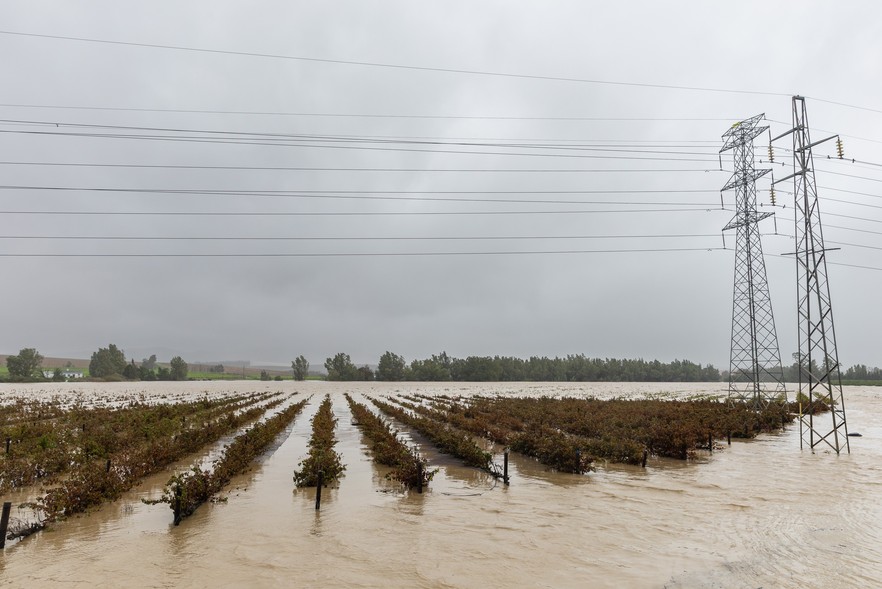
The Western Cape region of South Africa has recently been grappling with the devastating impacts of heavy rainfall and strong winds, leading to significant disruptions in transportation and severe challenges for local communities. As dozens of trucks became stranded on the roads and families faced the daunting task of dealing with flooded homes, the incident has highlighted not just the immediate effects of extreme weather but also the broader implications for the economy and local infrastructure.
In Wolseley, a small town nestled in the picturesque Breede River Valley, the consequences of the storm were felt acutely. With roads rendered impassable due to mudslides and flooding, many families were left without basic services, including electricity and access to essential supplies. The sight of stranded trucks and flooded homes painted a grim picture of the chaos that ensued when nature unleashed its fury.
The ongoing downpours have particularly affected the Cape Winelands, a region known for its vineyards and agricultural output. As water levels rose, many farms found themselves submerged, raising concerns about crop damage and the potential long-term economic impact on the local farming community. This is a region where agriculture plays a critical role in the economy, and any disruption can have cascading effects on employment and food supply chains.
The plight of individuals such as Akhona Mbendulo, a resident of the Mbekweni informal settlement, underscores the human element of this crisis. Having lived in the area since 2013, she noted that flooding has been a recurrent issue, with each year bringing fresh challenges. For families like hers, the reality is one of ongoing uncertainty and fear, as they navigate the aftermath of each storm.
Truck drivers, too, have been dramatically affected by the weather conditions. Among them was Hassan Nahimana, who found himself stranded overnight in Wolseley after the roads became impassable. His story highlights the crucial role that transportation plays in the economy, particularly in delivering goods to communities. With entry points blocked, and power outages limiting communication, the disruption rippled through the supply chain, affecting not just drivers but also local businesses and consumers relying on timely deliveries.
The municipal response to the crisis has involved evacuating families from the most severely affected areas, but as reports indicate, many healthcare facilities also faced closures. Clinics such as the Annie Brown Clinic in Ceres and the Wolseley Clinic were among those impacted, raising alarms about the ability to provide essential services during such a critical time. The combination of flooding and wind damage has created major hurdles for municipal services, complicating restoration efforts and stretching resources thin.
Key points to consider in this situation include the urgent need for enhanced infrastructure resilience in light of climate change and extreme weather events. The challenges faced by local communities and the economy highlight an essential reality: as weather patterns become increasingly unpredictable, regions must adapt to mitigate risks, particularly in vulnerable areas like informal settlements.
From a trader or investor perspective, the fallout from such weather events can present both challenges and opportunities. Businesses involved in construction, infrastructure development, and disaster recovery may find increased demand for their services as municipalities seek to rebuild and fortify against future storms. Conversely, sectors heavily reliant on agriculture may face volatility, prompting investors to closely monitor weather forecasts and crop reports to make informed decisions.
In conclusion, the recent weather disturbances in the Western Cape serve as a stark reminder of the far-reaching impacts of climate change. The strain on transportation, local communities, and essential services underscores the need for proactive measures to build resilience in both infrastructure and economic systems. As individuals and businesses navigate the aftermath of this crisis, the lessons learned may inform future strategies for mitigating similar challenges in an increasingly unpredictable world.