
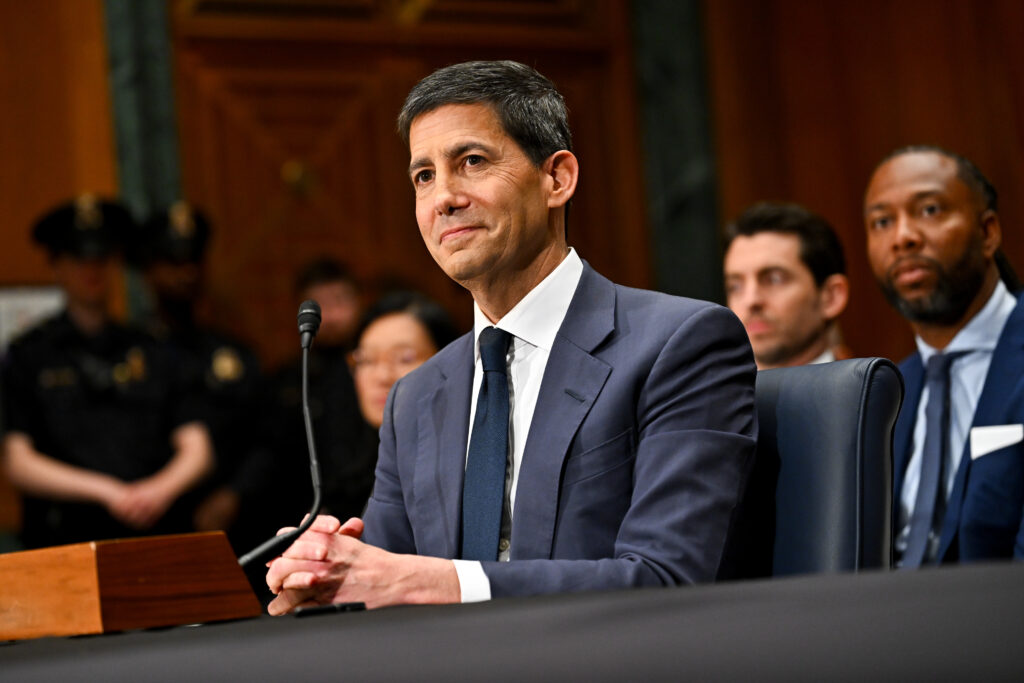
The recent confirmation of Kevin Warsh as the chair of the Federal Reserve has sparked significant debate and speculation about the future of U.S. monetary policy. With a narrow vote of 54-45 in the Senate, Warsh’s confirmation marks a pivotal moment in the Federal Reserve’s leadership, reflecting the current political climate’s polarization and the challenges ahead. As Warsh prepares to take the helm, market participants and policymakers alike are keenly watching how this transition will impact monetary policy, especially in the context of rising inflation and political pressures.
Kevin Warsh’s appointment comes at a time when the economy is grappling with persistent inflationary pressures. Recent data revealed a significant increase in wholesale prices, with the producer price index (PPI) rising by 6% year-over-year, surpassing economists’ expectations. This uptick in wholesale prices is concerning, particularly as it hints at a broader inflationary trend that could affect consumers. As gas prices, essential goods, and services have risen sharply, the urgency for effective monetary policy has never been clearer.
Warsh, who has previously advised former President Donald Trump on economic matters, faces a unique challenge as he steps into this role. His confirmation was notably contentious, with only one Democrat, John Fetterman, supporting him, a stark contrast to the bipartisan approvals that past Fed chairs have usually enjoyed. The slim margin of approval raises questions about the degree to which Warsh may be influenced by political considerations, especially given Trump’s vocal dissatisfaction with current monetary policy direction under Jerome Powell, the outgoing chair.
A significant point of concern among investors and economic analysts is whether Warsh will uphold the Federal Reserve’s long-standing tradition of making decisions free from political interference. During his confirmation hearings, Warsh asserted his commitment to maintaining the Fed’s independence, promising that monetary policy would remain unaffected by external pressures. However, the reality of the political landscape, particularly with the upcoming midterm elections, could complicate this commitment. As the Republican majority in Congress faces scrutiny, Warsh might encounter pressures to align monetary policy with broader political goals, particularly if inflation continues to rise.
In addition to the political landscape, Warsh’s approach to monetary policy will also be scrutinized based on his previous statements regarding the Federal Reserve’s balance sheet and interest rates. He has indicated a desire to gradually reduce the Fed’s $6.7 trillion balance sheet, arguing that cutting interest rates is a fairer approach than expanding the balance sheet, as rate cuts provide more widespread benefits. This perspective aligns with a growing faction within the Fed that advocates for a more flexible approach to interest rates, with some members suggesting that the next move could be either a cut or a hike, depending on the evolving economic landscape.
Key takeaways from Warsh’s impending leadership include the following:
1. **Political Independence**: The extent to which Warsh can maintain the Fed’s independence amidst political pressures will be crucial for the credibility of monetary policy.
2. **Inflation Concerns**: With inflationary pressures mounting, the Fed’s approach to interest rates will need to be carefully calibrated to balance economic growth and price stability.
3. **Market Reactions**: Investors should remain vigilant as any shifts in monetary policy could significantly impact markets, particularly in sectors sensitive to interest rates.
4. **Long-Term Strategy**: Warsh’s intention to shrink the balance sheet signals a potential shift in the Fed’s long-term fiscal strategy, which could lead to changes in how markets react to monetary policy decisions.
As Warsh prepares to lead the Federal Reserve, traders and investors are advised to keep a close eye on upcoming economic data and any signals from the Fed regarding interest rate adjustments. The interplay between political dynamics and economic realities will be critical in shaping the landscape of U.S. monetary policy in the months ahead.
In conclusion, Kevin Warsh’s confirmation as chair of the Federal Reserve embodies a complex intersection of economic challenges and political dynamics. As he takes on this pivotal role, the financial community will be watching closely to see how he navigates the intricacies of monetary policy, inflationary pressures, and the expectations set by a politically charged environment. The coming months will be critical in determining the trajectory of U.S. monetary policy and its implications for the broader economy.