
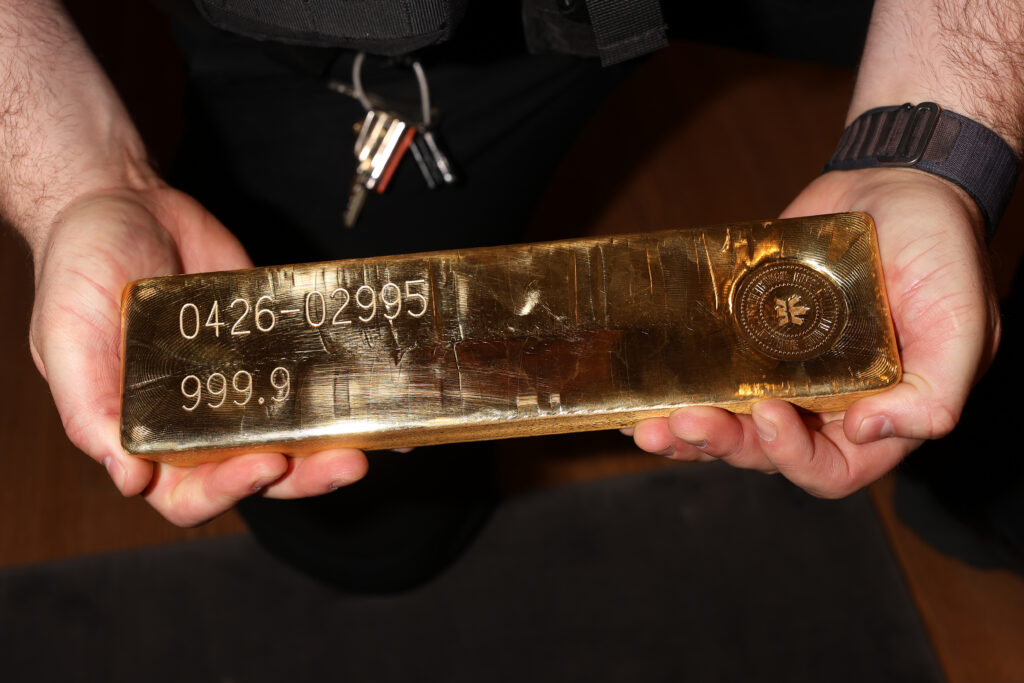
As economic uncertainties loom large, gold has been facing headwinds that have led to a modest weekly decline in its prices. The precious metal, often seen as a safe haven during turbulent times, has recently been affected by rising inflation and increased expectations for higher interest rates in the United States. Investors are now grappling with various factors impacting the gold market, which may set the stage for future price movements.
The current landscape for gold is heavily influenced by the recent surge in U.S. inflation, which has reached its highest levels since 2022. This uptick in wholesale inflation, coupled with a notable increase in the consumer price index, has led to a stronger U.S. dollar and rising Treasury yields. These developments are particularly detrimental to gold, which does not yield any interest and is typically priced in U.S. dollars. When the dollar strengthens, gold becomes more expensive for overseas buyers, leading to decreased demand and downward pressure on prices.
One of the contributing factors to the inflationary environment is the ongoing conflict in the Strait of Hormuz, a critical waterway for global oil transportation. The standoff regarding the Iran war has effectively closed this vital route, exacerbating the energy crisis and maintaining high inflation concerns. As a result, oil prices have been climbing, with West Texas Intermediate nearing $102 per barrel. In an environment where inflation expectations are high, rising yields and a stronger dollar are likely to continue exerting pressure on gold prices in the near term. Analysts at ANZ Group Holdings have even adjusted their gold price target, deferring their expectations from early 2024 to mid-2027, forecasting a price of $6,000 per ounce.
Despite these challenges, the gold market has seen limited volatility in recent weeks, trading within a narrow range since the initial phases of the war. Investor sentiment remains cautious as they assess the potential for inflationary pressures to maintain elevated interest rates, while also considering the possibility of monetary easing if economic growth falters due to prolonged conflict.
Interestingly, while gold has struggled, hedge funds may begin to incorporate it into their portfolios as a hedge against uncertainty. Senior commodity strategist Ryan Mckay from TD Securities pointed out that commodity trading advisors are likely to increase their positions in gold under various pricing scenarios. This shift could provide some support for gold prices, even amidst a backdrop of bearish sentiment.
In addition to gold, silver has been experiencing a notable rally, gaining approximately 11% in May driven by renewed interest in industrial metals. The gold-silver ratio has recently declined, suggesting that silver might be perceived as relatively undervalued compared to gold. However, analysts from ANZ caution that silver’s current price surge could encounter challenges in the short term. They emphasize that despite potential price volatility, structural demand and a persistent market deficit should support silver prices over a longer horizon.
Meanwhile, in India, new regulations on gold imports have been implemented to bolster the rupee, further complicating demand conditions in one of the world’s largest gold markets. The Indian government has recently increased import duties, leading to a decline in sentiment among gold buyers in the region. This development could have ramifications on global gold demand, given India’s significant role in the international bullion market.
As of recent trading sessions, spot gold was down approximately 1% to around $4,605.16 per ounce, while silver saw a decline of 2.9%, with prices hovering around $81.09 per ounce. Additionally, platinum and palladium also experienced dips during this period. The Bloomberg Dollar Spot Index has shown resilience, climbing 0.2% and up 0.9% for the week, further reinforcing the challenges faced by gold.
In summary, gold is currently navigating a complex environment characterized by rising inflation, increasing interest rates, and geopolitical tensions. While the near-term outlook appears challenging, there are indications that hedge funds may start to view gold as an attractive asset amidst uncertainty. Investors should remain vigilant, monitoring inflation trends and regulatory changes, particularly in major markets like India, as they may significantly impact gold demand and pricing dynamics in the months ahead. As always, diversification and a thorough understanding of market trends will be essential for traders and investors looking to navigate this evolving landscape.