
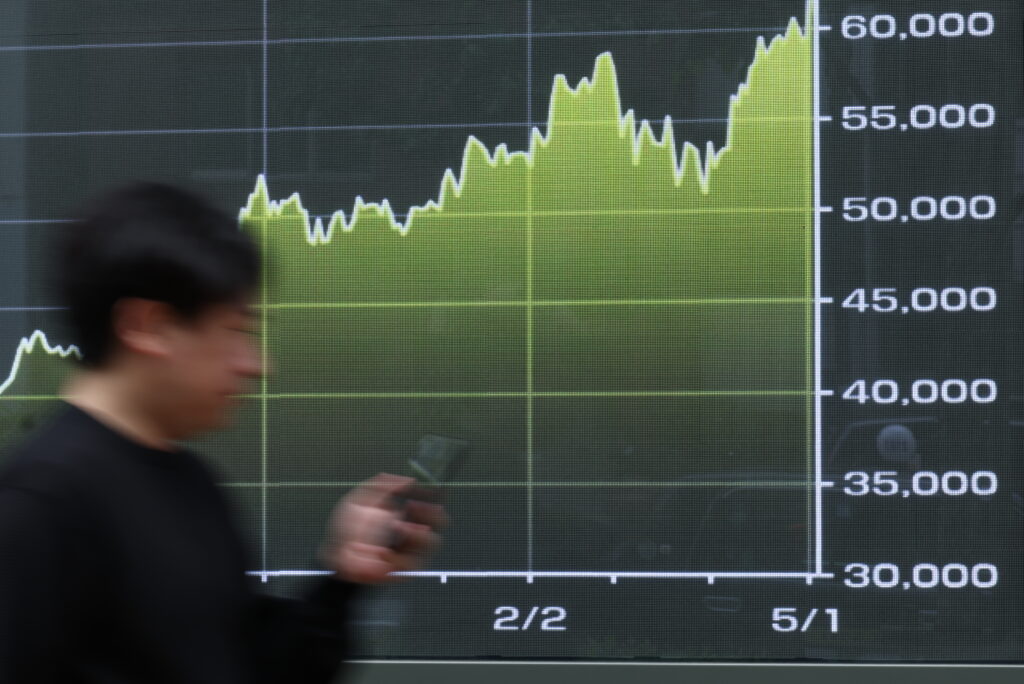
In recent days, financial markets have experienced significant volatility, driven primarily by rising oil prices and increasing inflation fears. The consequences of these developments are reverberating across various asset classes, particularly equities and government bonds. As investors grapple with whether the recent rally in stock prices, largely fueled by advancements in artificial intelligence (AI), has reached its peak, the landscape appears more precarious than ever. This blog post will explore the implications of these market shifts, identify key takeaways, and offer insights for traders and investors navigating this turbulent environment.
The recent surge in oil prices has intensified concerns about a resurgence of inflation, prompting many investors to reevaluate their positions in the equity markets. The MSCI Asia Pacific share index saw a notable decline of nearly 2%, with South Korea’s Kospi—a critical indicator of AI investment sentiment—plummeting by approximately 5%. In the United States, futures contracts for the technology-heavy Nasdaq 100 also fell by 0.8%, signaling growing anxiety among investors regarding the sustainability of the tech sector’s remarkable gains.
The ripple effects of rising oil prices were not limited to equities. The U.S. dollar, often seen as a safe haven during geopolitical uncertainty, enjoyed its fifth consecutive day of gains. Meanwhile, government bonds faced pressure as inflation concerns weighed heavily. The yield on the two-year Treasury note climbed to 4.06%, while the yield on the 10-year note rose to 4.53%. In Japan, government bond yields also trended upward, with the 20-year yield hitting its highest level since 1996.
At the core of this market turbulence is the fear that oil prices, which have recently surged above $100 per barrel, may reignite inflationary pressures. This scenario could limit the Federal Reserve’s ability to implement interest rate cuts, a prospect that many market participants had begun to anticipate. According to Dilin Wu, a research strategist at Pepperstone Group, the markets have now largely discounted any potential rate cuts from the Fed for the remainder of the year and are even considering the possibility of an interest rate hike before the year concludes. Wu emphasized the urgency of the situation, noting that the resilience of equities in light of soaring oil prices is becoming increasingly untenable.
Adding another layer of complexity to the market dynamics is the geopolitical landscape, particularly the ongoing tensions surrounding the Strait of Hormuz. President Donald Trump recently made remarks suggesting uncertainty about U.S. intentions regarding this crucial waterway, which could have negative repercussions for risk assets and investor sentiment. As Mark Cudmore, executive editor for Markets Live, pointed out, the recent equity rally has been both impressive and concentrated, making any subsequent pullbacks potentially dramatic.
Investors are also closely monitoring the outcome of the recent summit between President Trump and Chinese President Xi Jinping. While Xi spoke of a “new relationship” and hinted at positive developments, the details remain vague. The ongoing tensions over Taiwan and issues related to the Iran conflict continue to cloud the prospects for U.S.-China relations. Hiroyuki Ueno, chief strategist at Sumitomo Mitsui Trust Asset Management, articulated the confusion surrounding the market’s reaction to these discussions. He acknowledged the signs of increased economic cooperation but also highlighted the uncertainty that lingers.
Key takeaways from the current market situation include the following:
1. Rising oil prices are reigniting inflation concerns, leading to increased scrutiny of equity valuations.
2. The U.S. dollar has strengthened amid geopolitical tensions, reflecting its status as a safe haven.
3. Government bond yields are on the rise, suggesting that investors are adjusting their expectations regarding monetary policy.
4. The recent equity rally may be vulnerable to sharp corrections given the concentration of gains in certain sectors, particularly technology.
For traders and investors, the current environment calls for a cautious approach. With inflation concerns looming and geopolitical risks at play, it may be prudent to reassess portfolio allocations and consider diversifying into assets that can provide a hedge against rising prices. Additionally, keeping a close eye on macroeconomic indicators and central bank communications will be crucial in navigating this uncertain landscape.
In conclusion, the interplay of rising oil prices, inflation worries, and geopolitical tensions has created a complex backdrop for financial markets. While the AI-driven rally in equities has garnered significant attention, the recent downturn serves as a reminder of the volatility that can arise in response to external shocks. As investors seek to chart a course through these turbulent waters, maintaining vigilance and adaptability will be key to seizing opportunities and mitigating risks in an ever-evolving market.