
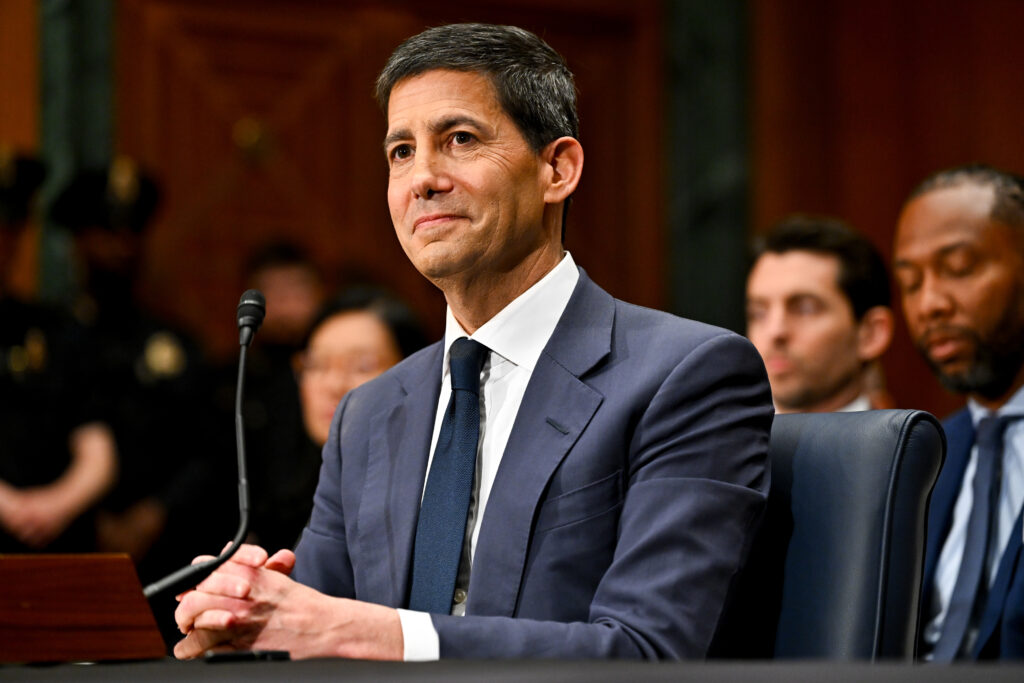
The landscape of the U.S. financial system is poised for a significant shift as Kevin Warsh officially assumes the role of Federal Reserve chair. Sworn in during a ceremony at the White House, Warsh’s appointment is not only historic due to its timing but also carries with it a host of implications for monetary policy, market stability, and economic outlook. With pressing geopolitical tensions and inflationary pressures on the rise, the financial community is keenly observing how Warsh will navigate these challenges.
Kevin Warsh’s ascension to the top of the Federal Reserve comes at a time marked by uncertainty and volatility. Recent events, particularly the ongoing conflict between the U.S. and Israel with Iran, have exacerbated inflationary concerns, complicating the Federal Reserve’s policy decisions. Warsh, who has been a vocal critic of the Fed’s previous strategies, particularly under Jerome Powell’s temporary leadership, brings a fresh perspective that could reshape how the central bank approaches its dual mandate of fostering maximum employment and stabilizing prices.
Warsh’s confirmation by the U.S. Senate was notably narrow, passing with a 54-45 vote, the smallest margin ever for a Federal Reserve chair. This slim confirmation suggests a deeply divided sentiment regarding his potential leadership. Supporters argue that Warsh’s experience and insights from his previous tenure as a Fed governor equip him well to face the current economic climate, while detractors raise concerns about his independence from political influence, particularly given President Trump’s expectations for rate cuts.
One of the foremost challenges Warsh will face is the need to balance inflationary pressures against the backdrop of political expectations. President Trump has been vocal about his desire for lower interest rates, indicating a clear preference for policies that stimulate economic growth in the short term. However, Warsh has publicly committed to maintaining the Fed’s independence, emphasizing that decisions will be made based on economic indicators rather than political pressures. This commitment will be closely scrutinized as he steps into his role.
As Warsh takes the helm, several key points will likely guide his policy decisions:
1. **Inflation Management**: The current inflationary environment, exacerbated by global tensions, will require careful monitoring. Warsh may need to adopt a cautious approach to avoid stifling growth while also addressing rising prices.
2. **Interest Rate Decisions**: The pressure for rate cuts from the Trump administration adds complexity to Warsh’s decision-making process. The balance between stimulating the economy and preventing overheating will be a crucial focus.
3. **Market Reactions**: As traders and investors digest Warsh’s leadership, market volatility may persist, especially in sectors sensitive to interest rate changes. The bond market, in particular, will be a key area to watch as traders adjust their positions based on anticipated Fed actions.
4. **Long-term Economic Strategy**: Beyond immediate pressures, Warsh will need a broader vision for the Fed’s role within a rapidly changing global economy. This includes addressing issues such as income inequality and the long-term impacts of monetary policy on economic stability.
For traders and investors, the implications of Warsh’s leadership are profound. Those involved in the equity markets should brace for potential fluctuations as the Fed’s policy direction becomes clearer. Observing Warsh’s initial moves will be critical; any signals regarding interest rate adjustments or policy shifts could lead to sharp market reactions.
Moreover, the geopolitical landscape will also play a crucial role in shaping investor sentiment. As tensions in the Middle East continue to evolve, their impact on oil prices and inflation could reverberate through the markets, influencing Fed decisions and, consequently, investment strategies.
In conclusion, Kevin Warsh’s swearing-in as the Federal Reserve chair marks a pivotal moment for the U.S. economy and its financial markets. His leadership will be tested against the backdrop of complex global challenges and domestic pressures. As he embarks on this significant role, all eyes will be on how he balances independence with the expectations of the administration, and how his decisions will ultimately shape the economic landscape for years to come. Investors and traders must remain vigilant and adaptable, ready to respond to the evolving situation under Warsh’s leadership at the central bank.