
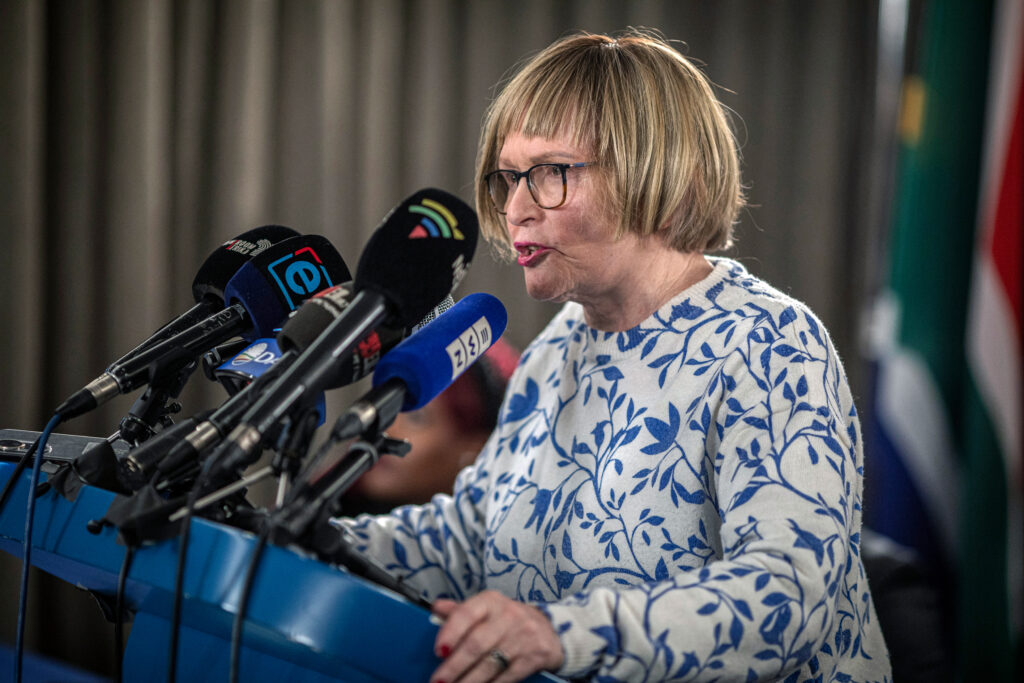
In the wake of economic turmoil, Johannesburg stands at a critical crossroads, facing immense challenges that threaten its very fabric. Enter Helen Zille, the former mayor of Cape Town and the current mayoral candidate for Johannesburg, who has boldly stepped forward with a plan to restore financial stability and revitalise the city. With a staggering R4 billion in cash and R25.2 billion owed to creditors, the situation calls for immediate and decisive action. Zille’s strategy focuses on stabilising the city’s financial situation and improving basic services, which are essential for restoring public trust and fostering economic growth.
At the heart of Zille’s plan is a commitment to transparency and accountability in the city’s financial dealings. She acknowledges that Johannesburg’s decline is a direct consequence of systemic corruption—a web of deceit that has crept into nearly every aspect of the city’s administration. This corruption has not only squandered public resources but has also eroded the citizens’ faith in local governance. Zille’s approach seeks to dismantle this corrupt framework and replace it with a transparent system that prioritises the needs of the residents.
Zille has outlined her immediate priorities for her first 100 days in office, which revolve around financial stability and service delivery. She emphasises the need to engage with national support structures, such as Finance Minister Enoch Godongwana’s special task team within Treasury. By collaborating with this task force, Zille aims to bring order to Johannesburg’s chaotic financial landscape. She has also signalled her intention to reach out to the Presidential Task Team, which is currently redirecting its focus from other crises, like those at Transnet and Eskom, to the urgent situation in Johannesburg.
One of the most alarming revelations Zille has encountered is the lack of digitisation within the city’s administrative systems. This oversight, she argues, is not merely an oversight but a deliberate choice made to facilitate corruption. Without digital records, it becomes alarmingly easy to manipulate billing systems, allowing debts to be erased or inflated without any accountability. To combat this, Zille plans to employ forensic auditors and create an anonymous reporting app that empowers citizens to expose corrupt activities without fear of retribution.
The stakes in Johannesburg are incredibly high, and Zille understands that restoring financial stability is the foundation upon which all other initiatives must be built. She has indicated that if elected, city staff will be required to work around the clock to draft an adjustment budget focused on essential spending. This decisive approach is reminiscent of the successful turnaround in Cape Town, which was achieved after voters opted for change in 2006, ousting the ANC in favour of the Democratic Alliance (DA).
Key takeaways from Zille’s plan include the pressing need for collaboration with national institutions to restore order in Johannesburg’s finances, a commitment to transparency and accountability, and the implementation of modern technologies to combat corruption. Without these fundamental changes, the city risks descending further into chaos, which would have dire implications for its residents and the broader economy.
For traders and investors, Zille’s proposed changes could signal a turning point for Johannesburg’s economic landscape. A stable and transparent financial environment can attract investment, stimulate business growth, and ultimately lead to job creation. However, this transition will require patience and strategic planning, as rebuilding trust and restoring services will take time.
In conclusion, Helen Zille’s candidacy for mayor of Johannesburg represents a critical opportunity for the city to reclaim its financial health and restore public services. By addressing the foundational issues of corruption and mismanagement, Zille aims to pave the way for a brighter future for Johannesburg. As she embarks on this journey, the support of the citizens will be paramount in achieving lasting change. The road ahead is undoubtedly challenging, but with a clear vision and a commitment to accountability, there is hope for a revitalised Johannesburg that can serve as a beacon of progress for other cities facing similar struggles.