
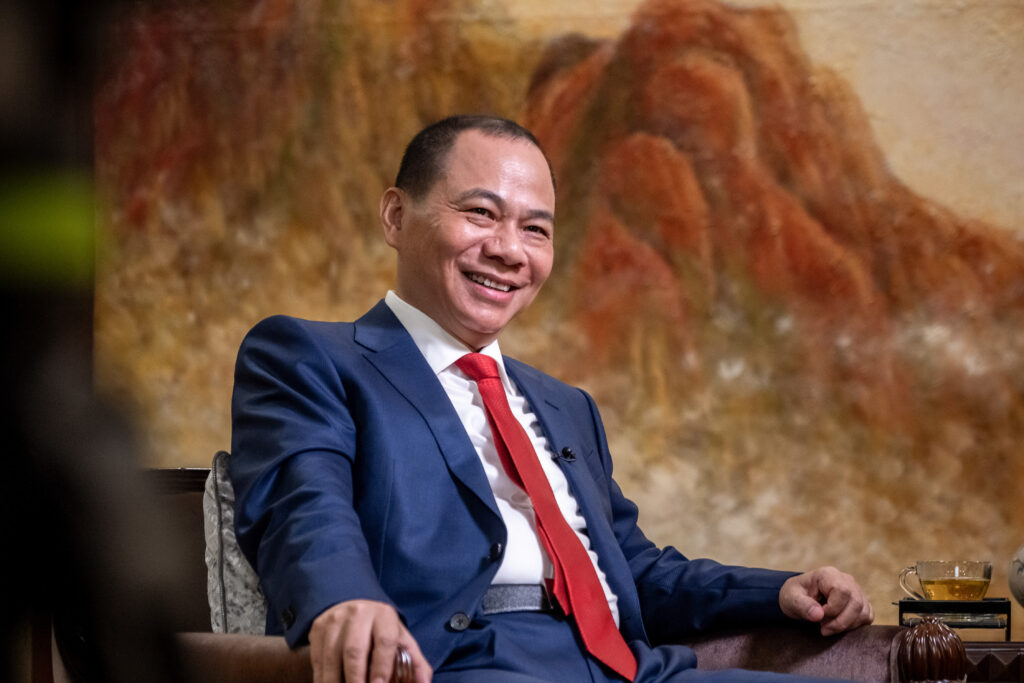
In the rapidly evolving world of electric vehicles (EVs), few stories are as compelling as that of Pham Nhat Vuong, Vietnam’s wealthiest individual and the visionary behind VinFast Auto. Over the past year, Vuong has poured billions from his personal fortune into his emerging automotive company, even as it faces significant challenges in the competitive global landscape. This blog post delves into Vuong’s audacious investments, the performance of VinFast, and the broader implications for Vietnam’s economy and automotive industry.
Pham Nhat Vuong’s investment in VinFast Auto has reached staggering heights, with his contributions totaling approximately $2.5 billion. This sum includes $900 million invested directly into the company and an additional $1.59 billion spent on acquiring essential research and development assets. The scale of Vuong’s financial commitment underscores not only his confidence in VinFast but also highlights the ambitious trajectory he envisions for the company, which he founded in 2017. Despite the company’s current financial challenges, including a reported loss of nearly $4 billion last year, Vuong’s belief in the potential of electric vehicles remains steadfast.
VinFast’s journey has been marked by bold initiatives, including the establishment of manufacturing plants in Indonesia and India, a strategic pivot aimed at penetrating the Asian market. This move comes after the company’s previous attempts to gain traction in the United States and European markets yielded less than favorable results. Recently, the state of North Carolina filed a lawsuit against VinFast, alleging breaches of agreement related to a proposed manufacturing facility, further complicating the company’s expansion efforts.
The majority of Vuong’s fortune is tied to Vingroup JSC, the sprawling conglomerate that serves as VinFast’s parent company. The remarkable rise in Vingroup’s stock price, which saw an eightfold increase last year, has significantly boosted Vuong’s net worth, currently estimated at around $30 billion, according to the Bloomberg Billionaires Index. While this surge reflects Vingroup’s prominence among foreign investors seeking exposure to Vietnam’s burgeoning market, it also raises crucial questions about the company’s valuation, particularly given its price-to-earnings ratio of approximately 150.
To many observers, Vuong and his conglomerate symbolize Vietnam’s transformation from a state-controlled economy to a more dynamic, market-oriented system. Vuong’s entrepreneurial journey began in the early 2000s with property development after he initially made a fortune in Ukraine through an instant noodle business. Today, Vingroup has diversified its operations to include real estate, healthcare, education, and even ventures in robotics and film, showcasing the breadth of Vuong’s ambitions.
VinFast, however, represents Vuong’s most significant gamble. The company has already made headlines with the launch of its first vehicle, a moment celebrated by the then-Prime Minister of Vietnam. Since its inception, VinFast has sold nearly 197,000 vehicles and over 400,000 electric scooters and bikes, generating approximately $3.59 billion in revenue. Despite these impressive figures, the contribution from Vingroup and Vuong’s other enterprises has diminished slightly, accounting for 27% of VinFast’s revenue, down from 31% the previous year.
To bolster its financial standing, VinFast has announced plans to divest its factories in Vietnam, intending to sell them to a separate entity while entering into a manufacturing contract. This move aims to raise around 13.3 trillion dong (approximately $505 million), which could provide a much-needed influx of capital as the company navigates its growth challenges.
For traders and investors, Vuong’s journey and VinFast’s trajectory present both opportunities and risks. The ongoing developments in the EV market are shaping a landscape that is ripe for innovation, yet fraught with competition and uncertainty. As VinFast continues to refine its business strategy and expand its operations, investors will need to closely monitor the company’s performance, market reception, and legal hurdles that could impact its future.
In conclusion, Pham Nhat Vuong’s substantial investments in VinFast reflect not only his personal belief in the future of electric vehicles but also the aspirations of Vietnam as a rising player in the global automotive market. While challenges abound, Vuong’s commitment to building a successful automotive brand underscores the potential for growth and innovation in this sector. As we observe the unfolding narrative of VinFast and its parent company, Vingroup, the journey will undoubtedly offer valuable lessons for investors and industry stakeholders alike. The road ahead may be fraught with obstacles, but Vuong’s determination could very well pave the way for Vietnam’s emergence as a significant force in the electric vehicle landscape.