
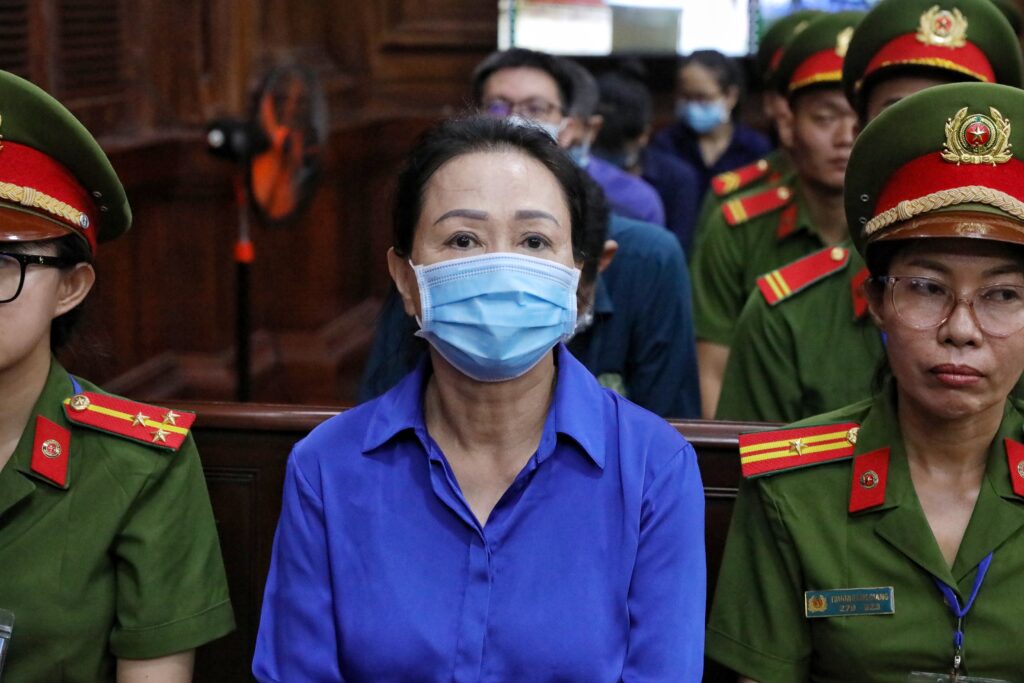
In a dramatic turn of events, Vietnam has intensified its efforts to reclaim ill-gotten assets from individuals convicted of financial crimes. A recent auction of two luxurious Hermes handbags belonging to the disgraced real estate mogul Truong My Lan has underscored the government’s commitment to recovering lost funds in a bid to restore public trust and uphold the rule of law. With Lan facing staggering financial penalties, the auction not only reflects the ongoing struggle against corruption but also raises questions about the broader implications for the nation’s economy.
Truong My Lan, once hailed as one of Vietnam’s leading property developers, has become synonymous with the nation’s largest fraud case, which has sent shockwaves through the financial community. Convicted of embezzling an astounding $12.3 billion from the Saigon Commercial Bank, Lan’s downfall has sparked a wave of legal actions aimed at recovering lost assets. The Vietnamese government is currently auditing her wealth, which includes both tangible and intangible assets, as it seeks to claw back billions of dollars for the victims of her fraudulent activities.
In an effort to facilitate this recovery, the recent auction of Lan’s luxury handbags was a noteworthy event. The Hermes items, known for their exclusivity and high market value, fetched a total of 14.21 billion dong (approximately $539,000). The auction drew significant interest, with one handbag selling for 2.54 billion dong and the other, a gemstone-adorned piece, attracting 119 bids before closing at a jaw-dropping 11.67 billion dong. This auction serves not only as a means of recovering funds but also as a symbolic gesture of the government’s determination to hold high-profile individuals accountable for their actions.
Key points to consider in this unfolding narrative include the scale of Lan’s financial obligations. After a court ruling mandated that she repay a staggering $27 billion in damages, she has thus far managed to return over 12 trillion dong to approximately 42,000 bondholders. However, a significant amount remains outstanding, with around 18 trillion dong still owed. This situation illustrates the challenges faced by both the authorities and the victims as they navigate the complex landscape of asset recovery.
As the government continues to audit Lan’s assets, it has also announced plans to auction off additional valuable items, including three luxury vehicles: a Mercedes-Maybach, a BMW, and a Toyota Motor Lexus. This ongoing initiative not only aims to recover financial losses but also sends a strong message to the business community about the consequences of unethical practices. By publicly auctioning luxury items, the government is attempting to dismantle the culture of impunity that has persisted in certain sectors of the economy.
For traders and investors, there are several insights to be drawn from this case. Firstly, the auction of high-value items highlights the potential liquidity of luxury assets, which can serve as a means of recovering capital in times of financial distress. Additionally, the government’s crackdown on corruption may instill greater confidence in the market, encouraging investment by ensuring that rule of law is enforced. However, the risks associated with investing in environments where corruption is prevalent remain significant. Investors should remain vigilant and conduct thorough due diligence to mitigate potential risks.
In conclusion, the auction of Truong My Lan’s Hermes handbags is a significant development in Vietnam’s ongoing battle against corruption. As the government intensifies its efforts to recover lost assets and hold wrongdoers accountable, the implications for the broader economy could be substantial. This case serves as a stark reminder of the importance of ethical practices in business and the potential consequences of neglecting them. As Vietnam strives to foster a more transparent and accountable economic environment, both traders and investors will need to adapt to the evolving landscape and remain aware of the ongoing challenges posed by corruption.