
In the heart of Limpopo’s Vhembe district lies Chavani, a community that has become emblematic of the critical issues surrounding infrastructure development in South Africa. Despite a hefty investment of R486 million aimed at establishing a reliable water supply system, residents are still grappling with the absence of running water. This situation raises significant questions about governance, accountability, and the efficacy of public spending in addressing basic needs.
The water system project in Chavani commenced in 2022 and was slated for completion by November 2025. However, the reality on the ground tells a different story. The project has been marred by incidents of vandalism and challenges related to water availability, rendering it non-operational. According to Vhembe District Municipality spokesperson Moses Shibambu, testing of the system is expected to be completed by the end of May. Unfortunately, his responses have been vague regarding when residents can expect to have access to running water. A recent visit to the site revealed that, although there are new reservoirs and pipelines in place, the installation of communal standpipes remains insufficient, with many already falling victim to vandalism.
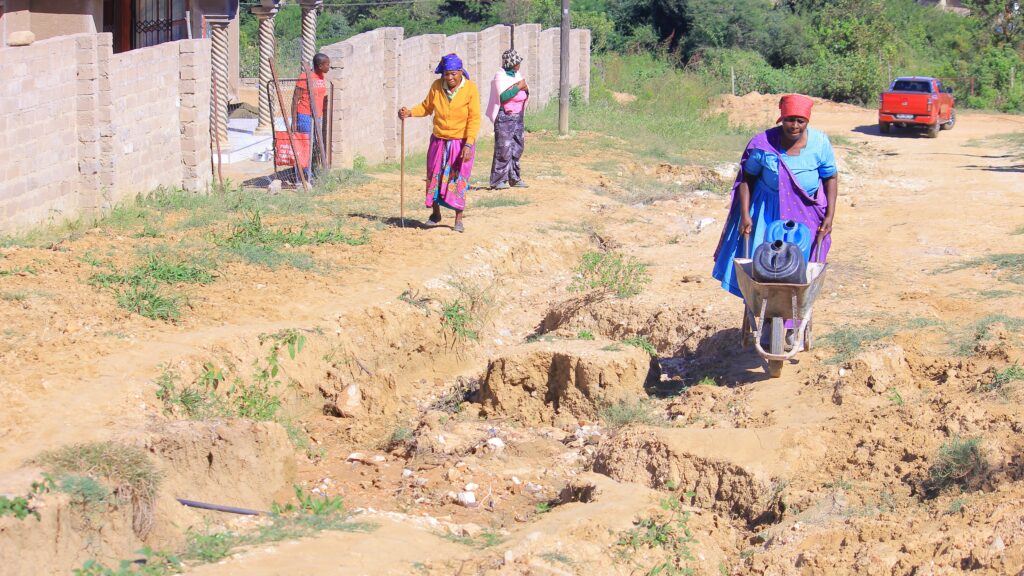
For the residents of Chavani and its neighboring villages, the absence of accessible water sources has forced them to rely on alternative means to fulfill their daily needs. Grace Rikhotso, a local resident, shared her frustration, stating that she uses her Social Assistance grant money to purchase water. Her disillusionment with the government runs deep; she expressed a lack of faith in any forthcoming changes, even going so far as to say she will abstain from voting in the next election. The sentiment is echoed throughout the community, as many have to travel several kilometers to obtain water, often transporting it in wheelbarrows.
Chavani’s Chief, Sikheto Thomas Mukari, voiced his concerns, stating that while the project claims to bear the village’s name, the benefits are not filtering down to the people. Vonani Khorombi, chairperson of the project steering committee, corroborated this sentiment by noting that there are no functioning standpipes available for the community’s use. The situation raises serious questions about the transparency and accountability associated with the project, as Shibambu failed to provide satisfactory answers regarding the lack of operational standpipes.
The financial implications of the project are equally troubling. Initially budgeted at R318 million, the costs ballooned to R486 million, with R482 million already spent. The Department of Water and Sanitation attributes this increase to various factors, including inflation, rising fuel prices, and fluctuations in exchange rates. Discrepancies between engineers’ estimates and contractor pricing during the tender process have also contributed to the financial strain.
Key takeaways from this situation highlight the systemic issues at play. First, the apparent disconnect between project completion and community benefit raises concerns about governance and oversight in public infrastructure projects. Second, the reliance on large budgets does not guarantee successful outcomes; rather, effective planning and execution are crucial to ensure that funds are used effectively. Lastly, community engagement and transparency are vital to ensure that projects serve their intended purpose.
For traders and investors, the Chavani water project underscores the importance of due diligence when assessing investment opportunities in infrastructure. The failure to deliver basic services can lead to discontent and unrest, which can ultimately impact local economies. Investors should consider factors such as governance, community engagement, and cost management when evaluating potential projects.
In conclusion, the plight of the residents in Chavani serves as a stark reminder of the challenges that accompany infrastructure development in South Africa. While significant funding has been allocated to improve the lives of community members, the lack of tangible results has led to frustration and disillusionment among the population. As stakeholders reflect on this situation, it becomes increasingly clear that effective governance, community involvement, and rigorous financial oversight are essential components of any successful infrastructure initiative. Only by addressing these factors can the nation hope to build a future where all citizens have access to basic services like clean water.