
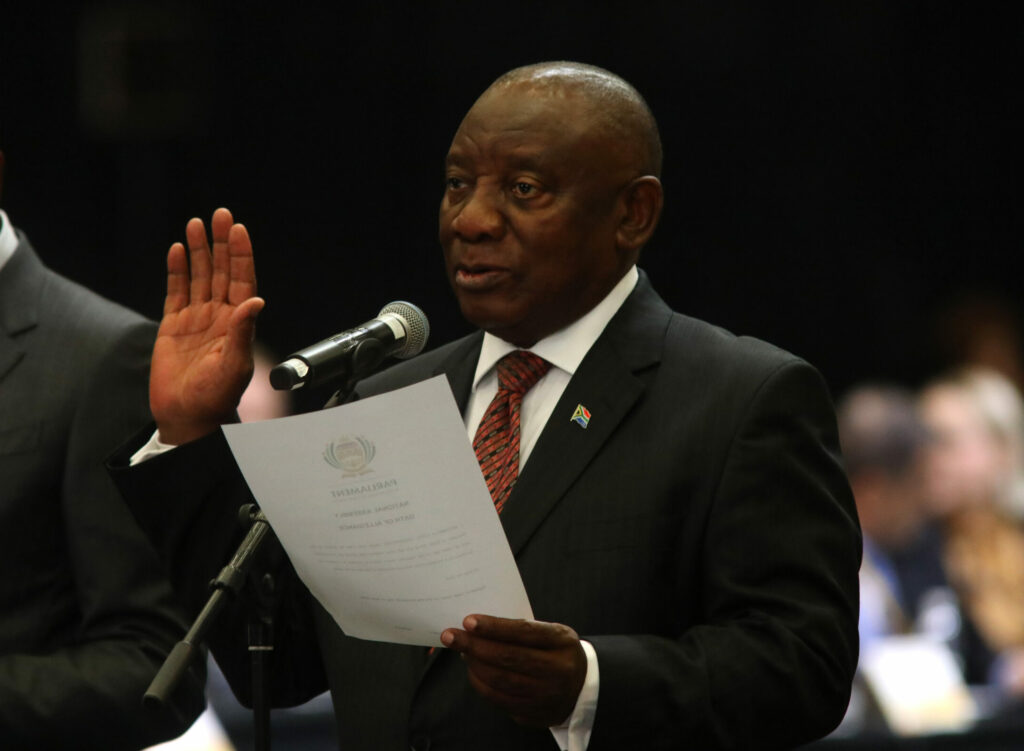
In recent months, South African President Cyril Ramaphosa has found himself at the center of a significant legal controversy known as the Phala Phala scandal. This situation not only raises questions about the president’s actions but also casts a shadow over the political landscape as the nation gears up for local elections. Ramaphosa’s legal team is preparing to challenge the findings of an independent panel that has suggested he may have violated constitutional provisions in his management of a burglary at his game farm. This blog post will delve into the details of the scandal, its potential impact on South Africa’s political scene, and the broader implications for investors and the economy.
The Phala Phala scandal revolves around an incident that occurred in 2020, where a substantial amount of foreign currency was stolen from President Ramaphosa’s wildlife ranch. The subsequent investigation by the Constitutional Court has reignited discussions about whether Ramaphosa’s handling of the incident constituted a breach of the law. His legal representatives plan to submit a formal application to the Western Cape High Court early next week, seeking a judicial review of the independent panel’s report. This legal action is particularly significant as it comes at a time when the president and his party are preparing for local elections, where political stability is crucial.
The core of the controversy stems from allegations that Ramaphosa may have failed to report the theft and that his actions could be perceived as inconsistent with his obligations under the South African Constitution. The independent panel’s report raised concerns about transparency and accountability, asserting that the president’s actions might have undermined public trust in his administration. As this legal battle unfolds, it is essential to consider the potential ramifications not only for Ramaphosa’s political future but also for South Africa’s economic landscape.
Key takeaways from this unfolding situation include the importance of government accountability and the impact of political scandals on investor confidence. In an era where transparency is paramount, any perception of impropriety can lead to a ripple effect, influencing foreign direct investment and economic growth. Investors typically favor stable political environments, as these conditions foster a favorable business climate. Therefore, the Phala Phala scandal may deter potential investors who are wary of engaging with a government embroiled in legal troubles.
Moreover, the timing of this scandal is particularly critical. As South Africa prepares for local elections, the political climate is charged with uncertainty. The African National Congress (ANC), Ramaphosa’s party, has been grappling with internal divisions and public discontent over issues such as corruption and economic mismanagement. The outcome of these elections could significantly affect the direction of policy and governance in the country, which, in turn, could influence the investment landscape.
For traders and investors, the implications of the Phala Phala scandal are multifaceted. On one hand, there may be opportunities to capitalize on potential market volatility as political developments unfold. Historically, markets can react sharply to news surrounding government stability, and savvy investors may look for entry points in sectors that could benefit from changes in political leadership or policy direction.
On the other hand, it is essential for investors to remain cautious and conduct thorough due diligence before making any financial commitments. Understanding the broader context of the South African economy, including its challenges and opportunities, will be key in navigating this uncertain environment. Factors such as currency fluctuations, commodity prices, and the overall economic climate will play crucial roles in shaping investment decisions.
In conclusion, the Phala Phala scandal is more than just a personal legal battle for President Cyril Ramaphosa; it represents a pivotal moment for South African politics and the economy. As the legal proceedings progress and the local elections approach, the implications of this scandal will resonate across the nation. For investors, the situation serves as a reminder of the delicate balance between politics and finance, underscoring the importance of staying informed and adaptable in a constantly evolving landscape. Whether Ramaphosa can successfully navigate this storm will not only determine his political fate but also shape the future trajectory of South Africa’s economic development.