
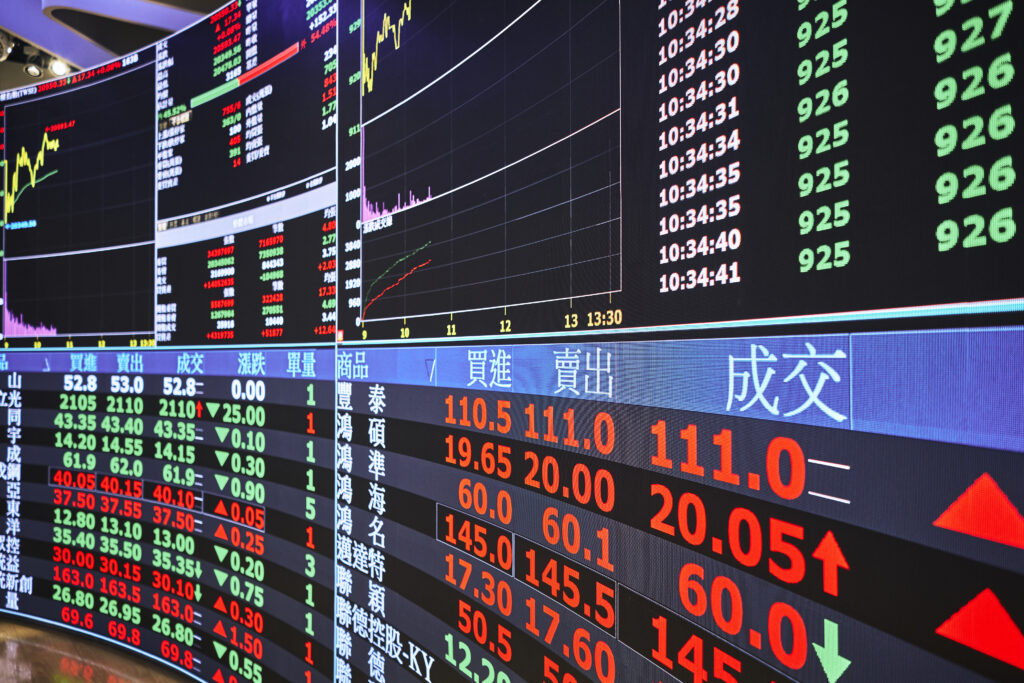
In a significant shift in the global financial landscape, Taiwan has recently surpassed India in stock market capitalization, propelled largely by the remarkable performance of Taiwan Semiconductor Manufacturing Co. (TSMC). As of the latest reports, Taiwan’s market capitalization reached an impressive $4.95 trillion, edging past India’s $4.92 trillion. This development not only highlights Taiwan’s economic prowess but also sheds light on the changing dynamics within the technology sector, particularly concerning semiconductors and artificial intelligence (AI).
The recent surge in Taiwan’s stock market value is fundamentally tied to TSMC, the world’s largest chipmaker, which now constitutes about 42% of the benchmark index. This concentration underscores the significant role that technology plays in Taiwan’s economy and its stock market performance. The company’s shares have skyrocketed by 49% this year, benefiting from the ongoing AI boom, where its advanced semiconductors are in high demand. This growth story contrasts sharply with India, which is currently facing a variety of economic challenges, including rising energy costs and a slowdown in corporate earnings.
As markets worldwide become increasingly influenced by technology, Taiwan’s ascent to the fifth-largest stock market globally—behind only the United States, mainland China, Japan, and Hong Kong—reveals a clear trend: tech-heavy markets are becoming the standard bearers of growth. The optimism surrounding AI is driving a global rally in tech shares, particularly benefiting manufacturing hubs like Taiwan and South Korea. According to Yi Ping Liao, a fund manager at Franklin Templeton, the concentration of tech hardware in Taiwan is a crucial factor in its rising market capitalization. Markets that lack significant exposure to tech hardware are being overshadowed by those that are heavily invested in it.
One of the catalysts for Taiwan’s market rally is the recent regulatory change by Taiwan’s financial regulator, which increased the allowable investment limit for domestic funds in individual stocks. Previously, funds could hold a maximum of 10% of their net assets in any single stock that exceeded 10% of the Taiwan Stock Exchange. This limit has now been raised to 25%, a move that could attract over $6 billion in new investments, as TSMC is the only company currently meeting this criterion. This regulatory shift not only underscores the government’s support for its leading tech firms but also signals a potential influx of capital into the market.
In stark contrast, India is grappling with its own set of economic challenges. Despite having a robust economy valued at approximately $4.15 trillion—making it one of the fastest-growing in the world—India’s stock performance has faltered this year. Foreign investors have pulled nearly $24 billion from Indian equities, driven by concerns over high valuations and a depreciating rupee. Additionally, rising energy costs have created inflationary pressures, dampening growth prospects and leading to an 8% decline in India’s stock market, setting it on course for its first annual drop after a decade of uninterrupted gains.
The changing weight of India in the MSCI emerging markets index—dropping from 19% to around 12%—further illustrates the challenges facing Indian equities. As global funds pivot towards markets with significant tech exposure, such as Taiwan and South Korea, India finds itself on the sidelines, struggling to attract investor interest. Alison Shimada, a portfolio manager at Allspring Global Investments, noted that India has been largely overlooked over the past two years, reflecting a broader trend of capital migration towards tech-centric markets.
For traders and investors, this shift offers several key insights. First, the dominance of technology in driving stock market performance cannot be overstated. As AI continues to reshape industries, markets heavily invested in tech will likely see sustained growth. Second, regulatory changes can have a profound impact on market dynamics, as seen in Taiwan’s case. Investors should closely monitor such developments in their respective markets. Lastly, understanding macroeconomic factors—such as energy prices and currency fluctuations—can provide critical context for investment decisions, especially in emerging markets like India.
In conclusion, Taiwan’s rise above India in stock market capitalization serves as a microcosm of the broader technological and economic trends reshaping the global financial landscape. As Taiwan benefits from its strong position in the semiconductor industry and regulatory support, India faces challenges that could hinder its growth potential in the near term. For investors, these developments underscore the importance of staying informed and adaptable in a rapidly changing market environment.