
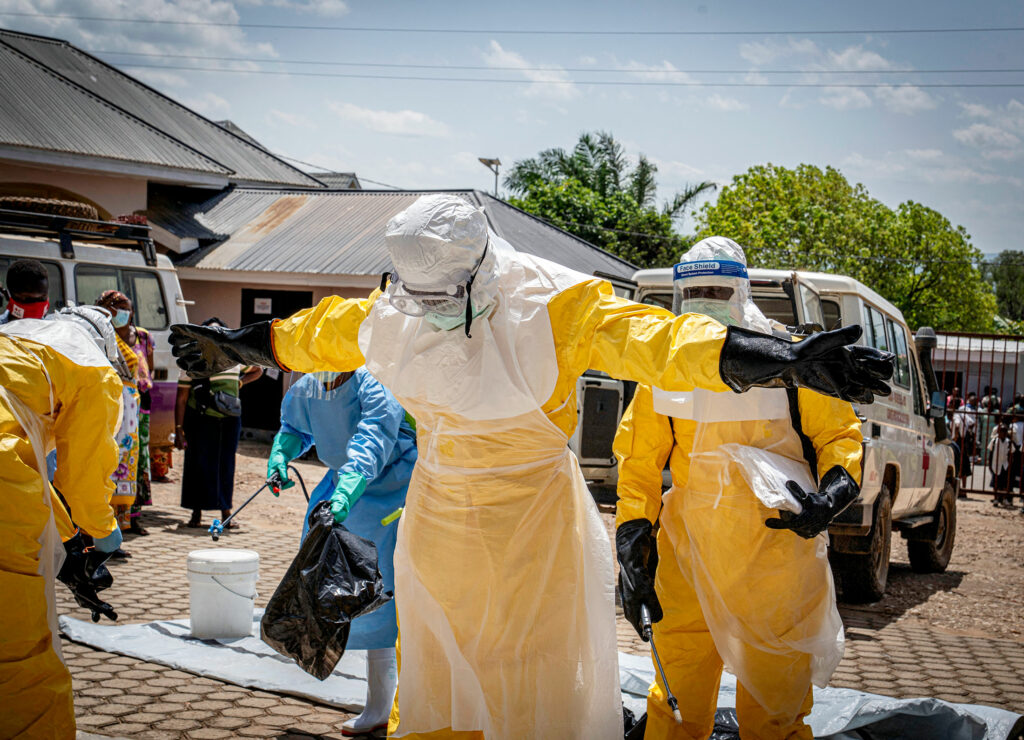
The Democratic Republic of Congo (DRC) is currently grappling with a severe Ebola outbreak compounded by ongoing conflict in its eastern regions. As the situation escalates, the government is exploring access to an experimental monoclonal antibody treatment aimed at combating multiple strains of the Ebola virus. With confirmed cases and fatalities on the rise, the challenges faced by health officials are multidimensional and dire.
As of late May, health ministry reports indicated that the DRC had confirmed 121 cases of Ebola and seen 17 deaths attributed to the virus. The number of suspected cases has surged to a staggering 1,077, with suspected deaths reaching 238. The situation is particularly alarming in Ituri province, where 16 new infections were reported. The DRC is confronting what World Health Organization (WHO) Director-General Tedros Adhanom Ghebreyesus described as a “catastrophic collision” between warfare and disease, which is exacerbating the spread of Ebola and hampering critical containment efforts.
The ongoing conflict in eastern Congo has created a chaotic environment that complicates public health initiatives. Efforts to isolate infected individuals and trace their contacts are being undermined by violence and widespread displacement. Tedros has emphasized that it is nearly impossible to build trust within communities or implement effective health measures while conflict rages on. He has called for an immediate ceasefire to allow health workers to operate safely and effectively.
Health systems in eastern Congo are fragile and struggling to cope with the dual crises of armed conflict and an Ebola outbreak. Reports indicate that operational hurdles are hampering response efforts, including inadequate contact tracing, slow laboratory results, and shortages of protective equipment. Furthermore, the establishment of isolation facilities is being delayed, making it difficult to contain the spread of the virus.
In light of the escalating outbreak, the DRC has formally requested access to an experimental monoclonal antibody treatment developed in the United States. This treatment is particularly promising as it has demonstrated efficacy against various strains of the virus, including Zaire, Sudan, and Bundibugyo. Health Minister Roger Kamba has detailed that this treatment would likely be assessed through clinical trials involving confirmed Ebola patients.
While specific details about the monoclonal antibody have not been disclosed, it appears to correspond to a compound produced by Mapp Biopharmaceutical Inc. This innovative treatment comprises two monoclonal antibodies that were isolated from a survivor of a previous Ebola outbreak in West Africa. Reports suggest that U.S. officials are collaborating with Mapp to expedite the delivery of this experimental medication to individuals exposed to the virus.
On a positive note, a U.S. doctor who became infected during the outbreak is currently being treated in Berlin and has received both the monoclonal antibody compound and an antiviral medication. Hospital officials report that he is in stable condition and showing signs of recovery. Remarkably, his family has also been given the antibody compound as a precautionary measure, despite not exhibiting symptoms of Ebola.
Unfortunately, the Bundibugyo strain of the virus lacks an approved vaccine or treatment, which significantly hampers containment efforts. The WHO has warned that the outbreak is spreading more rapidly than health responders can manage, as the delayed identification of cases has facilitated the virus’s spread across eastern Congo and into neighboring Uganda. In a bid to protect its population, Uganda has announced the closure of its border in response to the crisis.
The outbreak currently spans across 13 health zones in the provinces of Ituri, North Kivu, and South Kivu, with new confirmed cases emerging in various regions.
Key Takeaways:
1. The DRC is facing a serious Ebola outbreak complicated by ongoing conflict, straining already fragile health systems.
2. The government is seeking access to an experimental monoclonal antibody treatment aimed at multiple strains of Ebola.
3. Effective response efforts are hindered by violence, distrust, and operational challenges within health systems.
4. International collaboration is critical in providing experimental treatments and resources to combat the outbreak.
For traders and investors, the health crisis in the DRC presents both risks and opportunities. The situation underscores the importance of investing in healthcare solutions that can address public health emergencies effectively. Companies involved in vaccine development, monoclonal antibody research, and health infrastructure could see increased interest as governments and organizations focus on pandemic preparedness.
In conclusion, the DRC’s battle against Ebola highlights the intricate interplay between health crises and socio-political instability. As the government seeks innovative treatments and the international community rallies for support, the need for robust health systems and conflict resolution becomes ever clearer. The coming months will be critical in determining the trajectory of this outbreak and the lessons learned could shape future responses to global health emergencies.