
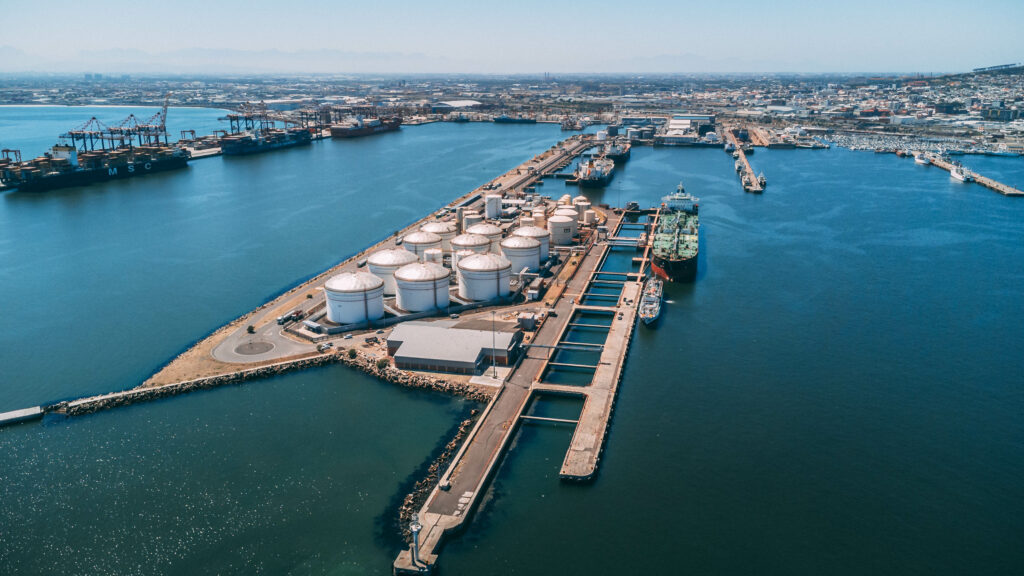
In a significant development for South Africa’s energy sector, the Transnet National Ports Authority (TNPA) has recently entered into a groundbreaking agreement to establish a liquefied natural gas (LNG) regasification facility in the Eastern Cape. This 25-year terminal operator agreement marks a pivotal shift in the country’s approach to energy diversification and maritime logistics. With the global energy landscape constantly evolving, it’s essential to explore the implications of this project and what it means for South Africa’s energy future.
The TNPA’s partnership with Ukwanda LNG—a consortium formed by Tamasa Energy Group and the state-owned Strategic Fuel Fund—aims to reshape the dynamics of South Africa’s energy portfolio. The agreement allows Ukwanda to design, finance, construct, and operate the LNG terminal in the Port of Coega, a strategic location for energy importation and distribution. This initiative reflects an increasing trend towards public-private collaborations in infrastructure projects, especially in sectors where expertise and investment from the private sector can significantly enhance operational efficiency and output.
The development of an LNG facility is timely, considering the global shift towards cleaner energy sources. Natural gas is seen as a transitional fuel that can bridge the gap as countries move away from coal and other fossil fuels towards renewable energy solutions. The facility at Coega is expected to play a crucial role in meeting South Africa’s growing energy demands while contributing to environmental sustainability. By increasing access to LNG, the country can diversify its energy mix, potentially reducing dependence on coal and enhancing energy security.
Key takeaways from this initiative include:
1. **Public-Private Partnership Model**: The agreement exemplifies the increasing reliance on public-private partnerships in South Africa’s infrastructure development. By engaging private firms in the construction and operation of energy facilities, the government can leverage additional expertise, resources, and innovation.
2. **Strategic Location**: The Port of Coega is strategically positioned to facilitate the importation of LNG, making it a critical node in the country’s energy supply chain. This will not only improve logistical efficiency but also enhance the overall reliability of energy supply.
3. **Long-Term Commitment**: The 25-year duration of the agreement underscores a long-term commitment to developing a sustainable energy infrastructure. This stability can attract further investments in related sectors, promoting economic growth.
4. **Environmental Impact**: By shifting towards LNG, South Africa is taking steps to reduce its carbon footprint. The use of natural gas as a cleaner energy alternative can significantly lower greenhouse gas emissions compared to traditional coal-based power generation.
For traders and investors, the implications of this project are noteworthy. The LNG market is poised for growth globally, with many countries recognizing the need to transition to cleaner energy sources. The establishment of the Coega facility could position South Africa as a key player in the LNG market within the southern African region. Investors may find opportunities in companies that are involved in the LNG supply chain, from infrastructure development to logistics and distribution.
Furthermore, the successful implementation of this project could lead to increased confidence in South Africa’s regulatory environment, encouraging more foreign direct investment. As the government shows its commitment to fostering a conducive environment for energy projects, it may open doors for further initiatives in renewable energy and other sustainable practices.
In conclusion, the recent signing of the LNG terminal operator agreement by the TNPA heralds a new era for South Africa’s energy landscape. This project not only represents a strategic shift towards cleaner energy but also illustrates the potential benefits of public-private partnerships in infrastructure development. As the country embarks on this journey to enhance its energy mix, the anticipated economic and environmental benefits could prove to be significant. Stakeholders in the energy sector, including investors and traders, should keep a close eye on developments in this space as South Africa strives to position itself as a leader in the sustainable energy transition.