
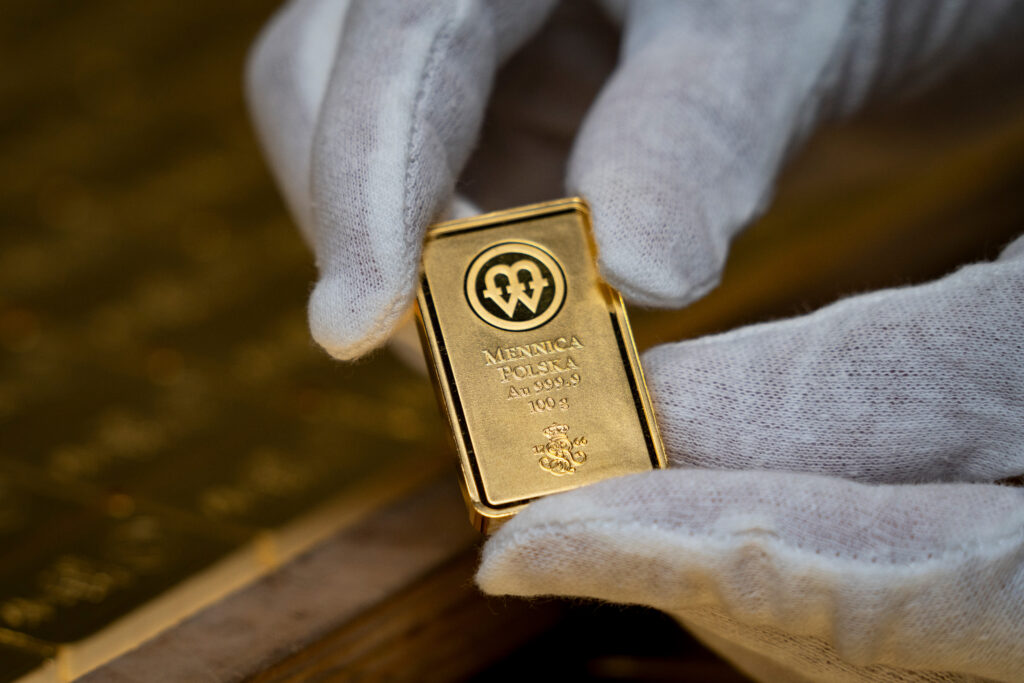
In an ever-shifting landscape of global economics, gold has proven to be a steadfast asset, particularly in times of geopolitical turmoil. Recent reports indicating a tentative agreement between the United States and Iran to extend a ceasefire have sent ripples through the financial markets, easing some inflation fears and providing a temporary boost to the bullion. As gold hovers around $4,500 an ounce, it’s essential to examine the factors influencing its price movements and the broader implications for investors.
Gold has long been regarded as a safe haven, a refuge for investors seeking stability when political instability and economic uncertainty loom large. The recent developments surrounding US-Iran relations, where a 60-day ceasefire extension and discussions about nuclear programs are reportedly in the works, have contributed to a brief recovery in gold prices. This uptick comes after a tumultuous period where gold prices touched a two-month low due to escalating airstrikes that threatened to undermine peace efforts.
The significance of this tentative deal cannot be understated. As outlined by Christopher Wong, a strategist at Oversea-Chinese Banking Corp, this rebound in gold is indicative of a broader macroeconomic relief trade. Investors are cautiously optimistic, but much depends on the final approval from President Trump and the clarity on the terms of the US-Iran agreement. Until those details are solidified, market reactions may remain unpredictable, especially given the ongoing tensions in the Strait of Hormuz, a critical chokepoint for global oil shipments.
One of the primary concerns affecting gold prices is the potential for rising inflation. As tensions in the Middle East influence oil supply, inflationary pressures are felt worldwide, leading central banks to consider maintaining higher interest rates for longer periods. Typically, gold does not perform well in a high-rate environment since it yields no interest, making it less attractive compared to interest-bearing assets. The recent consumer spending data in the US indicates a slight increase, paired with inflation rates accelerating at the fastest pace observed since 2023, further complicating the economic picture.
Amidst these developments, the US economy’s growth has been revised downward. The first quarter’s expansion was recorded at an annualized rate of 1.6%, which is slower than earlier estimates. This deceleration, coupled with fluctuating gold prices, indicates a market grappling with conflicting signals about economic health and geopolitical stability.
Spot gold’s recent price movement, which showed a 0.3% increase to $4,507.47 an ounce, is a reflection of these dynamics. Meanwhile, silver also saw a slight rise of 0.4% to $75.96, while platinum and palladium prices remained relatively unchanged. The overall stability of the Bloomberg Dollar Spot Index suggests that the US currency is holding its ground, despite previous dips.
For traders and investors, these developments underscore the importance of closely monitoring geopolitical events and economic indicators. The potential for a more stable geopolitical climate could provide much-needed support for gold prices, particularly if rate hike concerns diminish. However, investors should remain vigilant, as market sentiments can shift rapidly with new developments.
Key takeaways from the current landscape include the need for investors to diversify their portfolios, keeping a close eye on gold as a hedge against inflation and economic uncertainty. Understanding how geopolitical tensions can influence market trends is crucial, as is the recognition that gold’s performance may fluctuate based on broader macroeconomic factors.
In conclusion, gold’s recent resilience, amid the backdrop of US-Iran negotiations and inflationary fears, highlights its role as a safe haven asset. As the global economic environment continues to evolve, investors should remain informed and adaptable, leveraging gold’s unique position in times of crisis. With the prospect of a ceasefire and potential resolution in sight, gold may find renewed strength, but the path ahead remains uncertain. Keeping a watchful eye on both geopolitical developments and economic indicators will be vital for making informed investment decisions in this unpredictable landscape.