
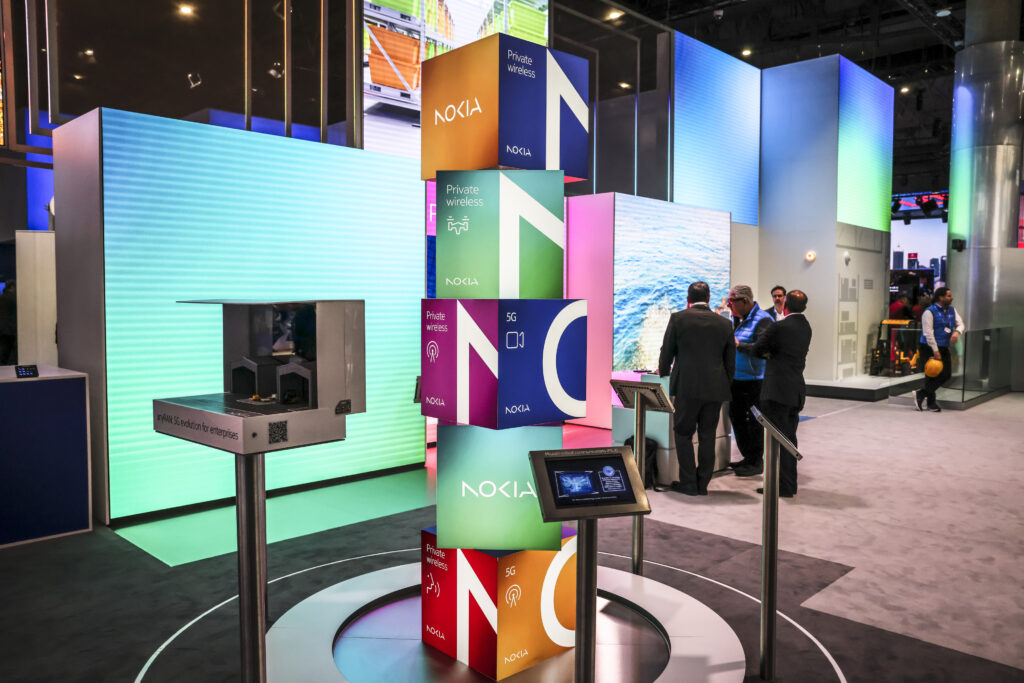
In an era marked by rapid technological advancements, certain companies are redefining their identities and market perceptions. One such example is Nokia Oyj, a Finnish telecommunications company that has experienced a remarkable resurgence this year. Once viewed primarily as a relic of the telecom equipment industry, Nokia is now being recognized as a vital player in the burgeoning artificial intelligence (AI) infrastructure sector. With shares skyrocketing over 140% in 2023, investors are reevaluating the company’s potential and its relevance in today’s digital age.
The backdrop to Nokia’s impressive stock performance is rooted in a significant shift in demand for its optical equipment, which is becoming increasingly crucial for data centers. This transformation has propelled the company’s shares to heights not seen since 2008, placing it among the top performers in the Stoxx Europe 600 index. The surge in stock price has also altered the market’s perception of Nokia, with its forward price-to-earnings (PE) ratio more than doubling from approximately 17 to around 36 times, suggesting that investors are anticipating strong future growth.
However, this optimistic outlook comes with caveats. A closer examination reveals that the AI and cloud segments driving much of this excitement accounted for only 8% of Nokia’s total sales in the first quarter of the year. This statistic raises essential questions about how much growth investors should realistically expect from Nokia moving forward. Amanda Lyons, head of research at Energy Group Capital, emphasizes that while the stock’s initial revaluation has occurred, the critical inquiry now is whether a second wave of growth is on the horizon.
Key Points to Consider
As investors assess Nokia’s potential, several key factors come into play. First, there is the undeniable trend of AI spending, which is influencing the financial performance of technology companies across the globe. In the U.S., other optical component manufacturers such as Lumentum Holdings Inc and Coherent Corp have also seen their shares more than double this year, indicating a broader market trend towards companies that are well-positioned to benefit from the AI boom.
Second, Nokia’s historical context cannot be ignored. Once a dominant player in the mobile phone market, the company has had to reinvent itself following the sale of its mobile phone division to Microsoft in 2014. Since then, Nokia has focused on telecom infrastructure—an area that many analysts predict will experience limited growth over the next decade as the rollout of 5G technology matures. Despite these challenges, Nokia’s acquisition of Infinera Corp last year bolstered its position in optical networking, which is becoming increasingly vital as data demands surge.
Furthermore, the investment from Nvidia Corp has provided additional validation of Nokia’s new strategic direction. The partnership will see Nvidia’s chips being integrated into Nokia’s software for 5G and 6G networks, and both companies are exploring ways to leverage Nokia’s data center technology within Nvidia’s own AI infrastructure. This collaboration signifies a shift in how investors regard Nokia—not merely as a legacy telecom player but as an active participant in the AI infrastructure ecosystem.
Investor Insights
For traders and investors considering Nokia’s stock, there are invaluable lessons to be learned. First, understanding the broader market dynamics at play is crucial. The rise in demand for AI technologies and the infrastructure that supports them is not a fleeting trend but rather a fundamental shift in how businesses operate. Companies like Nokia that can adapt and align themselves with these trends are likely to be the beneficiaries of significant growth.
Second, investors should remain cautious about overly optimistic projections based solely on past performance. While current growth in AI-related sales is promising—evidenced by a 49% increase in sales in the first quarter—investors need to analyze whether this growth is sustainable and what it means for the company’s overall valuation in the long term.
Lastly, as Morgan Stanley analysts have pointed out, a valuation approach that emphasizes future earnings potential may yield a more accurate picture of Nokia’s worth. Investors should consider the long-term implications of AI-related demand and how it might support the company’s growth trajectory, rather than relying solely on traditional metrics.
In conclusion, Nokia’s evolution from a telecom equipment manufacturer to a player in the AI infrastructure sector illustrates the dynamic nature of today’s financial markets. While the company has made significant strides this year, it is essential for investors to remain vigilant and consider both current trends and future possibilities. With the right perspective, Nokia could very well continue to redefine itself and its role within the technology landscape, making it an intriguing option for those looking to invest in the future of AI.