
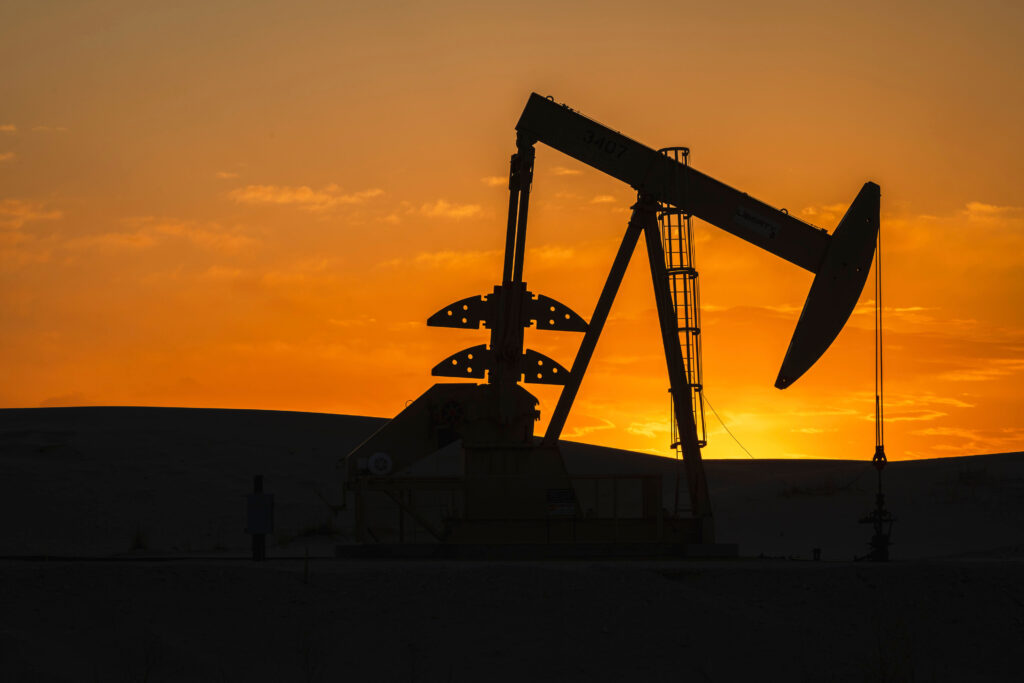
The oil market is currently facing a rollercoaster ride of price fluctuations, driven largely by geopolitical tensions and the state of diplomatic relations between the United States and Iran. Recent developments have led to a decline in oil prices following a significant surge, highlighting the ongoing volatility that traders and investors need to navigate. Understanding the intricate dynamics at play is essential for anyone involved in the energy sector or the broader financial markets.
Oil prices recently experienced their largest one-day gain in nearly a month, with Brent crude rising by 4.2% before experiencing a notable pullback. As of now, Brent crude is trading around $94 per barrel, while West Texas Intermediate (WTI) is hovering at approximately $91 per barrel. This surge can be attributed to reports indicating that Iran had momentarily suspended negotiations with the United States. The catalyst for this action appears to be Iran’s dissatisfaction with perceived attacks by Israel, particularly regarding the situation in Lebanon.
However, the optimism surrounding a potential deal between the U.S. and Iran was tempered when President Donald Trump announced that discussions were still ongoing, suggesting that a memorandum of understanding to reopen the vital Strait of Hormuz could be reached shortly. This strait is crucial for global energy supplies, as it serves as a transit point for a substantial portion of the world’s oil and liquefied natural gas. The uncertainty surrounding these negotiations has made oil prices particularly sensitive to any news regarding U.S.-Iran relations.
One of the key concerns for traders and investors alike is the potential for disruptions in energy flows from the Persian Gulf. The Strait of Hormuz, in particular, has been a focal point of geopolitical tension and is critical for maintaining the stability of oil markets. Recent reports from Iran’s semi-official news agency Tasnim have indicated that Tehran, along with its regional allies, is considering a complete closure of the Strait of Hormuz and the Bab el-Mandeb Strait—another crucial route for oil exports at the southern end of the Red Sea. Such actions would have profound implications for global oil supply and prices, making the current diplomatic landscape even more precarious.
Market analysts, including Linh Tran from XS.com, have noted that the ongoing uncertainty surrounding the negotiation process between the U.S. and Iran is likely to keep oil prices elevated and volatile. Since the situation remains fluid, traders should be prepared for rapid price changes based on news developments. The fluctuating nature of these geopolitical tensions underscores the importance of closely monitoring both diplomatic communications and military developments in the region.
Furthermore, the differing narratives from U.S. officials and Israeli Prime Minister Benjamin Netanyahu regarding the ongoing conflict in Lebanon add another layer of complexity to the situation. The U.S. hopes to broker a ceasefire that extends beyond the immediate conflict and stabilizes the broader region, yet the lack of a coherent strategy or consensus may prolong uncertainty in the oil markets.
Key takeaways for traders and investors in this environment include the following:
1. **Stay Informed**: Regularly monitor news related to U.S.-Iran relations, as any announcements can lead to rapid price movements in oil.
2. **Risk Management**: Given the volatility in oil prices, implementing effective risk management strategies is essential. Consider using options and futures contracts to hedge against potential price swings.
3. **Diversification**: In light of geopolitical risks, diversifying investments across different sectors can help mitigate the impact of oil market fluctuations on overall investment portfolios.
4. **Long-term Perspective**: While short-term price movements can be alarming, maintaining a long-term investment strategy that accounts for fundamental supply and demand dynamics in the energy sector is crucial.
In conclusion, the oil market is currently navigating a complex landscape influenced by diplomatic tensions between the U.S. and Iran. As prices fluctuate in response to the news cycle, traders and investors must remain vigilant and adaptable. Understanding the intricacies of the geopolitical factors at play will be essential for making informed decisions in this volatile environment. As we move forward, the fate of oil prices will largely depend on the resolution of these diplomatic challenges and the potential for stability in one of the world’s most critical energy corridors.