
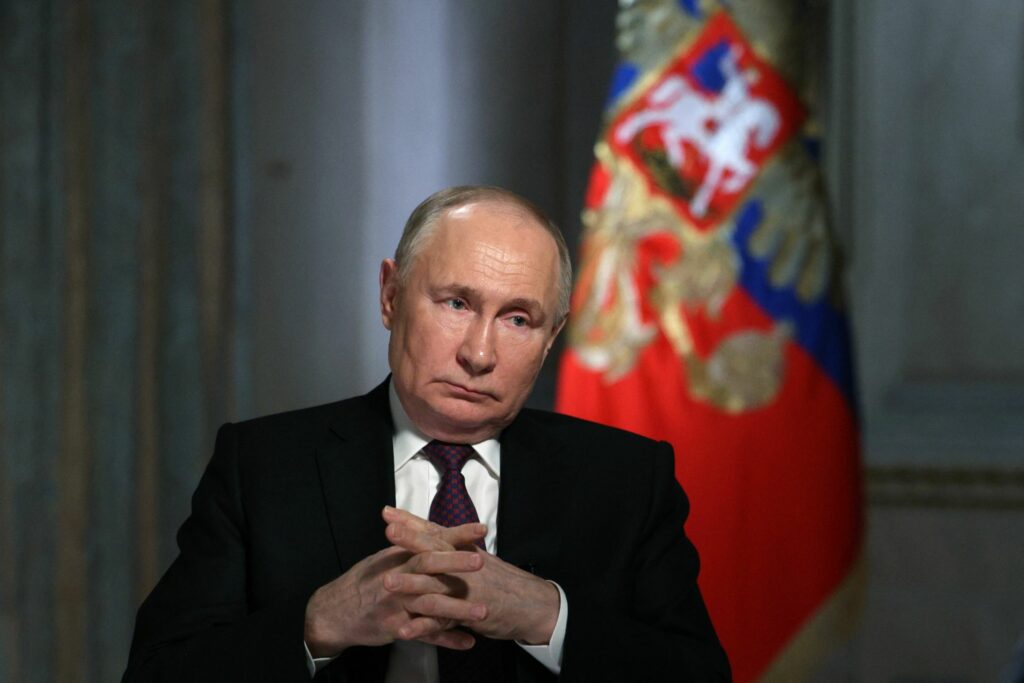
The ongoing conflict in Ukraine continues to shape global politics, with its ramifications felt far beyond the borders of Eastern Europe. As the war enters its fifth year, the question of how to negotiate peace becomes increasingly pressing. Recently, Russian President Vladimir Putin made headlines by rejecting the notion that European leaders could serve as mediators in the conflict, instead emphasizing a deal he claims was previously established with former U.S. President Donald Trump. This raises significant questions about the roles various global actors can play in resolving the crisis.
In a recent meeting with foreign media in St. Petersburg, Putin challenged the credibility of the European Union (EU) as a neutral mediator. He pointedly questioned how the EU could serve in this capacity while simultaneously providing military support to Ukraine, which is engaged in active conflict with Russia. “Mediation implies neutrality,” he stated, highlighting a fundamental issue regarding the nature of mediation in international conflicts. The crux of Putin’s argument lies in the assertion that credible mediators must be impartial to foster a conducive environment for dialogue.
As discussions among European nations, particularly Germany, France, and the United Kingdom, continue regarding potential negotiations with both Russia and Ukraine, the landscape becomes more intricate. The focus of these European powers is to engage in dialogue that may eventually lead to a peaceful resolution, yet they face the challenge of being perceived as biased by Moscow. This perception complicates their potential role as mediators, effectively sidelining them in the eyes of the Kremlin.
Putin has reiterated his belief that a peace agreement was reached with Trump during their summit in Anchorage, Alaska, where he claims a compromise was outlined. However, the details of this alleged agreement remain murky, and the ongoing hostilities suggest that its implementation has not materialized. The Russian leader has insisted that Ukraine must concede control of the entire Donetsk region, a demand that Kyiv has firmly rejected. Instead, Ukraine has proposed to cease hostilities along the current front lines, a point that underlines the stark differences in negotiating positions.
The current stalemate on the battlefield is exacerbated by growing losses for Russian forces and increasing strain on the Russian economy. Reports indicate that the European nations, recognizing the potential for a shift in dynamics, are considering ways to bring Putin back to the negotiating table. Amid this backdrop, Ukrainian President Volodymyr Zelenskyy has publicly called for direct talks with Putin, emphasizing the need for a clearer path to resolving the conflict. This development raises critical questions about who can be trusted in this negotiation process and what framework might be established for meaningful dialogue.
Key points to consider in this complex situation include the challenges of establishing trust between conflicting parties, the implications of military support from external actors, and the necessity of a neutral mediator. While Putin has floated the idea of former German Chancellor Gerhard Schroeder as a potential representative for Europe, the credibility of such a figure remains contentious. The choice of mediator is critical, as the success of negotiations often hinges on the parties’ perceptions of impartiality and trustworthiness.
For traders and investors, this ongoing conflict presents a myriad of risks and opportunities. The geopolitical landscape is fraught with uncertainty, which can lead to volatility in markets, particularly in sectors directly impacted by the conflict, such as energy and defense. Investors should remain vigilant, closely monitoring developments in the negotiations and any shifts in international policy that may arise as a result.
In conclusion, the path to peace in Ukraine remains uncertain, with significant obstacles in the way of effective mediation. As world leaders grapple with how to approach the conflict, the question of who can facilitate meaningful dialogue is paramount. The ramifications of this conflict will continue to resonate across global markets, making it essential for stakeholders to remain informed and adaptable in their strategies. The interplay of negotiation, trust, and international relations will ultimately determine the future of Ukraine and the broader geopolitical landscape in Europe.