
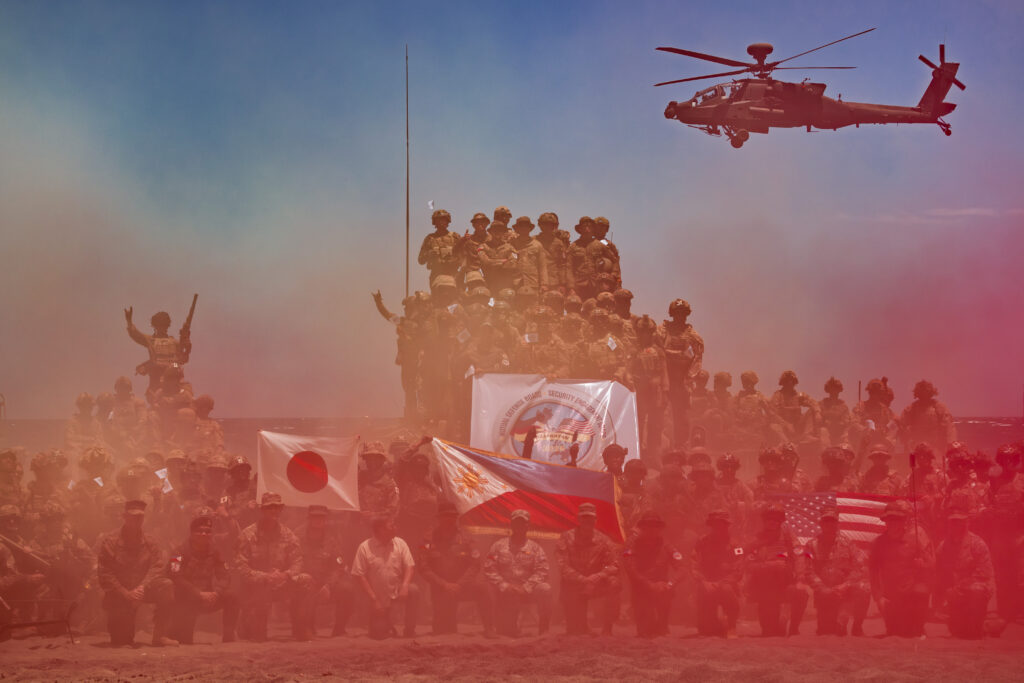
In the complex landscape of international relations, few issues are as contentious as the status of Taiwan. With its rich history and strategic significance, Taiwan has become a focal point in the rivalry between the United States and China. Recently, however, the dynamics in this region have shifted, particularly with the growing assertiveness of U.S. allies Japan and the Philippines. As these nations prepare to deepen their military alliances in response to the evolving geopolitical climate, it’s crucial to understand the implications of their actions and the broader context surrounding Taiwan.
In recent months, Japan and the Philippines have taken a more vocal stance regarding their potential involvement in conflicts concerning Taiwan. Their leaders have indicated that if tensions escalate into a military confrontation, both nations would likely be compelled to engage, a statement that has provoked a strong reaction from Beijing. This newfound assertiveness is evident through their commitment to strengthening military cooperation, as demonstrated by their recent agreements to enhance defense discussions and joint exercises.
While the United States has adopted a more subdued approach towards Taiwan, Japan and the Philippines are actively fostering a robust network of alliances. The leadership in Tokyo and Manila recognizes the necessity of collaborating closely to counterbalance China’s growing influence in the region. Raymond Powell, a retired U.S. Air Force colonel and founder of the SeaLight Foundation, aptly noted that if Beijing intends to leverage its power in markets and maritime territories, its neighboring countries must respond by constructing a more resilient defense framework.
The recent diplomatic movements have been underscored by concerns regarding U.S. policy and its commitment to Taiwan. Although U.S. Defense Secretary Pete Hegseth reaffirmed that American policy towards Taiwan remains unchanged, there is uncertainty surrounding the fate of a proposed $14 billion arms package for the island. President Trump’s characterization of the arms deal as a “bargaining chip” marks a significant departure from traditional U.S. foreign policy norms, raising questions about America’s long-term strategy in the region. During a recent hearing, Secretary of State Marco Rubio indicated that while the arms package was under review, the U.S. had previously conducted the largest arms sale to Taiwan in history, valued at $11 billion.
As this situation unfolds, the strategic calculations of Japan and the Philippines are becoming increasingly complex. Both nations are eager to enhance their military capabilities without provoking a severe backlash from China. Their recent agreements focus on establishing military information-sharing protocols and addressing maritime border disputes, building on prior initiatives to facilitate joint exercises and logistics support.
The stakes are particularly high for the Philippines, given its proximity to Taiwan. Philippine President Ferdinand Marcos Jr. recently articulated that the nation would likely find itself embroiled in any conflict involving Taiwan, reflecting a shift in the nation’s defense posture. Similarly, Japanese Prime Minister Sanae Takaichi echoed these sentiments, suggesting a broader acceptance of the potential need for military involvement in the defense of Taiwan.
Key takeaways from this evolving situation include the recognition that the balance of power in East Asia is shifting. Japan and the Philippines are moving away from a historically passive stance to one that embraces proactive military collaboration. This pivot not only signals a commitment to regional security but also highlights the growing concern over China’s assertiveness in territorial claims.
For traders and investors, these developments present both risks and opportunities. The military alignment of Japan and the Philippines could lead to increased defense spending, benefiting companies involved in the defense sector. Conversely, heightened tensions with China could lead to market volatility, particularly in sectors reliant on exports to the Chinese market. Investors should remain vigilant and consider the geopolitical landscape’s impact on global supply chains and trade relations.
In conclusion, the evolving military cooperation between Japan and the Philippines represents a significant shift in the geopolitical landscape surrounding Taiwan. As these nations seek to enhance their defense capabilities in response to China’s assertiveness, the implications for regional stability and international relations are profound. For stakeholders in the financial markets, understanding these dynamics will be critical in navigating the risks and opportunities that arise from this complex and rapidly changing situation. As the world watches closely, the actions of these allied nations could very well shape the future of East Asia and beyond.