
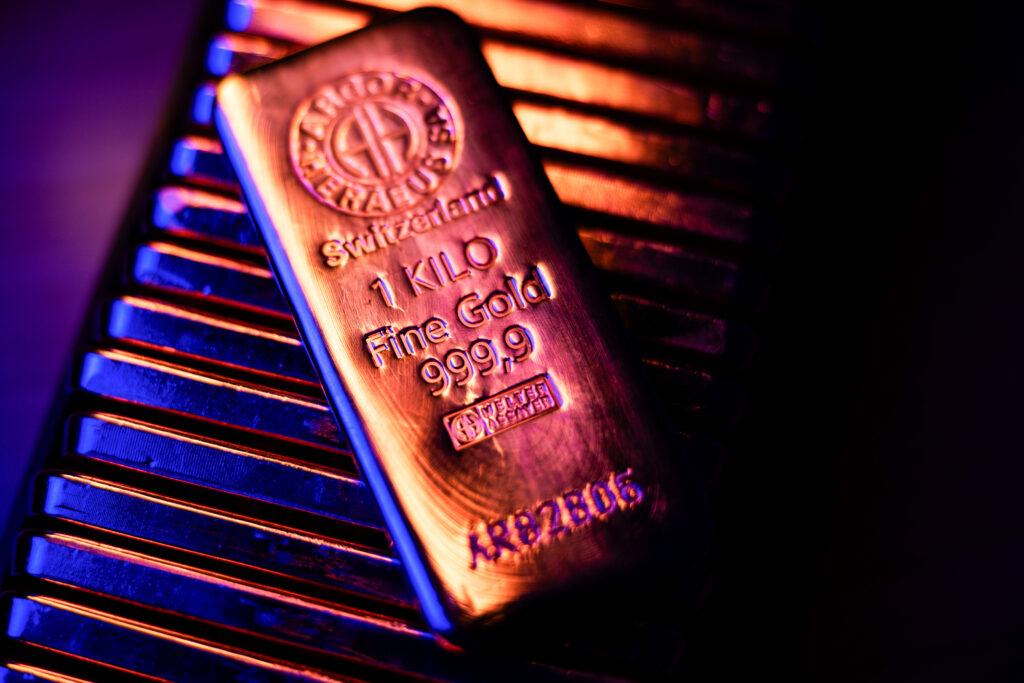
As geopolitical tensions simmer in the Middle East and economic indicators shift, the gold market finds itself in a precarious position. Recently, the yellow metal has faced a decline, driven by escalating conflicts and the potential implications for global monetary policy. Understanding these dynamics is crucial for traders and investors looking to navigate the complexities of the current financial landscape.
Gold has long been regarded as a safe haven asset, a refuge for investors during turbulent times. However, recent developments have challenged this perception. Following Israel’s military actions against Iranian targets in response to missile threats from Tehran, gold prices have slipped further, extending a decline that has seen the precious metal fall nearly 5% in a week. The market reacted swiftly to these geopolitical events, with gold dropping to around $4,300 an ounce. This sharp decline highlights how external factors can heavily influence commodity prices, particularly in times of heightened conflict.
The situation in the Middle East has been tense for months, with ongoing hostilities disrupting energy flows, specifically through critical passageways like the Strait of Hormuz. Such disruptions have ramifications beyond the immediate region, as they contribute to rising oil prices and raise concerns about inflation on a global scale. Higher inflation often leads central banks to reconsider their monetary policies, potentially maintaining or even increasing interest rates, which can negatively impact gold prices. Gold, traditionally viewed as a hedge against inflation, may struggle to attract investors when interest rates rise, as the opportunity cost of holding non-yielding assets like bullion increases.
Key insights into the current market dynamics indicate that unresolved issues in the Middle East continue to cast a shadow over gold’s performance. Rhona O’Connell, head of market analysis at StoneX Group, noted that while there is a prevailing downward bias in the market, opportunities for bargain hunting might still exist. This perspective suggests that while current trends may be unfavorable, astute investors could find value in the fluctuations.
Another factor influencing gold prices is the performance of the US dollar and bond yields. Recent robust employment data from the United States has fueled speculation about potential interest rate hikes by the Federal Reserve, leading to a rise in both bond yields and the value of the dollar. Since gold is priced in US dollars, a stronger dollar typically results in lower gold prices, making it more expensive for holders of other currencies. The market reacted to these economic signals, with gold erasing its year-to-date gains and trading at approximately $4,308.51 an ounce.
In addition to these macroeconomic factors, the activity of central banks plays a significant role in shaping gold demand. The People’s Bank of China has made headlines recently by adding around 10 tons to its gold reserves, marking the highest monthly total since 2024. This move reflects China’s ongoing interest in diversifying its reserves and could provide some support to gold prices, even amid broader market declines. As the world’s largest gold purchaser, China’s actions can significantly influence market trends and investor sentiment.
For traders and investors, the current market for gold offers both challenges and opportunities. The interplay between geopolitical tensions, economic indicators, and central bank activities creates a complex landscape that requires careful navigation. While recent events suggest a downward trend for gold, the potential for bargain hunting remains a viable strategy for those willing to take calculated risks.
In conclusion, the gold market is experiencing significant volatility driven by a combination of geopolitical tensions in the Middle East and shifting economic signals from the United States. As prices retreat, the implications for traders and investors are profound. Staying informed about global events and economic indicators will be crucial in making strategic decisions. The interplay of factors affecting gold prices underscores the importance of a multifaceted approach to investing in precious metals, with a keen eye on both immediate risks and long-term opportunities.