
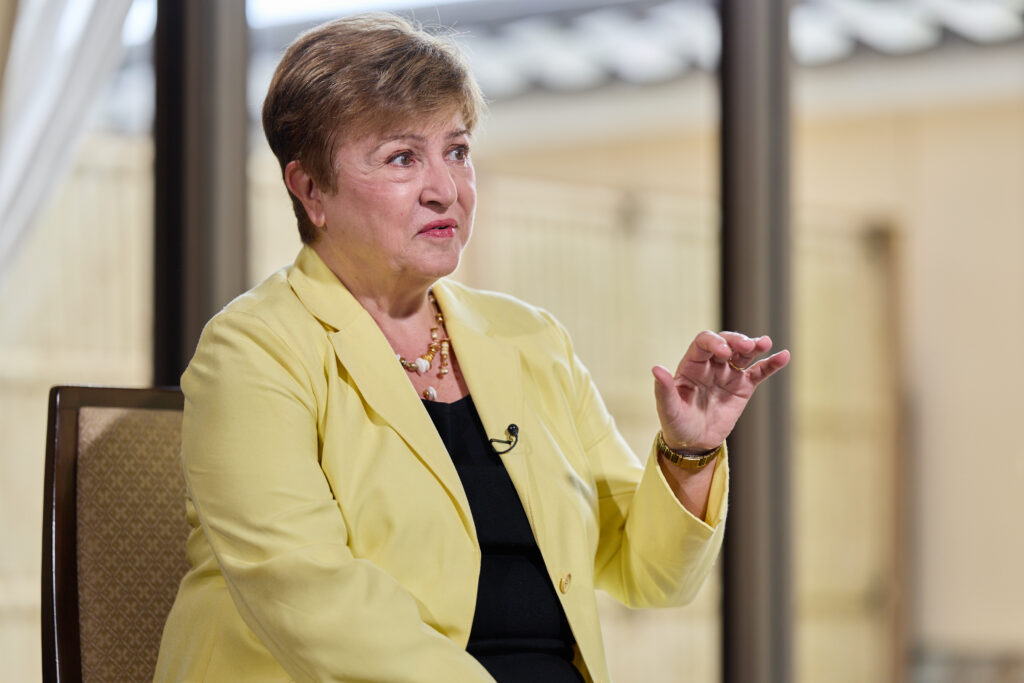
In recent years, the global economy has faced an unprecedented series of challenges, from the COVID-19 pandemic to geopolitical conflicts that have reshaped international relations. As the world grapples with these crises, the call for resilience and adaptability becomes increasingly urgent. Kristalina Georgieva, the Managing Director of the International Monetary Fund (IMF), has been at the forefront of this discourse, emphasizing the need for a robust framework capable of withstanding future shocks. In a recent conversation on Bloomberg’s podcast, Georgieva shared her insights on the evolving economic landscape and the critical role of the IMF in fostering global cooperation.
The IMF, with a lending capacity of nearly $1 trillion, serves as a backbone for global economic stability, providing financial support to its 191 member countries. Georgieva’s tenure has witnessed the IMF navigating through numerous crises, including the fallout from the pandemic, the ongoing war in Ukraine, and the recent escalation of conflict in the Middle East. Her perspective is clear: the world must come to terms with the reality that economic shocks are no longer anomalies but rather an integral part of our globalized existence.
One of the most pressing transformations currently underway is the rise of artificial intelligence (AI) and its potential impact on labor markets and local economies. Georgieva has been vocal about the need to avoid repeating past mistakes, particularly regarding the inequalities that emerged from globalization. She acknowledges that many communities have been left behind as jobs disappeared, often without sufficient attention from organizations like the IMF. The challenge now is to ensure that the implementation of AI does not exacerbate these disparities. Georgieva’s commitment to addressing these issues reflects a broader recognition that economic policies must account for the diverse experiences of communities around the world.
As the IMF prepares to update its global economic outlook, the organization is not only responding to the immediate challenges posed by geopolitical events but also looking ahead to the long-term implications of these changes. The IMF’s annual economic revisions and surveillance activities aim to provide a comprehensive understanding of member countries’ economic health, allowing for informed policy decisions. This year, the IMF has faced particular scrutiny regarding its approach to Russia, as it plans to restart its annual review of the Russian economy for the first time since the invasion of Ukraine. This decision has sparked backlash from several European Union countries, who argue that engaging with Russia could undermine international sanctions. Georgieva has acknowledged the complexities of this situation, emphasizing the need for accurate data collection on trade and economic activities.
Key points to consider in this evolving economic landscape include the following:
1. **Resilience in the Face of Crisis**: The increasing frequency of economic shocks necessitates a shift in how countries and organizations prepare for and respond to these challenges.
2. **The Role of AI**: As artificial intelligence becomes more prevalent, it is crucial to address the potential inequalities it may create, learning from the lessons of globalization.
3. **Global Cooperation**: The IMF’s mission remains centered on fostering collaboration among member countries to address shared economic challenges, underscoring the importance of a unified approach.
4. **Ongoing Surveillance**: The IMF’s surveillance and reporting mechanisms are essential for understanding global economic dynamics and ensuring that countries are equipped to respond effectively.
For traders and investors, the insights shared by Georgieva underscore the importance of staying informed about global economic trends and geopolitical developments. Understanding the potential repercussions of AI on labor markets, for instance, can inform investment strategies in technology and related sectors. Additionally, being aware of the IMF’s assessments can provide valuable context for decision-making, particularly in times of uncertainty.
In conclusion, Kristalina Georgieva’s reflections on the current state of the global economy serve as a reminder that the challenges we face are complex and multifaceted. As the IMF seeks to navigate these turbulent waters, the emphasis on resilience, cooperation, and proactive policy-making becomes paramount. For investors, traders, and policymakers alike, the message is clear: adapting to a rapidly changing world requires not only vigilance but also a commitment to fostering inclusive economic growth that benefits all communities.