
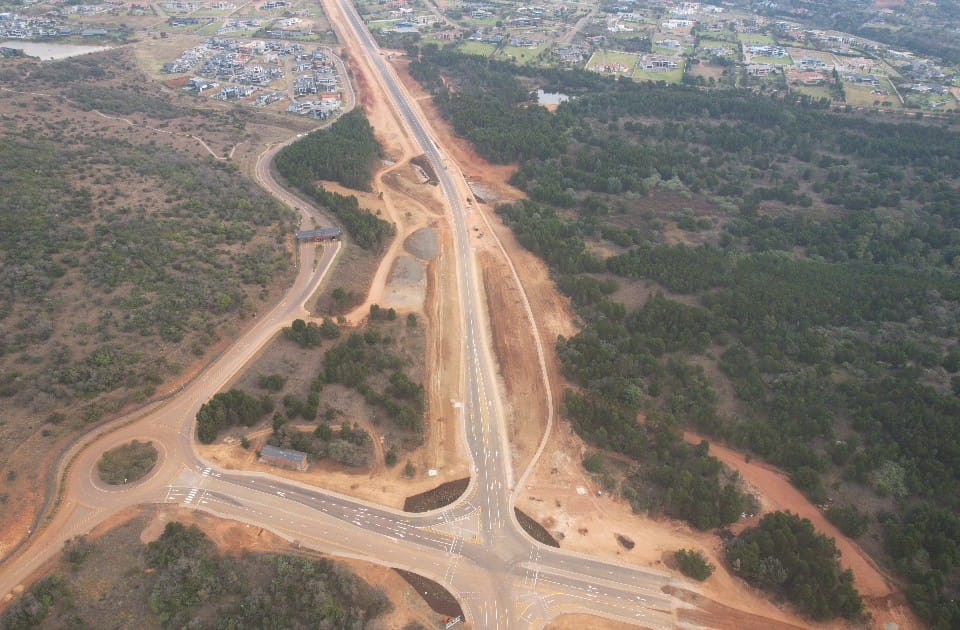
In an era where urban expansion is a common theme across major cities, the role of infrastructure in facilitating growth cannot be overstated. Balwin Properties Limited, a key player in residential property development, has recently taken a major step in this direction with the completion of a significant infrastructure project in the eastern region of Tshwane. The new R100 million K147 Zwavelpoort Road link is designed to alleviate logistical challenges in a burgeoning development corridor, demonstrating the vital connection between urban planning and real estate development.
The K147 Zwavelpoort Road project is a 2-kilometer dual carriageway that acts as a crucial east-west link between Atterbury and Garsfontein roads. This new roadway is not just a means of transportation; it is a strategic asset intended to tackle existing commuter backlogs while supporting the long-term urban planning framework for the area. Upon completion, the road will be handed over to the City of Tshwane, marking a significant addition to the public infrastructure of the municipality.
As urban centers become more densely populated, the need for efficient transport networks becomes increasingly critical. For property developers, this means that investing in surrounding infrastructure is no longer optional but essential for ensuring the viability of residential projects. Balwin Properties’ decision to invest in the K147 road link highlights the growing trend where developers are proactively engaging in infrastructure projects that complement their residential developments.
The planning process for the K147 road began in 2019, and the construction phase officially commenced on May 6, 2025, concluding on June 5, 2026. Throughout this period, the project not only generated around 400 direct and indirect jobs but also reinforced the importance of infrastructure development as a catalyst for economic growth. According to Steve Brookes, the founder and CEO of Balwin Properties, this new road will significantly relieve congestion on key routes like Solomon Mahlangu Drive and De Villebois Mareuil Drive, which are critical for accessing major highways such as the N1 and R21.
The strategic placement of the K147 road benefits a variety of residential estates and communities, including Mooikloof Eco Estate, Greenkloof, Mooikloof Ridge, and The Hills. The impact extends beyond just local residents; commuters from areas such as Olympus, Moreleta Park, and Zwavelpoort will also experience improved access and reduced travel times. By directly connecting Atterbury and Garsfontein roads, the dual carriageway is poised to enhance the overall efficiency of public transport routes across the growing node.
The K147 road link is not merely a solution to current congestion issues; it is also a foundational element for future developments. It aligns with the approved planning and infrastructure requirements tied to the ongoing urban expansion in the area. Notably, this road lays the groundwork for Balwin’s ambitious Mooikloof Smart City project, which aims to transform the region into a fully integrated urban environment.
Investors and traders should take note of the implications of such infrastructure investments on property values and market dynamics. The development of efficient transport links not only boosts the accessibility of existing neighborhoods but also enhances the attractiveness of new residential projects. As urban centers continue to evolve, the interdependence between infrastructure and real estate development will become a focal point for both investors and developers.
In conclusion, Balwin Properties Limited’s K147 Zwavelpoort Road project symbolizes a strategic investment in both infrastructure and community development. By addressing transportation challenges and establishing a strong logistical framework, Balwin is positioning itself as a forward-thinking developer that understands the complexities of urban growth. As cities expand, the insights gleaned from such projects will be invaluable for stakeholders across the real estate landscape, emphasizing the importance of cohesive planning that integrates infrastructure with residential development. This investment not only promises immediate benefits for local commuters but also sets the stage for future growth and development in Tshwane, making it a noteworthy example of how strategic infrastructure can facilitate urban expansion.