
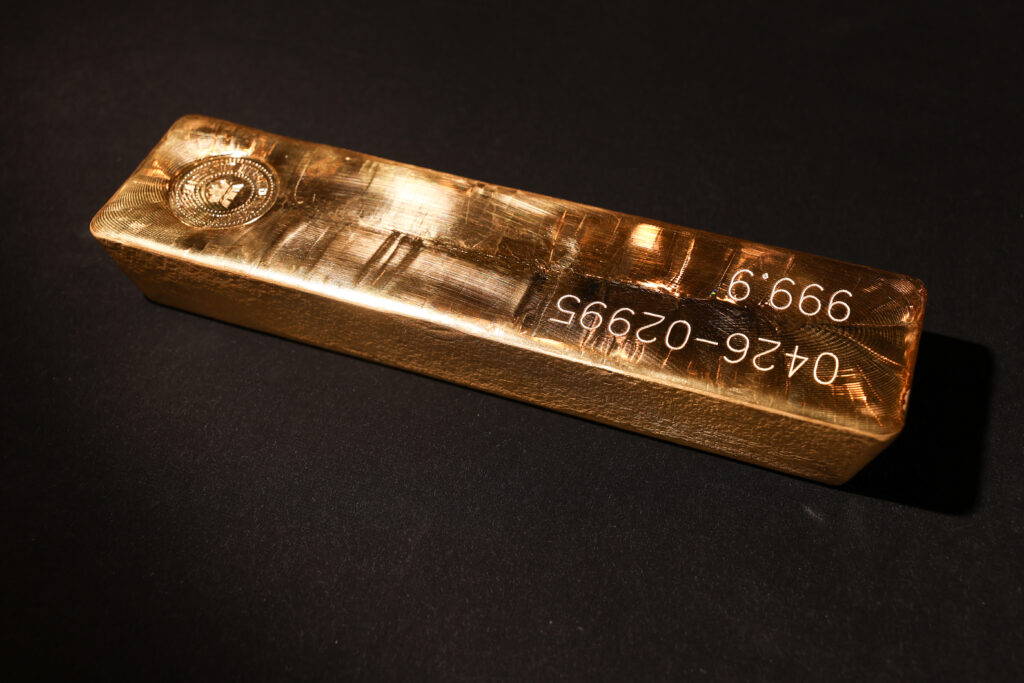
In recent weeks, the financial markets have experienced considerable volatility, particularly in the precious metals sector. Gold, often viewed as a safe haven during times of uncertainty, has faced downward pressure due to renewed geopolitical tensions and shifting economic indicators. As international relations sour and inflation risks rise, investors are left pondering the future of gold and its role in their portfolios.
The recent escalation in hostilities between the United States and Iran has sent shockwaves through global markets. Following a series of retaliatory strikes by American forces against Iranian sites, gold prices have taken a notable hit. On one occasion, bullion prices plummeted by as much as 2.1%, settling around $4,173 per ounce, following a 1.6% decline the previous day. The catalyst for this downturn was the U.S. military’s response to Iran’s shooting down of an American helicopter, which has revived concerns over ongoing conflict in the region.
The Strait of Hormuz, a critical maritime chokepoint for oil shipments, has become a focal point of this tension. Any threat to the security of this route raises alarm bells for traders and analysts alike, as it could lead to a significant disruption in energy supplies and, consequently, heightened inflationary pressures. Iranian officials have warned that they will respond decisively to any attacks, further complicating an already fragile ceasefire and intensifying fears of a prolonged conflict.
As gold’s price trajectory takes a downward turn, oil markets have reacted differently. Initially, crude oil prices surged by up to 2%, reflecting the market’s anxiety over supply disruptions. This rise in oil prices adds another layer of complexity for central banks, as rising costs can lead to increased inflation, prompting policymakers to consider tighter monetary policies. Such a scenario would typically be unfavorable for gold, which offers no interest to investors.
Market participants are closely monitoring the U.S. inflation report, which is expected to provide insights into the Federal Reserve’s forthcoming actions regarding interest rates. The anticipation surrounding these economic data releases places additional pressure on gold, as expectations of rising rates tend to diminish the appeal of non-yielding assets. The yield on two-year Treasury bonds has already reached levels not seen in over a year, signaling that investors are bracing for a potential shift in monetary policy.
In terms of technical analysis, gold’s recent decline below its 200-day moving average has triggered alarm bells among institutional investors. This critical threshold is often seen as indicative of long-term momentum, and its breach can lead to increased selling activity. Suki Cooper, a noted commodities analyst at Standard Chartered, has cautioned that gold prices may remain vulnerable in the near term as the likelihood of interest rate hikes increases. The next key support level for gold is anticipated to be around $4,100 per ounce, a figure that traders will be watching closely.
While the current market landscape presents challenges, there are glimmers of hope in certain regions. Demand for gold in China has remained resilient, with local premiums holding steady at under $10 per ounce. Conversely, markets in India appear to be softer, indicating a potential shift in consumer buying patterns that could influence overall demand for gold.
In summary, the interplay of geopolitical tensions, inflationary concerns, and monetary policy expectations is creating a complex environment for gold investors. As the market reacts to external shocks and economic indicators, traders must remain vigilant and adaptable. Key takeaways from the current situation include:
– The geopolitical climate, particularly involving the U.S. and Iran, is exerting downward pressure on gold prices.
– Rising oil prices could lead to increased inflation, prompting central banks to reconsider their interest rate strategies.
– Technical indicators, such as the breach of the 200-day moving average, suggest caution among investors regarding gold’s near-term outlook.
– Demand dynamics in key markets like China and India will play a critical role in shaping the future trajectory of gold prices.
As the financial landscape evolves, it is essential for traders and investors to stay informed and strategically position their portfolios to navigate the uncertainties ahead. The interplay between geopolitical developments and economic indicators will remain a focal point for market participants in the days to come.