
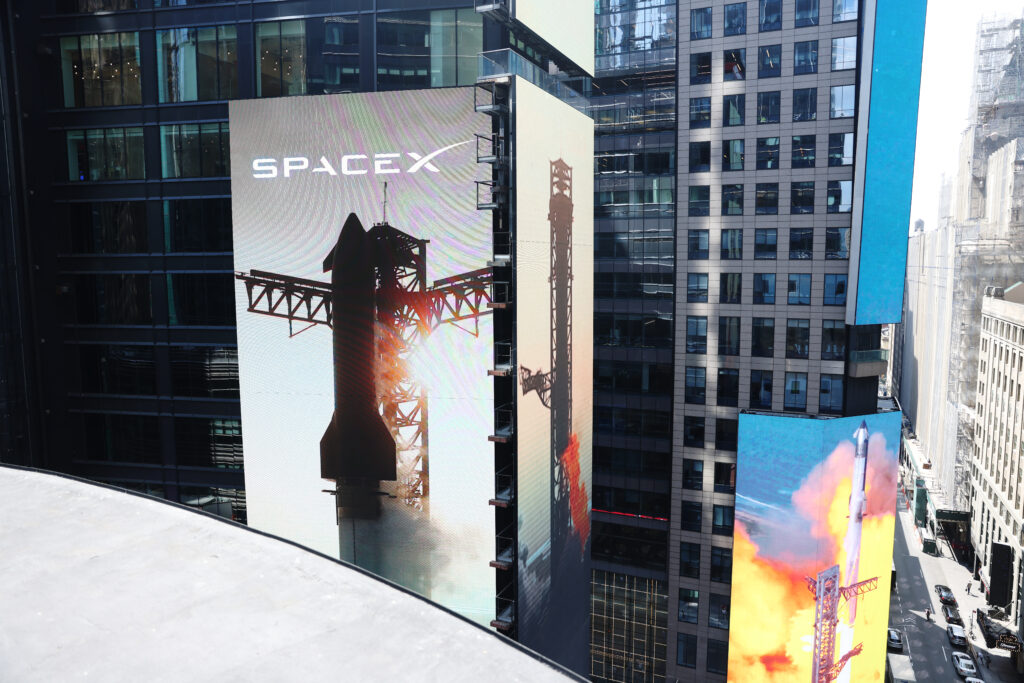
The recent initial public offering (IPO) of SpaceX has sent shockwaves through the financial markets, marking a significant milestone not only for the aerospace industry but also for the tech sector at large. With shares surging dramatically after their debut, SpaceX has rapidly ascended to become one of the most valuable public companies globally, valued at over $2 trillion. This blog post explores the implications of SpaceX’s IPO, its relationship with the burgeoning artificial intelligence (AI) sector, and what this means for investors and the broader market.
SpaceX, officially known as Space Exploration Technologies Corp., debuted on the stock market with a record-setting IPO, raising an impressive $75 billion. This event has not only captured the attention of investors but has also sparked discussions about the future of technology companies, particularly those involved in AI and aerospace. The stock opened with enthusiasm, culminating in a remarkable 19% increase on its first day of trading, followed by an additional 7.7% rise in premarket trading on the following Monday.
The excitement surrounding SpaceX’s IPO is partly attributed to the company’s strategic moves into artificial intelligence. Earlier this year, SpaceX acquired xAI, a venture founded by Elon Musk, which aims to advance AI technologies. This acquisition has positioned SpaceX at the intersection of aerospace and AI, reinforcing investors’ confidence in its growth potential. As a result, the positive reception of SpaceX’s stock has also ignited optimism for other tech companies looking to go public, such as Anthropic PBC and OpenAI, both of which are expected to pursue IPOs in the near future.
However, the overwhelming enthusiasm isn’t without skepticism. Many investors question whether SpaceX, despite its groundbreaking achievements in space travel and exploration, can justify its staggering valuation without having turned a profit yet. This skepticism is a reminder that high valuations often come with high expectations, and the road to profitability can be long and fraught with challenges.
Key Points to Consider:
1. **Record-Breaking IPO**: SpaceX’s IPO raised $75 billion, setting a new benchmark for technology companies.
2. **Valuation Surge**: The company’s market value soared above $2 trillion in a matter of hours, contributing to its rank among the world’s most valuable public entities.
3. **AI Integration**: SpaceX’s foray into artificial intelligence through xAI has solidified its position as a forward-thinking tech leader.
4. **Industry Implications**: The success of SpaceX’s IPO could pave the way for other tech companies, particularly in AI, to enter the public market.
5. **Investor Caution**: Despite the excitement, some investors remain wary of SpaceX’s high valuation given its lack of profitability.
For traders and investors, SpaceX’s IPO presents both opportunities and challenges. On one hand, the substantial initial gains indicate strong market enthusiasm and the potential for significant returns. For those looking to invest in the tech sector, the success of SpaceX could signal a broader recovery and growth in technology-related stocks, particularly those involved in AI and innovative technologies.
On the other hand, potential investors should exercise caution. The lack of profitability raises questions about sustainability and long-term growth. Investors might want to approach SpaceX’s stock with a blend of optimism and skepticism, analyzing market trends, financial health, and industry forecasts before making investment decisions.
In conclusion, SpaceX’s IPO is a landmark event that underscores the evolving landscape of technology and investment. As the company continues to push boundaries in space travel and AI, it has positioned itself as a frontrunner in the tech revolution. While the initial trading success reflects a robust appetite for innovative companies, the road ahead remains uncertain. Investors should remain vigilant, balancing excitement with analytical caution, as they navigate the implications of this historic IPO and its broader effects on the market.