
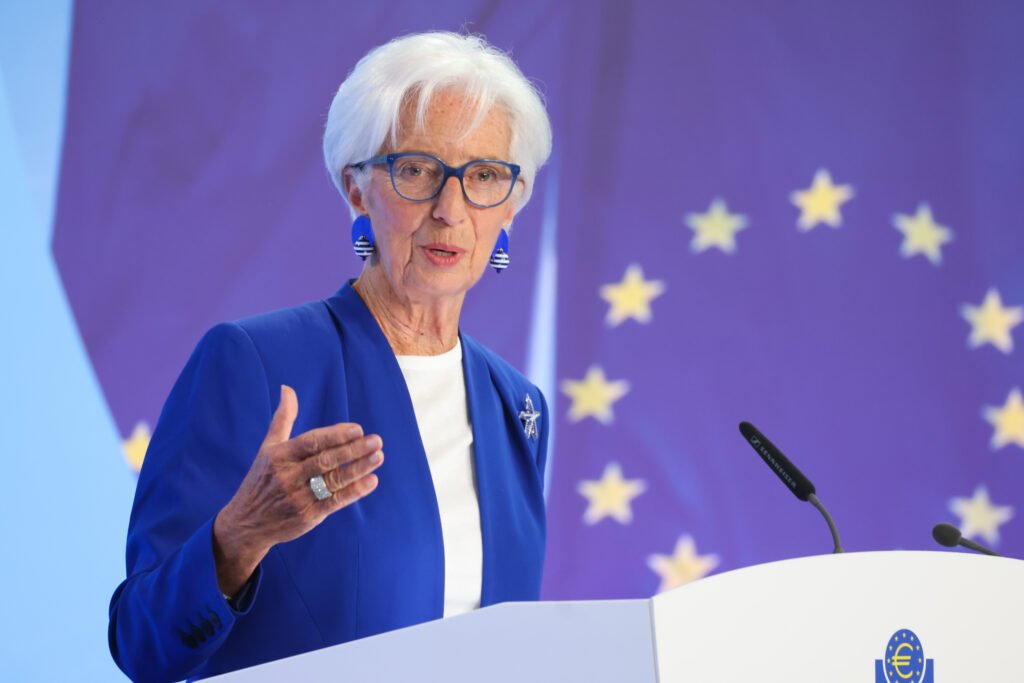
In the evolving landscape of global economics, the intersection of geopolitics and monetary policy is increasingly relevant. Recent discussions surrounding a potential peace agreement between the United States and Iran have sparked speculation about the implications for inflation and interest rates in Europe. However, officials from the European Central Bank (ECB) maintain that the anticipated agreement will not necessarily halt their trajectory of interest rate increases. Understanding this complex relationship is crucial for investors and traders alike as they navigate the shifting tides of the financial markets.
The backdrop to this situation includes the persistent inflationary pressures that have plagued the eurozone, which the ECB aims to control with interest rate adjustments. Recently, ECB President Christine Lagarde and other officials expressed cautious optimism about the resumption of oil shipments through the critical Strait of Hormuz. However, they emphasized that the economic damage inflicted by previous conflicts in the Middle East has already set back recovery efforts significantly. Governing Council member Peter Kazimir highlighted that “higher energy costs are likely to remain with us longer than many had hoped,” signaling that the path to normalizing energy prices will be a protracted process.
The crux of the matter lies in the challenges of restoring production capacity and repairing critical infrastructure to facilitate the flow of oil. Even if peace negotiations lead to a reduction in geopolitical tensions, the repercussions of previous disruptions will linger, and recovering full production capabilities will take time. This means that crude oil prices are likely to remain elevated, reinforcing the inflationary environment that the ECB is grappling with.
A primary concern for the eurozone is the potential response from businesses and workers. If companies begin to raise selling prices and employees demand higher wages in reaction to sustained energy costs, inflation could remain stubbornly above the ECB’s target of 2%. Many analysts anticipate that the ECB will have to take further action to combat this inflation, with traders predicting at least one more quarter-point increase in the deposit rate before the end of the year, raising it to 2.5%.
Greg Fuzesi, an economist at JP Morgan, commented that while the likelihood of a US-Iran peace deal might ease some immediate pressure on the ECB, it does not significantly alter the need for rate hikes. He anticipates another increase in September, underscoring the sentiment among analysts and policymakers that the inflationary risks remain pronounced. The views expressed by various ECB officials reinforce this perspective. For instance, Alvaro Santos Pereira, the head of Portugal’s central bank, indicated that normalizing the energy situation will take considerable time, while Martins Kazaks from Latvia pointed out that the current inflationary shock has not yet fully played out.
Furthermore, Bundesbank President Joachim Nagel warned that the expiration of temporary fiscal measures designed to lower energy prices could further bolster inflation in the months ahead. Gabriel Makhlouf, another ECB Governing Council member, reiterated that the resolution of the conflict in the Middle East does not guarantee an immediate alleviation of inflationary pressures. The normalization of supply chains and adjustments to energy prices will be closely monitored as part of the ECB’s ongoing assessment.
For traders and investors, the implications of these developments are significant. The ECB’s commitment to combating inflation through rate hikes suggests that there may be further opportunities for profit in the financial markets, particularly in sectors sensitive to interest rate movements. Investors should remain vigilant, as the economic landscape remains uncertain, with the potential for shifting dynamics based on geopolitical developments.
In conclusion, while a US-Iran peace deal may offer some hope for stabilizing oil prices and mitigating inflation, the European Central Bank’s current stance indicates that the fight against inflation is far from over. The interplay between geopolitical events and monetary policy underscores the complexity of the economic environment in which investors operate. As policymakers continue to navigate these turbulent waters, staying informed and adaptable will be key for traders looking to capitalize on emerging trends and potential market shifts.