
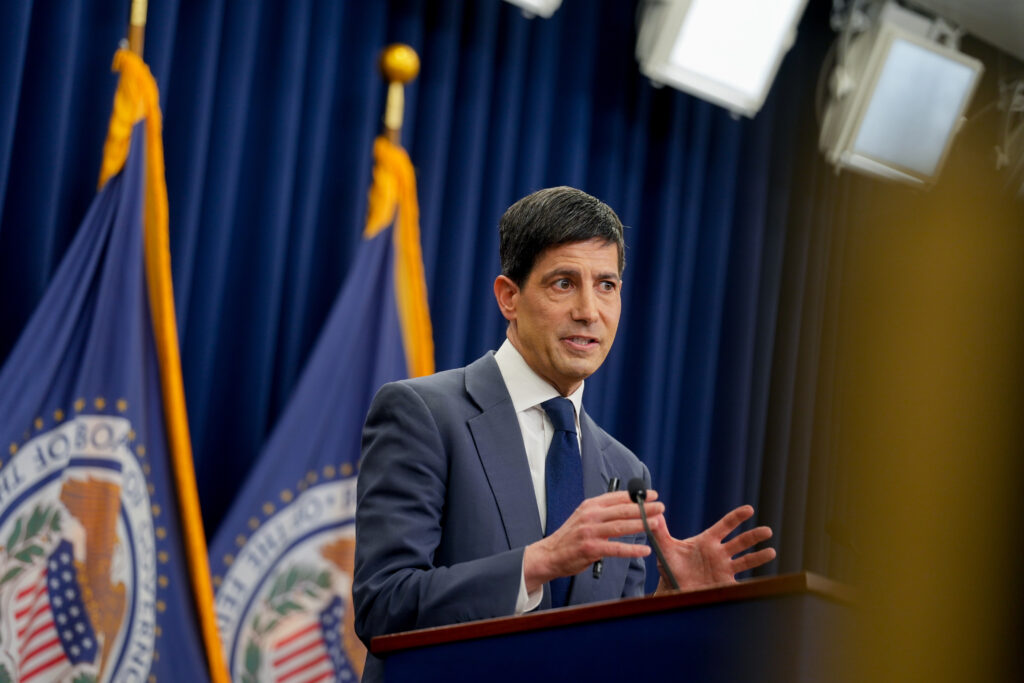
In a world marked by economic uncertainty, the decisions made by central banks hold significant sway over financial markets and the broader economy. The Federal Reserve, in its latest meeting, has once again opted to maintain interest rates, leaving investors and analysts alike to ponder the implications of this choice. Under the new leadership of Chair Kevin Warsh, the Fed is signaling a potential shift in its approach, as officials grapple with the complexities of inflation and growth amidst a backdrop of geopolitical tensions and changing economic indicators.
The Federal Reserve’s recent decision to keep the benchmark federal funds rate unchanged, maintaining it within a range of 3.5% to 3.75%, was met with a mixture of reactions from the markets. This marks the fourth consecutive meeting where rates have remained steady, reflecting a cautious stance as policymakers transition their focus from labor market dynamics to the pressing issue of inflation. Warsh’s first meeting as chair was characterized by a unanimous vote, signaling a potential departure from previous communication strategies that may have been more verbose.
As the Fed navigates this landscape, the divergence among officials regarding future rate hikes is noteworthy. Projections from the meeting indicate a split among policymakers: nine officials anticipate at least one increase in rates this year, while six expect two hikes. Conversely, another nine officials foresee no changes or even a potential cut. This spectrum of expectations underscores the uncertainty that continues to permeate the economic environment, particularly in light of external factors such as the ongoing conflict in the Middle East, which has contributed to rising energy prices.
In their post-meeting statement, Federal Reserve officials acknowledged that inflation remains persistently high, and they reaffirmed their commitment to achieving price stability. They characterized economic growth as “solid,” while also highlighting strong productivity growth and capital investment. However, the brevity of the statement suggests that under Warsh’s leadership, there may be a shift towards more concise communication, aimed at improving clarity for market participants.
One of the key themes emerging from Warsh’s tenure is his commitment to a “regime change” within the Fed. He has established multiple task forces to evaluate various aspects of the central bank’s operations, including its communication strategies, balance sheet management, data reliance, productivity, and inflation frameworks. However, Warsh has been clear in his stance against revisiting the Fed’s 2% inflation target, emphasizing the need to reaffirm the Fed’s dedication to this goal before considering any adjustments.
The evolving economic landscape has prompted the Fed to revise its forecasts significantly. For instance, the median inflation forecast for this year has surged to 3.6%, an increase from the previous estimate of 2.7%. Core inflation projections for 2026, which exclude volatile food and energy prices, have also risen, now standing at 3.3%. On the other hand, officials have downgraded their growth outlook for 2026, projecting a median growth rate of 2.2%, down from 2.4%. The unemployment forecast, however, has seen a slight improvement, with expectations now at 4.3%, down from 4.4%.
For traders and investors, these developments present both challenges and opportunities. The Fed’s cautious approach to interest rates suggests that volatility may continue to characterize financial markets. The divergence in officials’ projections could lead to fluctuating sentiment among investors, as they weigh the potential impact of inflation on consumer spending and economic growth.
As the situation unfolds, market participants should remain vigilant, paying close attention to economic indicators that may influence the Fed’s future decisions. Additionally, the Fed’s evolving communication approach under Warsh may provide new insights into the central bank’s thinking, allowing traders and investors to make more informed decisions.
In conclusion, the Federal Reserve’s recent meeting reflects a pivotal moment in its management of monetary policy amidst a complex economic backdrop. With inflation concerns at the forefront and a new chair at the helm, the path forward remains uncertain. As traders and investors navigate this landscape, understanding the implications of the Fed’s decisions and the broader economic indicators will be crucial in making strategic financial choices. In an ever-evolving economic environment, adaptability and informed decision-making will be key to navigating the challenges that lie ahead.