
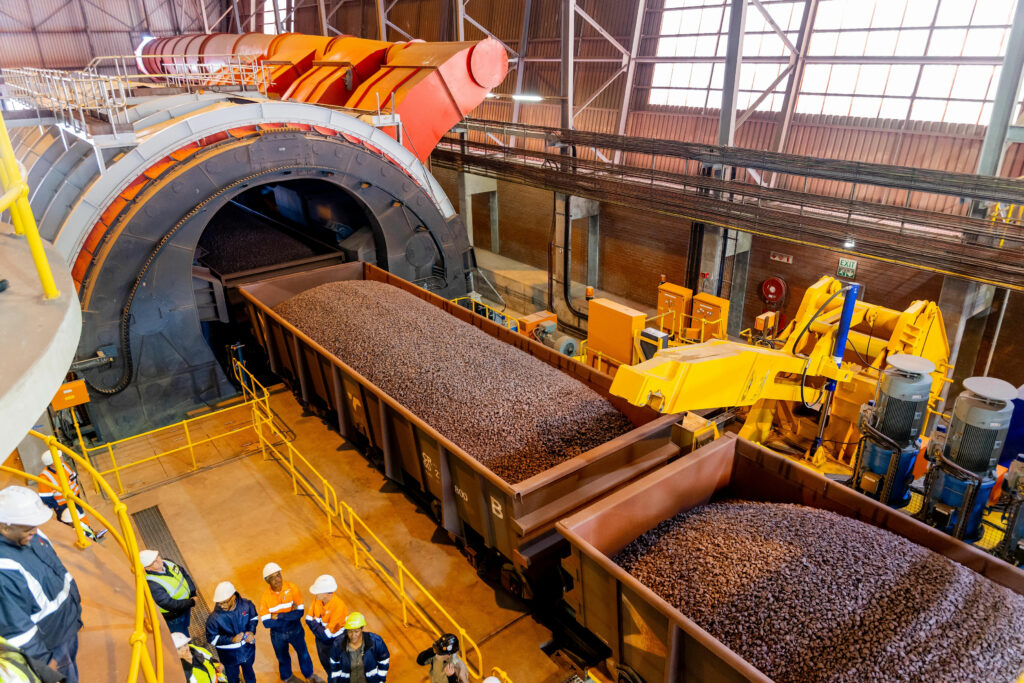
The African continent is rich in mineral resources, yet it faces significant challenges in transporting these valuable commodities from mines to markets. With a wealth of untapped potential, the question arises: why is Africa struggling to move its minerals efficiently? The answer lies not merely in financial constraints, but in a lack of comprehensive planning and coordination within its infrastructure systems.
In a recent panel discussion at the Africa Energy Forum held in Cape Town, industry experts emphasized the importance of a cohesive approach to infrastructure development. Deerosh Maharaj, Standard Bank’s executive head of energy, infrastructure, and mining, articulated a crucial point: the issue at hand is more complex than securing capital; it requires a nuanced understanding of the entire value chain that connects mining operations to export ports.
At the heart of Africa’s logistical challenges is the tendency to view different infrastructure projects in isolation. This fragmented perspective overlooks the interdependencies between mining, energy supply, water resources, and transportation networks. By treating these components as separate entities, the continent is unable to optimize its logistics systems, leading to delays, increased costs, and missed economic opportunities.
A critical takeaway from the discussion is the staggering logistics costs that plague the continent. According to Mohammed Mahomedy, head of rail infrastructure at DP World, the expenses associated with logistics in Africa can be up to three times higher than the global average. This is particularly concerning considering that most bulk minerals are still being transported via road rather than rail, which is often a more efficient method for moving large quantities of goods.
The panelists highlighted specific logistical corridors that exemplify the problem. The Lobito Corridor, which connects the mining regions of Zambia and the Democratic Republic of the Congo (DRC) to the Angolan port of Lobito, serves as a case in point. Trucks traversing this corridor can take up to ten days to reach their destination, a delay exacerbated by inefficient border crossings. Trucks can languish for up to a week at border posts, followed by an additional week at ports, particularly when loading processes are not mechanized.
To address these inefficiencies, experts called for a multi-modal approach to infrastructure planning. By integrating various transportation methods—such as rail, road, and maritime logistics—stakeholders can create a more streamlined and responsive system that facilitates quicker movement of minerals. Mahomedy pointed to the Port of Dakar in Senegal as an example of improved port operations due to a long-term concession agreement with DP World, showcasing how effective management can lead to enhanced efficiency.
The discussion also touched on the potential for brownfield developments across Africa, which can provide opportunities for upgrading existing infrastructure rather than starting from scratch with new greenfield projects. However, the challenges associated with these initiatives are not to be underestimated. The need for significant investment and commitment from both public and private sectors remains paramount.
For traders and investors, the insights shared during the panel underscore the importance of understanding the full logistics landscape when considering investments in Africa’s mineral sector. The high logistics costs and inefficiencies can significantly impact profitability, making it essential for stakeholders to advocate for integrated solutions that address the entire value chain.
As the continent strives to enhance its infrastructure and logistical capabilities, there are several key points to consider. First, a comprehensive approach that links mining, energy, water, and transport systems is crucial for establishing a more efficient logistics network. Second, stakeholders should push for modernized port operations and improved border management to reduce transit times and costs. Finally, investing in the development of rail infrastructure could prove beneficial in shifting more bulk transport away from roadways, thereby enhancing overall efficiency.
In conclusion, Africa’s mineral logistics struggles are not insurmountable barriers but rather call for a strategic rethinking of infrastructure development. By embracing an integrated approach that considers the interconnectedness of various sectors, the continent can unlock its potential, reduce costs, and pave the way for a more prosperous future in the global mineral market. With proper planning and coordination, Africa can transform its logistical landscape and emerge as a leading player in the mineral trade.