
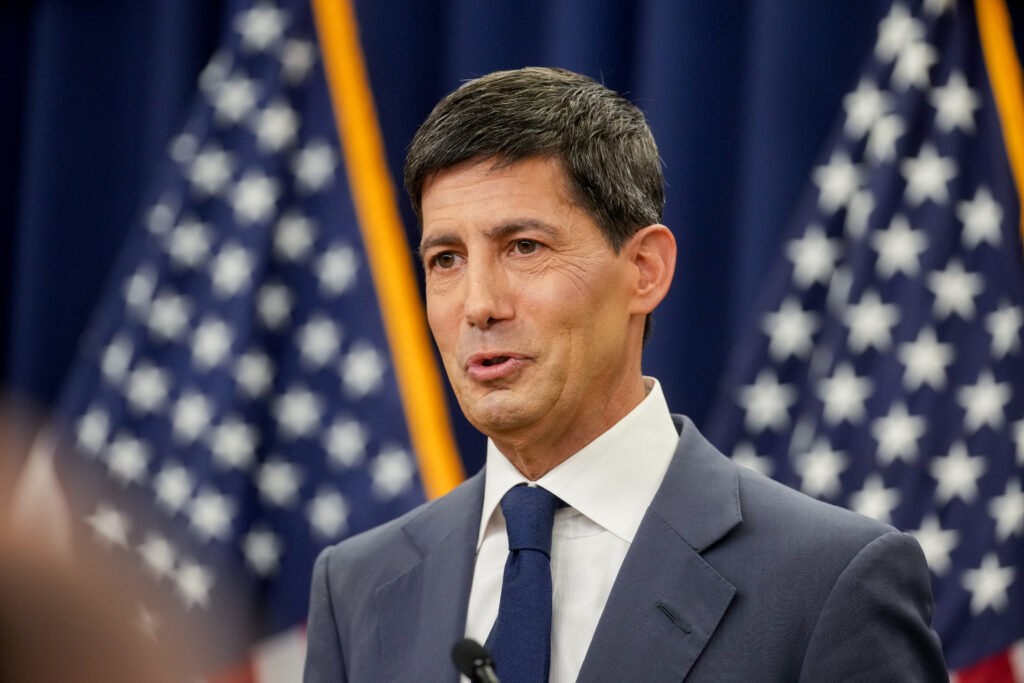
In the world of finance, few events can shift market sentiment as quickly as a new leader’s stance on monetary policy. Kevin Warsh, the recently appointed chairman of the Federal Reserve, has made his intentions crystal clear: the central bank is committed to combating inflation, and investors are taking notice. This shift has sparked a notable reaction in the bond market, leading to heightened volatility and a reevaluation of rate expectations. In this blog post, we will explore the implications of Warsh’s hawkish message, its impact on the bond market, and what investors should consider moving forward.
Kevin Warsh’s debut press conference marked a pivotal moment for the Federal Reserve and the broader financial landscape. As traders and investors tuned in, they quickly absorbed his emphatic declarations regarding inflation and interest rates. Warsh’s insistence that the Fed would not tolerate elevated inflation levels resonated throughout the markets, leading to a rapid sell-off in short-term Treasuries. This reaction was not merely a knee-jerk response; it reflected a broader reassessment of the Fed’s approach to monetary policy in the face of rising consumer prices.
Prior to Warsh’s comments, many on Wall Street believed that the Fed had reached a point of no further rate cuts, especially in light of the recent surge in oil prices driven by geopolitical tensions. The prevailing sentiment was that the central bank would maintain a cautious stance, but Warsh’s firm commitment to tackling inflation turned that narrative on its head. As he articulated the Fed’s focus on price stability, traders began to anticipate a shift back to a more aggressive monetary policy, with expectations for interest rate hikes becoming increasingly likely in the near term.
The key takeaway from Warsh’s statements is the clear message that the Fed is prioritizing inflation control. This hawkish stance is significant for several reasons. First, it signals to investors that the era of ultra-low interest rates may be coming to an end, prompting them to reconsider their investment strategies. As yields on short-term Treasuries spiked—marking the largest increase since April 2025—the bond market began to reflect a newfound confidence in the Fed’s ability to manage inflation effectively.
For traders and investors, this shift in sentiment has important implications. Those who had previously positioned themselves for further rate cuts now find themselves needing to reassess their portfolios. The expectations of a quarter-point rate hike by October have emerged, creating a sense of urgency for market participants to realign their investments. The potential for increased interest rates may influence various asset classes, prompting some investors to seek refuge in equities or alternative investments that can weather the storm of rising borrowing costs.
Moreover, the market’s reaction to Warsh’s statements underscores the significance of the Federal Reserve’s credibility. As Ian Lyngen, head of US rates strategy at BMO Capital Markets, noted, the day marked a renewed confidence in the Fed’s commitment to controlling inflation. This confidence is crucial for maintaining stability in financial markets, as it helps to anchor expectations and reduce uncertainty. The emphasis on central bank independence also reinforces the notion that monetary policy decisions will be driven by economic fundamentals rather than political pressures.
Despite the initial volatility in the bond market following Warsh’s comments, some movements have shown signs of stabilization. For instance, 30-year Treasury yields fell to their lowest levels since late April, indicating that investors still believe in the Fed’s long-term ability to contain inflation. However, the dynamics of the market are continuously evolving, and traders must remain vigilant as economic indicators and geopolitical developments unfold.
In conclusion, Kevin Warsh’s assertive stance on inflation control has triggered a significant shift in the bond market and broader financial environment. As traders reevaluate their positions in light of anticipated rate hikes, it is essential for investors to stay informed and adaptable. The Fed’s commitment to fighting inflation may herald a new era of monetary policy, one that demands careful consideration from all market participants. As we move forward, keeping a close eye on economic data and Fed communications will be crucial for navigating the complexities of the evolving financial landscape.