
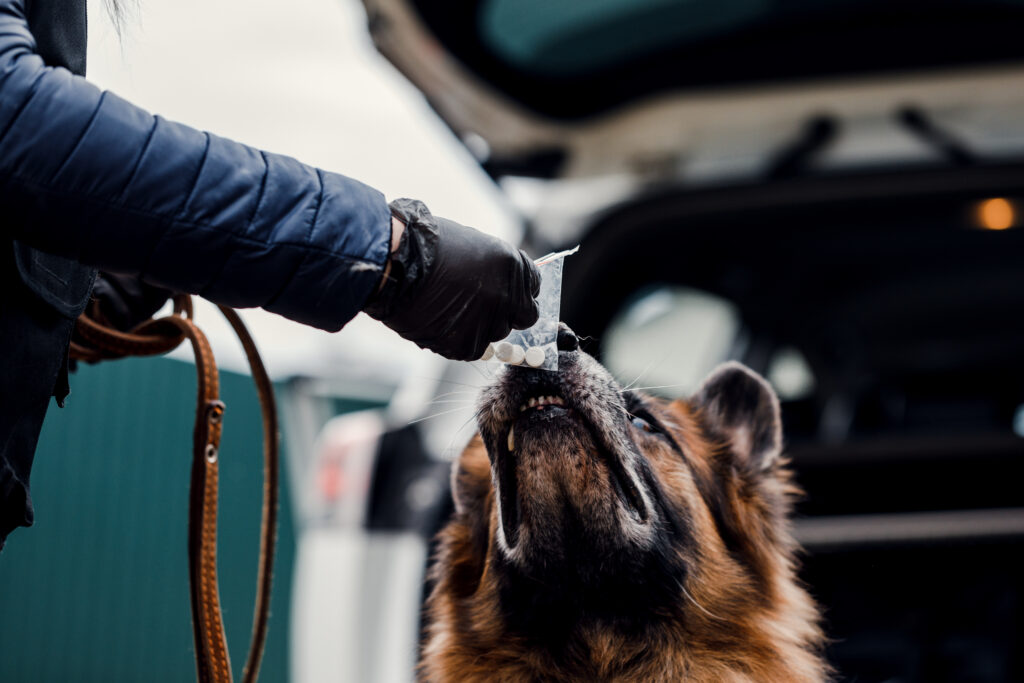
In an era where border security and customs enforcement are paramount for national revenue, South Africa finds itself grappling with an unexpected hurdle: a shortage of trained dogs essential for sniffing out drugs and other contraband. This deficiency is not just a logistical issue; it is a significant financial concern that is impacting the nation’s tax revenue by millions of rand. The Detector Dog Unit, operated by the South African Revenue Service (SARS), is in urgent need of additional canine assets, and the financial implications are staggering.
The Detector Dog Unit plays a critical role in customs enforcement, helping to identify goods that should be subject to duties and taxes. According to Finance Minister Enoch Godongwana, each trained dog can potentially contribute up to R29.7 million (approximately $1.8 million) annually to the state’s financial resources. With the current shortfall of trained dogs—nine handlers are without their canine partners and an additional 14 dogs are required—this deficit has resulted in an estimated loss of R415 million in customs revenue each year. This alarming figure highlights not only the operational challenges faced by the unit but also the broader impact on the national economy.
The shortage of dogs is attributed to several factors, primarily the rigorous behavioral standards that must be met for training in customs detection. Godongwana noted that over 60% of the dogs evaluated do not meet these requirements, making the acquisition of suitable canines a complex task. Additionally, a tender process to procure these dogs is slated to begin next month, with a new panel of suppliers expected to be appointed by April of the following year. This timeline indicates a proactive approach by the government to address the issue, yet the urgency of the situation cannot be overstated.
Key points to consider include:
1. **Economic Impact**: The loss of R415 million annually due to the shortage of detector dogs illustrates the tangible financial consequences of operational inefficiencies in customs enforcement. This figure could fund many initiatives aimed at improving public services or infrastructure.
2. **Operational Challenges**: The behavioral standards that dogs must meet for customs work are stringent. The fact that a significant percentage of assessed dogs do not qualify underscores the difficulties in sourcing suitable canines for this specialized work.
3. **Government Response**: The upcoming tender process signals that the South African government is taking steps to rectify the situation. However, the timeline for acquiring and training new dogs raises concerns about how quickly these issues can be resolved.
4. **Broader Implications**: The shortage of trained detector dogs can lead to increased smuggling and evasion of customs duties. This not only affects revenue but can also compromise national security.
For traders and investors, understanding these dynamics is crucial. The efficiency of customs operations directly influences trade costs and the overall business environment. Delays and inefficiencies at customs can lead to increased operational costs for businesses, ultimately affecting profitability and market competitiveness. Additionally, the loss of revenue can constrain government spending in other areas, potentially impacting economic growth and investment opportunities.
In conclusion, the shortage of detector dogs in South Africa’s customs enforcement is a multifaceted issue with significant financial implications. As the government moves forward with plans to address the shortfall, it is essential for stakeholders—including traders, investors, and the general public—to remain informed about the developments. The successful resolution of this issue will not only bolster the country’s revenue but also enhance the effectiveness of customs operations, thereby fostering a more secure and efficient trade environment. As we await the outcomes of the tender process and subsequent training efforts, the financial community will be watching closely, recognizing that these developments could have far-reaching consequences for the South African economy.