
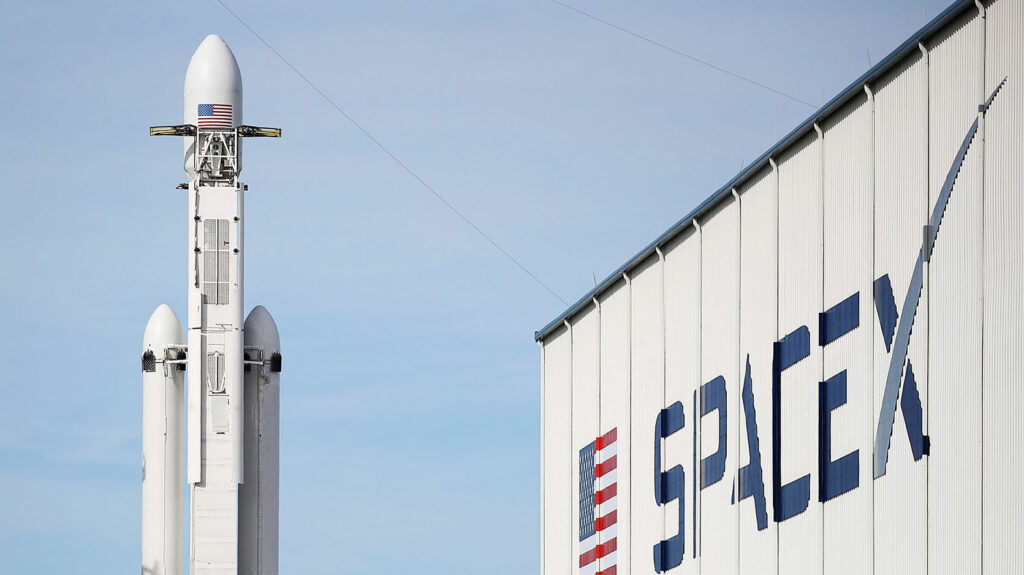
The journey of SpaceX as a publicly traded company has been nothing short of exhilarating. After making headlines with its record-setting initial public offering (IPO), the company has experienced significant fluctuations in its stock price, leaving investors and analysts pondering its future trajectory. As SpaceX concludes its first week on the market, let’s delve into the factors influencing its stock performance and what they mean for potential investors.
SpaceX, the aerospace company founded by Elon Musk, has gained prominence not only for its groundbreaking achievements in space travel but also for its aspirations in artificial intelligence. Following a highly anticipated IPO that priced shares at $135, the excitement surrounding the company’s public debut drove the stock to soar nearly 49% in its opening days. However, this upward momentum has recently hit a snag, with shares declining by approximately 5% on Wednesday and an additional 5.8% at the start of Thursday’s trading session. Despite these setbacks, SpaceX’s stock is still projected to close the week about 35% higher than its IPO price.
The core of the volatility lies in the ambitious revenue growth expectations set by analysts and investors alike. Michael Monaghan, a partner and portfolio manager at Founder Funds, expressed a sense of cautious optimism regarding SpaceX’s long-term revenue potential, projecting revenues could reach an astounding $200 billion by 2030. Yet, he also acknowledged the inherent challenges in realizing such lofty goals, emphasizing that significant technical and operational hurdles must be overcome in order to achieve this growth. “You literally need a rocket to go get those revenues,” he remarked, underscoring the complexities of the aerospace industry.
Adding to this narrative, Andrew Beale from Arete Research initiated coverage of the stock with a “buy” rating and a price target of $401—more than double its current trading price. Beale echoed Monaghan’s sentiment, forecasting that SpaceX could surpass $200 billion in revenue by the end of the decade. However, he cautioned that the path to this revenue goal is fraught with challenges, including launch anomalies, technical issues, and environmental concerns, which could lead to delays and altered timelines.
Despite the recent dips in stock price, there is potential for stabilization and growth in the near term. SpaceX is poised to be included in major stock indices such as the Nasdaq 100, thanks to recent changes in listing rules that facilitate quicker entry for large-cap IPOs. This inclusion is expected to attract significant passive investment, with projections suggesting that approximately 30% of SpaceX’s free float could be held by index funds shortly after its IPO. This influx of passive investment could create upward pressure on the stock, potentially offsetting the recent volatility.
For traders and investors, the current landscape presents both challenges and opportunities. The volatility observed in SpaceX’s stock might deter some investors who prefer stable investments, while others may view it as a chance to capitalize on price fluctuations. Those looking to invest in SpaceX should conduct thorough due diligence and consider their risk tolerance, especially given the unpredictable nature of the aerospace industry.
Key points to consider include the following:
– **Revenue Projections**: Analysts believe that SpaceX has the potential to generate substantial revenue in the coming years, but these projections come with caveats.
– **Market Volatility**: The stock’s performance has seen significant swings, and investors should remain aware of the factors driving these changes.
– **Index Inclusion**: The upcoming inclusion in major indices could provide a boost to the stock price by attracting passive investment.
– **Long-Term Growth vs. Short-Term Fluctuations**: Investors should weigh their investment strategy based on both long-term growth potential and short-term market behaviors.
In conclusion, SpaceX’s foray into public trading has been marked by excitement and volatility, reflective of both the company’s groundbreaking endeavors and the inherent uncertainties of the aerospace sector. While ambitious revenue forecasts suggest a bright future, investors must navigate the complexities of the market and be prepared for fluctuations. As SpaceX continues to develop its technology and expand its operations, the coming weeks and months will undoubtedly be pivotal in shaping its public perception and stock performance. Investors should approach this opportunity with both optimism and caution, keeping a close eye on market dynamics and the company’s evolving narrative.