
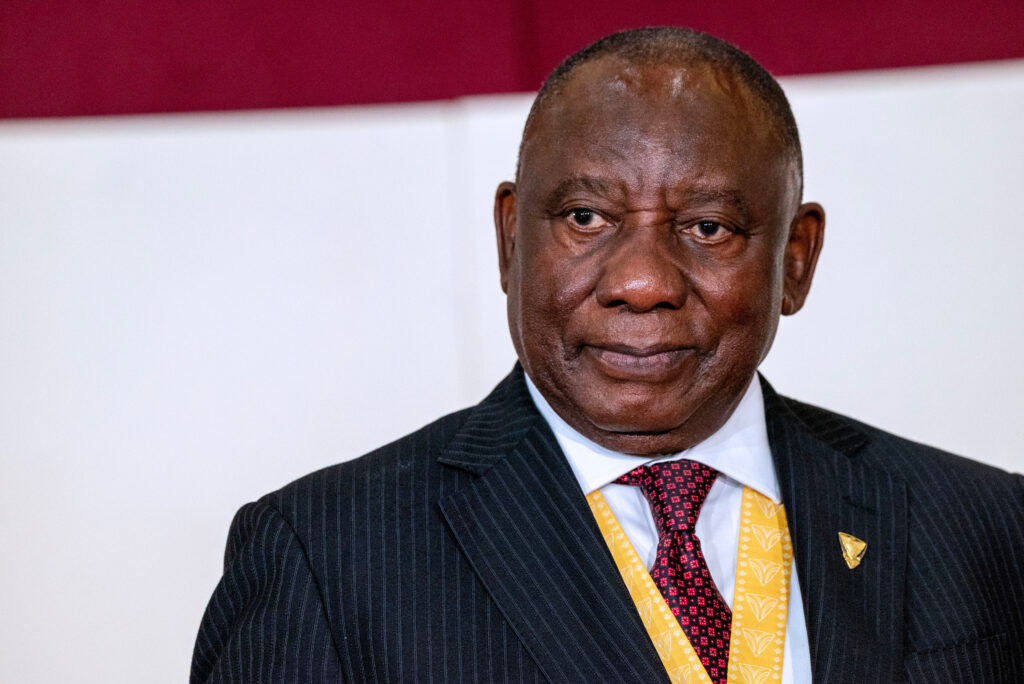
In recent weeks, the political landscape in South Africa has become increasingly tumultuous as President Cyril Ramaphosa faces potential impeachment proceedings. As the parliamentary speaker, Thoko Didiza, publicly supports efforts to halt these proceedings, the implications for the nation’s governance and economy are profound. This unfolding situation is not merely a political spectacle; it raises significant questions regarding governance, accountability, and the impact on investor confidence in South Africa.
At the heart of the matter is a scandal involving a robbery at Ramaphosa’s game farm in 2020, where a significant sum of foreign currency was reported stolen. The circumstances surrounding this incident have ignited allegations against the president, suggesting that he may have attempted to conceal the crime. Such claims have led to an inquiry by a panel of lawmakers, who are tasked with determining whether Ramaphosa should be impeached for his perceived mishandling of the situation and possible violations of anti-corruption and foreign-exchange regulations.
Parliamentary speaker Thoko Didiza’s support for Ramaphosa’s bid to suspend the impeachment process is noteworthy. According to her, the roles of the Assembly and the Impeachment Committee should remain distinct, implying that the inquiry may not align with the overarching responsibilities of the legislative body. This assertion reflects a broader concern about the separation of powers within the South African government, a principle that is essential for maintaining a balanced and effective political system.
The implications of this political drama extend beyond the corridors of power and into the economic sphere. Investors and market analysts are closely monitoring the situation, as political stability is a key component of economic confidence. A prolonged impeachment inquiry, especially one that is perceived as politically motivated, can lead to increased uncertainty in the market. This uncertainty often results in a decline in foreign investment, currency depreciation, and a slowdown in economic growth—factors that are detrimental to ordinary citizens and businesses alike.
Key points to consider in this ongoing saga include the timeline of events and the potential legal ramifications. The inquiry into Ramaphosa’s actions is scheduled to meet soon to finalize its terms of reference and begin appointing witnesses. Meanwhile, Ramaphosa’s legal team is preparing for a court hearing in July that may provide an avenue to halt the impeachment proceedings. Should the court rule in favor of the president, it could stave off the political crisis for the time being, but the underlying issues of governance and accountability would remain unresolved.
For traders and investors, the current political climate serves as a reminder of the importance of monitoring political developments and their potential impact on financial markets. The situation underscores the interconnectedness of politics and economics, where political instability can ripple through financial systems, affecting currency values and stock market performance. Investors seeking to navigate these turbulent waters should consider diversifying their portfolios, staying informed about local and global political trends, and evaluating the potential risks associated with investing in politically volatile regions.
In conclusion, the impeachment proceedings against President Cyril Ramaphosa highlight the delicate balance between political accountability and governance in South Africa. As the situation evolves, the implications for the economy and investor confidence remain crucial. Both traders and policymakers must remain vigilant and proactive in their approaches, understanding that political events can have far-reaching consequences in the financial world. Whether Ramaphosa will successfully navigate the challenges ahead or whether the impeachment inquiry will proceed remains to be seen, but one thing is clear: the outcome will significantly influence South Africa’s economic trajectory in the years to come.