
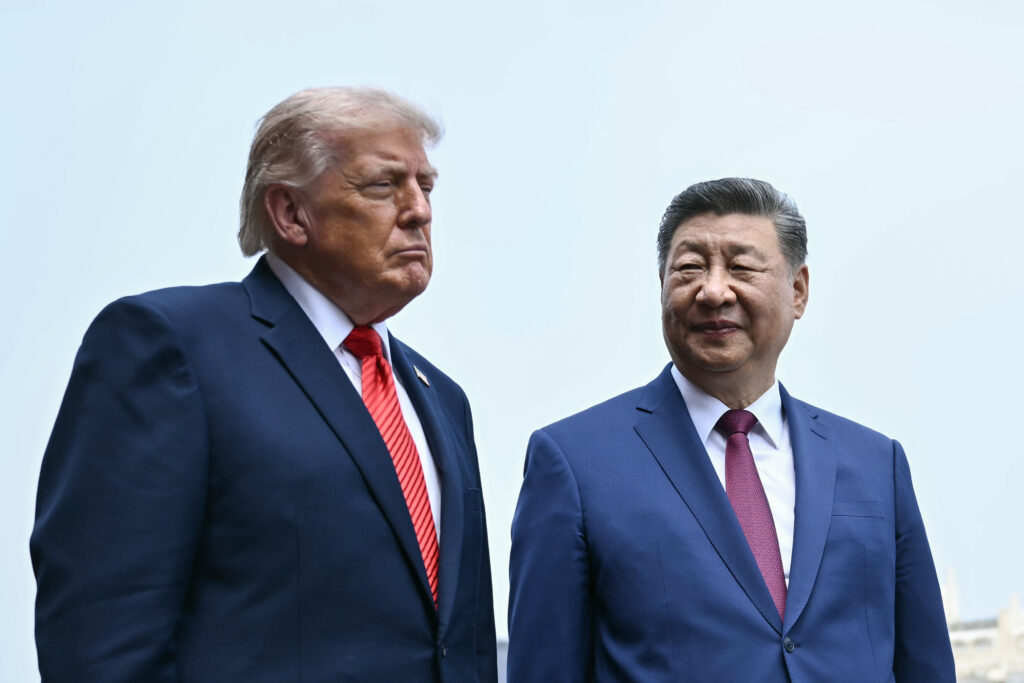
In the ever-evolving landscape of global politics, the relationship between major powers can significantly impact financial markets. Recently, a term that has gained traction in discussions concerning U.S.-China relations is the “Thucydides Trap.” First popularized by historians and political analysts, this concept has resurfaced in the context of Xi Jinping’s remarks at the recent U.S.-China summit. Understanding the Thucydides Trap and its implications is crucial for investors and traders looking to navigate the complexities of international relations and market dynamics.
The Thucydides Trap refers to the historical pattern where an emerging power threatens to displace an existing one, often leading to conflict. This concept is rooted in ancient Greek history, specifically the rivalry between Athens and Sparta, where Athens was on the rise while Sparta was the dominant power. This historical analogy serves as a warning that such shifts in power dynamics can escalate tensions, potentially resulting in military confrontations.
Xi Jinping’s mention of this trap during the summit was strategic. By framing the relationship between the U.S. and China in this context, he aimed to signal that both nations should recognize their status as equal powers. His message was clear: the two countries must work together to avoid falling into the pitfalls of history. This framing suggests an awareness of the precarious nature of their relationship, particularly in the face of rising tensions over issues like Taiwan.
Taiwan is a significant focal point in U.S.-China relations, and it’s no surprise that discussions surrounding it have become increasingly fraught. Xi’s strong remarks during the summit highlighted that mismanagement of the Taiwan situation could jeopardize bilateral relations. The island is not only a critical geopolitical flashpoint but also a hub for global technology, particularly in semiconductor production. With Taiwan Semiconductor Manufacturing Company (TSMC) producing about 90% of the world’s semiconductors, any disruption there could have far-reaching consequences across various industries, including automotive, telecommunications, and defense sectors.
From an investment perspective, the stakes are high. A potential conflict over Taiwan could lead to severe supply chain disruptions and market volatility. Traders and investors should be mindful of the ramifications that could arise if tensions escalate. The U.S. has already demonstrated its awareness of these risks, as evidenced by the recent pause in an arms deal with Taiwan. This move appears to be a calculated effort to avoid inflaming tensions while also using the situation as leverage in negotiations.
Key points to consider for investors include:
1. **Geopolitical Awareness**: Investors should stay informed about geopolitical developments, particularly those involving major powers like the U.S. and China. Understanding the historical context of their relationship can provide valuable insights into potential market movements.
2. **Sector Impact**: Certain sectors, such as technology and manufacturing, may be more sensitive to changes in the geopolitical landscape. For instance, any disruptions to semiconductor production in Taiwan could affect tech stocks globally.
3. **Diversification**: Given the uncertainty surrounding U.S.-China relations, diversification across different sectors and geographic regions can help mitigate risks associated with potential conflicts.
4. **Long-term Perspective**: While short-term market reactions to geopolitical events can be volatile, maintaining a long-term investment perspective can provide stability. Markets often recover from crises, and historical trends can inform future strategies.
For traders and investors, the Thucydides Trap serves as a reminder of the delicate balance of power in international relations. By recognizing the potential for conflict and its implications for global markets, they can better position themselves to navigate the complexities of investing in an interconnected world.
In conclusion, understanding the Thucydides Trap is not merely an academic exercise; it has real-world implications for financial markets and investment strategies. As the U.S. and China continue to grapple with their roles on the global stage, investors must remain vigilant, informed, and adaptable to the shifting dynamics of power. By doing so, they can better manage risks and seize opportunities that arise in this complex geopolitical landscape.