
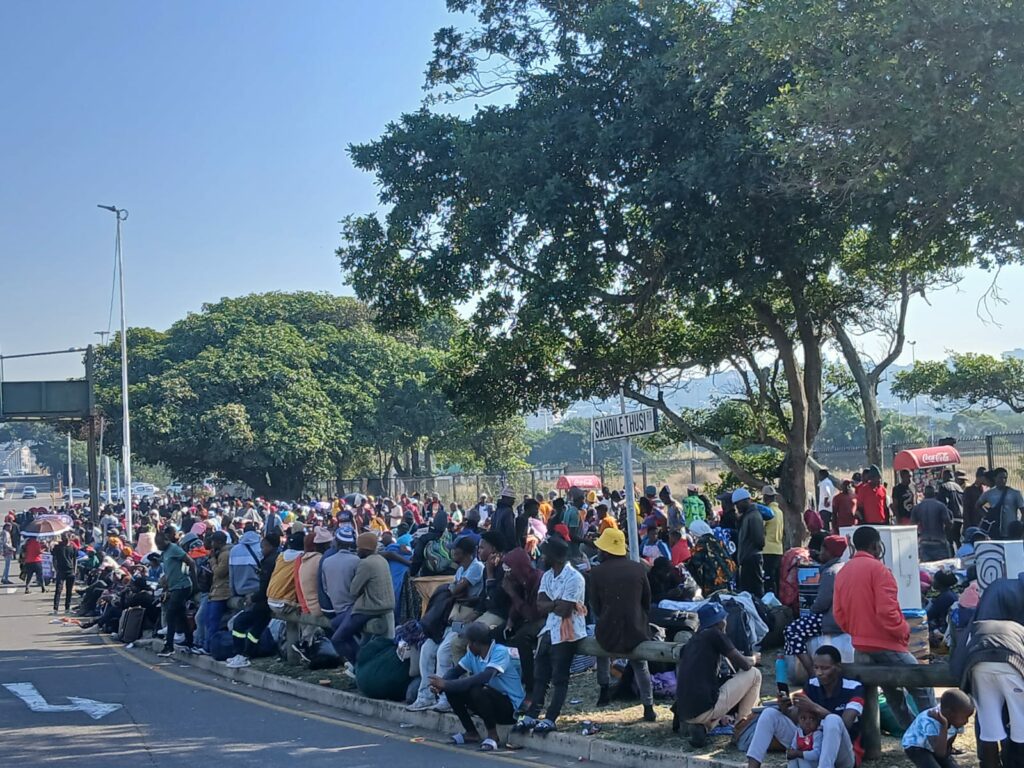
The ongoing humanitarian crisis in South Africa, particularly in Durban, has highlighted the complex interplay between immigration, economic instability, and social unrest. As the government grapples with the urgent need to process thousands of displaced immigrants, the situation on the ground reveals both the human toll of economic despair and the pressing need for systematic solutions.
At the heart of this crisis is the plight of many immigrants, particularly from Malawi, who have found themselves stranded in precarious living conditions. The temporary facility set up at the Old Drive-in site has reached its full capacity, leading to a humanitarian emergency where new arrivals are left to sleep outside without basic provisions. With limited access to food, water, and sanitation, the living conditions are worsening by the day, as illustrated by the experiences of individuals like Rose Jesinao, who traveled from the Eastern Cape in search of safety and support.
The influx of migrants into South Africa is primarily driven by economic hardships and violence in their home countries. Many, like Jesinao and Musa Saide, had previously held jobs in South Africa, but the loss of employment and the threat of violence have forced them to seek repatriation. Saide’s situation is particularly poignant; he has to leave his children behind due to a lack of travel documents, highlighting the painful sacrifices many are making amid this crisis.
The current situation also sheds light on the broader economic implications of mass migration. The arrival of immigrants, especially those lacking documentation, contributes to a landscape of uncertainty in the South African job market. Employers may be hesitant to hire undocumented workers, which can lead to economic disenfranchisement for these individuals, who are often forced to accept lower wages and exploitative working conditions. This, in turn, creates a cycle of poverty that can lead to increased tensions within communities.
Key points emerging from this crisis include the need for more robust immigration policies that can address the influx of displaced persons while also considering the economic realities of host countries. The South African government is under immense pressure to manage this situation effectively, balancing humanitarian needs with the social and economic concerns of its citizens. The humanitarian aid organization, Gift of the Givers, has stepped in to provide temporary relief, organizing bus transport back to Malawi for those wishing to return home and distributing essential supplies. However, the scale of the crisis suggests that these efforts are merely a stopgap solution.
For traders and investors, this situation raises critical questions about the stability of the South African economy. As social unrest escalates and community tensions rise, potential investors may view the region with increased caution. Economic indicators such as consumer confidence and market stability are likely to be impacted, affecting both local businesses and international trade relations. Investors looking to engage with South African markets need to consider the broader implications of social stability and the potential for unrest to disrupt economic activities.
In conclusion, the humanitarian crisis unfolding in South Africa due to mass migration presents a multifaceted challenge that requires urgent attention. The plight of displaced immigrants highlights the interconnectedness of economic conditions, social stability, and humanitarian needs. As the government works to navigate this complex landscape, it is essential for stakeholders, including businesses and investors, to remain vigilant and responsive to the evolving situation. Comprehensive and compassionate policies will be crucial not only for addressing immediate humanitarian needs but also for fostering long-term economic stability and community resilience in the face of ongoing challenges.