
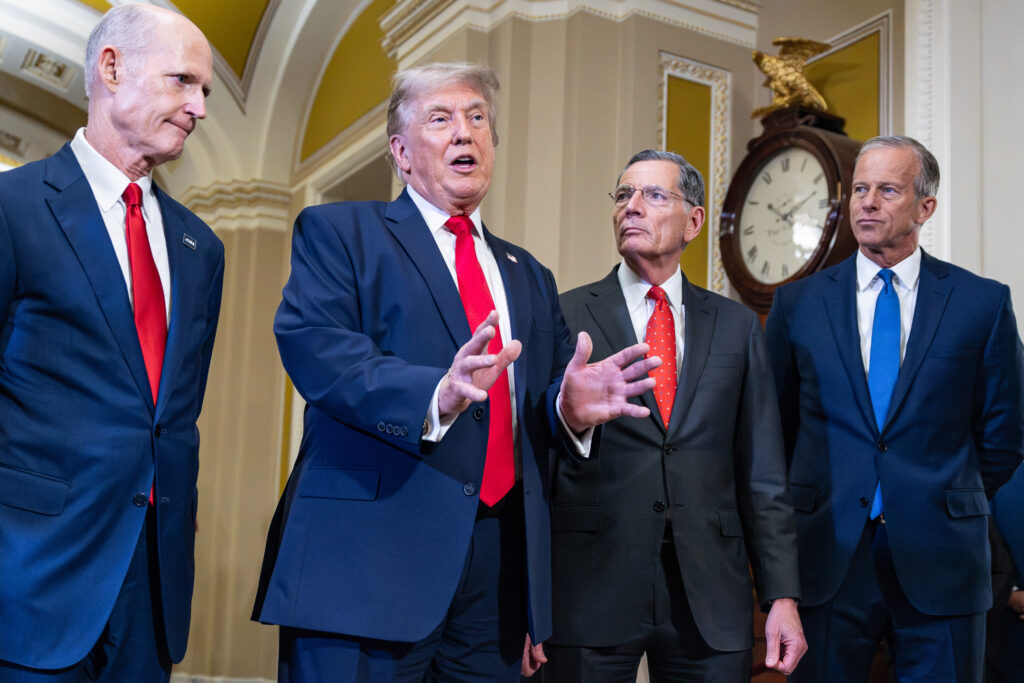
In the world of politics, few spectacles capture the public’s attention quite like the tumultuous relationship between a sitting president and members of their own party. This past Wednesday, the tensions between former President Donald Trump and Senate Republicans reached a dramatic peak, showcasing the complexities and challenges of governance in an election year. As the nation watches closely, the implications of these clashes extend far beyond the immediate political theater, affecting everything from foreign policy to the upcoming midterm elections.
The backdrop of this escalating conflict lies in a bipartisan housing bill that Trump abruptly declined to sign, highlighting a significant rift within the Republican party. This moment of contention came just as Senate Republicans, led by a growing concern over Trump’s foreign policy approach, took a rare step to limit his authority regarding military action against Iran. On the previous day, while Trump was rallying supporters in Pennsylvania, the Senate passed a largely symbolic measure aimed at curbing the president’s ability to engage in military operations without congressional approval.
The war powers vote stirred a storm of emotions, with Senator John Kennedy of Louisiana describing Trump as “mad as a murder hornet” in the aftermath. This phrase humorously captures the intensity of Trump’s reaction, as he felt the Senate’s actions undermined his ongoing negotiations with Iran. The senator’s quip about the lunch meeting, where he jokingly noted the use of metal utensils instead of plastic, added a light-hearted twist to a serious political standoff. However, beneath the humor lay a significant power struggle that could impact the Republican agenda in the lead-up to the midterm elections.
During the private luncheon with lawmakers, Trump engaged in a heated exchange with Senator Bill Cassidy, who had previously voted for the resolution to limit the president’s war powers. Cassidy, acknowledging the president’s frustrations, pushed back on Trump’s stance regarding transparency about his objectives in the Middle East. This confrontation was emblematic of the broader tensions within the party, as some members seek to assert their independence from Trump’s often unpredictable leadership style.
As the conversation progressed, Cassidy recounted that he and Trump raised their voices, reflecting the high stakes of the discussion. The senator’s insistence on the need for clearer communication with both the Senate and the American public underscores a growing desire among some Republicans to ensure that foreign policy decisions are made with greater accountability and oversight. Cassidy’s willingness to confront Trump, despite the potential political ramifications, highlights a significant shift within the party, as the traditional boundaries of loyalty are increasingly tested.
Trump’s response to the Senate’s actions and Cassidy’s criticisms was characteristically bold. He defended his military strategy, asserting that he is the first president to take decisive steps to prevent Iran from developing nuclear capabilities. This assertion, while firm, raises critical questions about the balance of power between the executive branch and Congress, particularly in matters of war and peace. As the nation remains divided on various fronts, the implications of these discussions extend to the heart of American democracy and governance.
Key takeaways from this unfolding drama include the recognition that internal divisions within the Republican party could complicate their midterm election strategy. With approval ratings for Trump hovering near historic lows, GOP lawmakers face a difficult balancing act. They must navigate the president’s influence while also addressing the concerns of their constituents who may be wary of unchecked executive power. The bipartisan vote on war powers serves as a reminder that even within party lines, dissent can emerge, particularly on crucial issues like foreign policy.
For traders and investors, the political climate surrounding these events may impact market sentiment. Uncertainty in Washington often leads to volatility in financial markets, especially in sectors closely tied to defense and international relations. As discussions around military engagements and foreign policy evolve, investors should remain vigilant about market trends and the potential for legislative changes that could affect economic stability.
In conclusion, the clash between President Trump and Senate Republicans encapsulates the complexities of contemporary governance within a polarized political landscape. As both sides grapple with their respective agendas and priorities, the implications of their actions will reverberate through the halls of Congress and beyond. For the Republican party, the challenge lies in unifying its members while effectively communicating a coherent message to the American people. As the midterm elections approach, the stakes are high, and the outcomes of these political skirmishes will shape the future of both the party and the nation.