
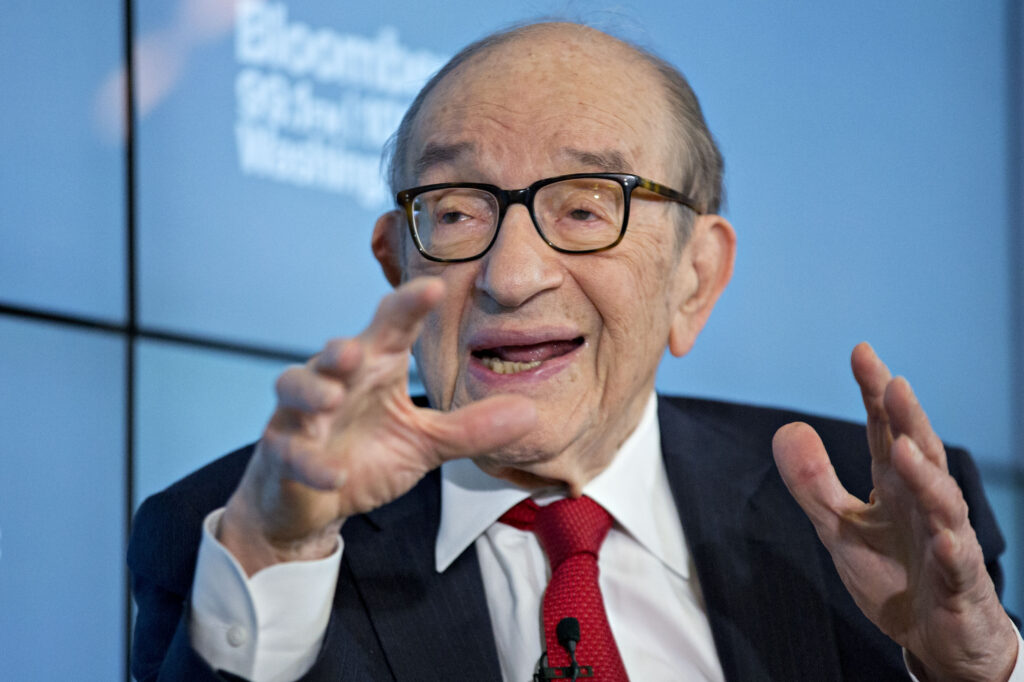
The financial world is mourning the passing of Alan Greenspan, the former chair of the Federal Reserve, who died at the remarkable age of 100. His influence on U.S. monetary policy and the global economy during his 18-year presidency at the Fed has left an indelible mark. Greenspan’s legacy is a complex tapestry woven from innovation, economic triumphs, and, ultimately, significant challenges. As tributes pour in from former colleagues and financial market participants, it is essential to examine Greenspan’s contributions to economic policy and what lessons investors can draw from his tenure.
Greenspan took the helm of the Federal Reserve in 1987, stepping into a role that would define not only his career but also the evolution of the U.S. economy during a period of unprecedented change. His leadership coincided with a seismic shift from the high inflation of the 1970s to a more stable economic environment characterized by technological advancements. This transition was not without its hurdles, but Greenspan managed to navigate these challenges while keeping inflation under control.
One of Greenspan’s most notable achievements was his steadfast commitment to combating inflation. Following in the footsteps of his predecessor, Paul Volcker, who famously quelled double-digit inflation, Greenspan focused on maintaining price stability. Under his guidance, inflation was systematically reduced to an average of around 2% by the early 2000s. This achievement not only helped stabilize the economy but also fostered an environment conducive to sustained economic growth.
A significant aspect of Greenspan’s legacy is his pioneering approach to communication. In a pivotal moment for the Federal Reserve, he implemented a policy in 1994 that introduced public statements after policy meetings. This marked a departure from the Fed’s previously opaque communication style, allowing market participants to gain insights into monetary policy decisions. This newfound transparency helped build trust between the Fed and investors, enabling a smoother market reaction to changes in interest rates.
During Greenspan’s tenure, the financial markets experienced a remarkable boom. The S&P 500 Index surged nearly fourfold, delivering impressive annual returns that many investors still reminisce about fondly. His ability to maintain investor confidence was so profound that some on Wall Street joked about the need for a dummy to be placed in his chair should he ever pass away while in office, as a means to keep the markets calm. This lighthearted banter speaks volumes about the faith that investors had in his leadership.
Greenspan’s approach to managing financial crises also became a defining characteristic of his legacy. Following the stock market crash of October 1987, he demonstrated a willingness to intervene decisively, injecting liquidity into the markets to stabilize them. This response would later be characterized as the “Greenspan put,” a term that reflects the perception that the Fed would support financial markets during downturns, thereby creating a safety net for investors. While this approach helped mitigate the immediate impact of crises, critics argue that it may have contributed to a culture of risk-taking that ultimately led to the financial turmoil of 2008-09.
As we reflect on Greenspan’s contributions, several key takeaways emerge for today’s traders and investors. First, the importance of monetary policy cannot be overstated; the Fed’s actions have far-reaching implications for asset prices and economic stability. Understanding the Fed’s communication strategies and policy shifts is crucial for market participants looking to navigate the complexities of financial markets.
Second, the balance between supporting markets and allowing them to find their footing is delicate. While intervention can provide short-term relief, it can also incentivize excessive risk-taking. Investors should be vigilant about potential market imbalances that may arise from prolonged periods of low interest rates and liquidity support.
In conclusion, Alan Greenspan’s tenure at the Federal Reserve was marked by significant achievements and challenges that continue to shape economic discourse today. His commitment to controlling inflation, pioneering communication strategies, and managing financial crises has left a legacy that is both revered and scrutinized. As traders and investors look to the future, they can draw valuable lessons from Greenspan’s career, emphasizing the need for a nuanced understanding of monetary policy’s role in shaping economic landscapes. While the financial world bids farewell to a pivotal figure, the discussions surrounding his legacy will undoubtedly continue, influencing generations to come.