
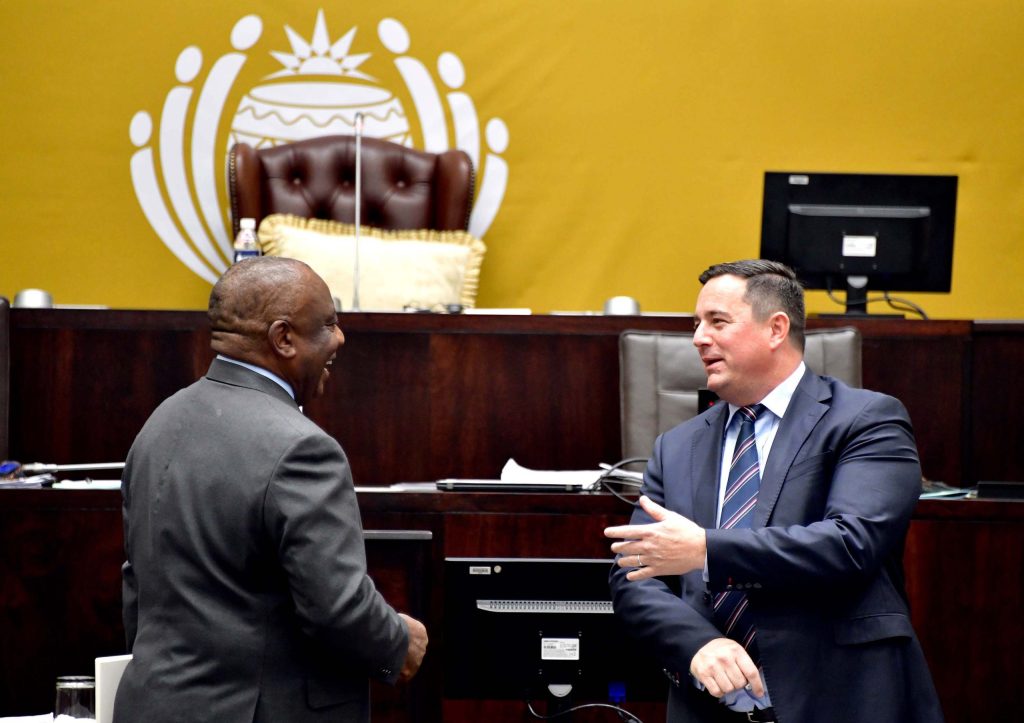
In the constantly evolving landscape of South African politics, leadership changes can significantly affect the nation’s economic environment. A recent cabinet reshuffle by President Cyril Ramaphosa, particularly the reassignment of John Steenhuisen, has raised questions about the direction of government policy and its implications for various sectors, especially trade and agriculture. This blog post will explore the ramifications of this reshuffle and the broader context in which it occurs.
In a move that has been described by many as a demotion, John Steenhuisen, the former leader of the Democratic Alliance (DA), has been appointed Deputy Minister in the Department of Trade, Industry and Competition. This shift follows a decisive change in leadership within the DA, where Geordin Hill-Lewis was elected as the new party leader. Steenhuisen’s transition from Minister of Agriculture to Deputy Minister signifies not only a personal career shift but also reflects the ongoing power dynamics within the Government of National Unity (GNU).
The announcement, made by President Ramaphosa, signaled a significant reshaping of the cabinet, affecting various ministries, including those critical to South Africa’s economic infrastructure. The changes were made after consultations with DA leadership, aligning with the constitutional provisions of section 91(3)(b). This reshuffle comes at a crucial time when sectors such as agriculture are grappling with challenges, including the recent foot and mouth disease crisis that has threatened livestock health and agricultural productivity.
The implications of these cabinet changes extend beyond individual roles; they reflect a broader strategy by President Ramaphosa to stabilize his administration and address urgent economic challenges. New appointees, including Willem Aucamp, who will now lead the Ministry of Agriculture, will need to navigate these pressing issues effectively. The transition of leadership within key ministries suggests a commitment to not only uphold but enhance governance in sectors vital to the nation’s economy.
Key points to take away from this cabinet reshuffle include:
1. **Leadership Changes**: The reassignment of Steenhuisen and the appointment of Aucamp highlight the fluidity of political roles within the GNU and the potential for shifts in policy focus.
2. **Economic Impact**: The effectiveness of the new ministers in managing their respective portfolios will be closely monitored, particularly as South Africa seeks to recover from economic downturns exacerbated by environmental and health crises.
3. **Political Dynamics**: The reshuffle signals the ongoing negotiation of power within the coalition government, and how those dynamics can influence policy-making and cabinet stability.
For traders and investors, the cabinet reshuffle presents both challenges and opportunities. Changes in leadership can lead to shifts in government policy, which may impact market confidence and economic performance. Investors should pay close attention to the actions and strategies of the newly appointed ministers, especially in sectors like agriculture and trade, that are essential for economic recovery.
The new Minister of Agriculture, Willem Aucamp, will be under significant pressure to address the foot and mouth disease crisis, which has the potential to disrupt agricultural output and food security. Aucamp’s ability to implement effective strategies will be closely watched by market participants, as the agricultural sector is a cornerstone of the South African economy.
In conclusion, the recent cabinet reshuffle by President Cyril Ramaphosa is a pivotal moment in South Africa’s political landscape, with far-reaching implications for economic stability and growth. As the new appointments take their posts, the effectiveness of their leadership will determine not only the success of government initiatives but also the confidence of investors and the public. It is crucial for stakeholders to remain informed about these developments, as the political climate can significantly influence economic policies and, ultimately, the financial markets. As the nation moves forward, the emphasis will be on how well the GNU can manage its internal dynamics and respond to the pressing challenges facing the economy today.