
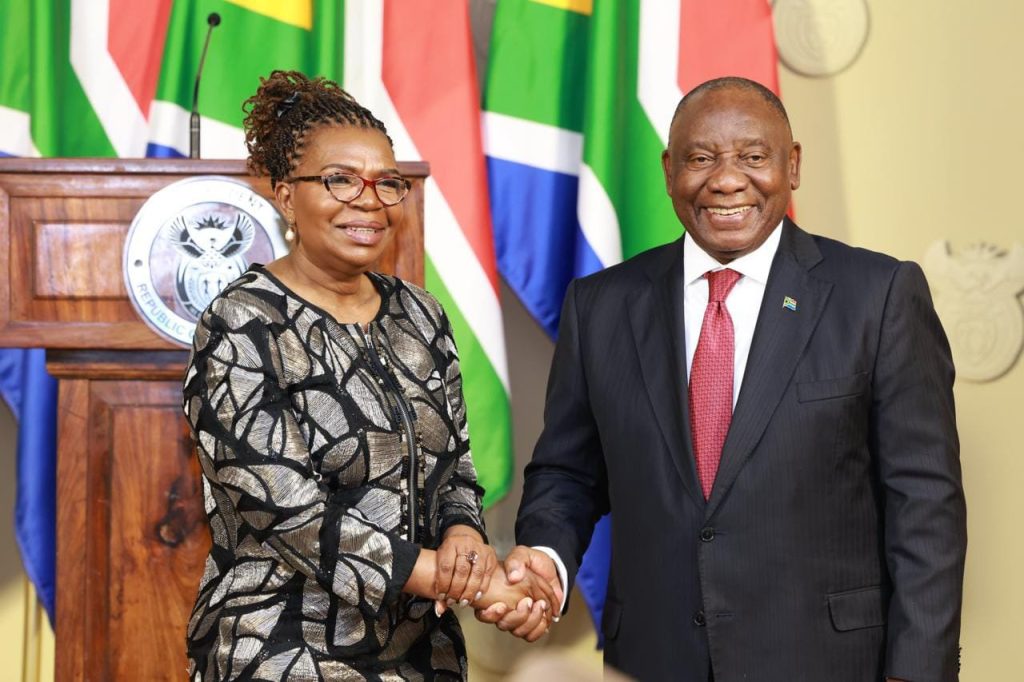
The political landscape is always evolving, with decisions made by leaders often leading to significant public discourse. Recently, the appointment of Dina Pule as Minister of Social Development by President Cyril Ramaphosa has sparked intense debate and criticism from various quarters, particularly opposition parties and civil society organizations. This development has raised important questions about the implications of political appointments and the standards of accountability expected from those in power.
Dina Pule’s appointment comes amid concerns over her past conduct during her tenure as the Minister of Communications, which was marred by allegations of unethical behavior. This history has led critics to argue that her new role represents not just a poor choice but a troubling reflection of the ruling African National Congress (ANC)’s commitment to accountability and ethical governance. As the leader of ActionSA, Athol Trollip has voiced these concerns, suggesting that the ANC is struggling to find competent leaders and is instead resorting to appointing individuals with questionable backgrounds.
The reaction to Pule’s appointment is indicative of broader issues within the ANC and the dynamics of the government of national unity (GNU). The appointment has been characterized by Trollip as a sign that the ANC is prioritizing political loyalty over the need for effective leadership. He highlights the party’s perceived inability to identify capable candidates for critical ministerial positions, which raises concerns about the future leadership of the country, especially as the ANC prepares to face upcoming challenges.
Trollip’s observations about the Department of Social Development are particularly noteworthy. The department has been headed by individuals with connections to the ANC Women’s League, including recently dismissed officials whose tenures have been marked by controversy. This trend raises questions about the qualifications and motives of those chosen to lead a department that plays a crucial role in the lives of millions of South Africans, particularly the 20 million individuals reliant on social grants.
The theme of accountability in political appointments cannot be overstated. The criticism surrounding Pule’s appointment suggests a deeper issue within the ANC’s leadership structure. Critics argue that the party’s leadership is failing to prioritize the needs of citizens and uphold the standards of public service. This brings to light a critical question: when should past ethical breaches disqualify individuals from holding public office? In the case of Pule, her history has become a focal point for those advocating for higher ethical standards among political figures.
For investors and stakeholders observing the political landscape, the implications of such appointments extend beyond ethical considerations. Political stability and the integrity of leadership directly affect economic confidence and investment prospects. When the public perceives a lack of accountability among leaders, it can lead to erosion of trust in government institutions, which may impact economic growth and investor sentiment.
Key takeaways from this situation include the importance of transparency in political appointments, the need for accountability in leadership roles, and the potential consequences of poor governance on economic conditions. Investors should remain vigilant about the political climate, as leadership decisions can significantly influence market dynamics and investor confidence.
For traders and investors, the current political climate in South Africa serves as a reminder of the intricate relationship between governance and market performance. The appointment of individuals with questionable ethical backgrounds can lead to increased volatility in local markets, as public sentiment may shift rapidly in response to political developments. Understanding these dynamics is crucial for informed decision-making.
In conclusion, the appointment of Dina Pule as Minister of Social Development has ignited a critical conversation about the standards of accountability and leadership within the ANC. As the political landscape continues to evolve, it is essential for both citizens and investors to remain aware of how these developments may shape the future of governance and economic stability in South Africa. The call for ethical leadership and competent governance is more important than ever, as the nation navigates complex socio-economic challenges and looks toward a future that demands integrity and accountability from its leaders.