
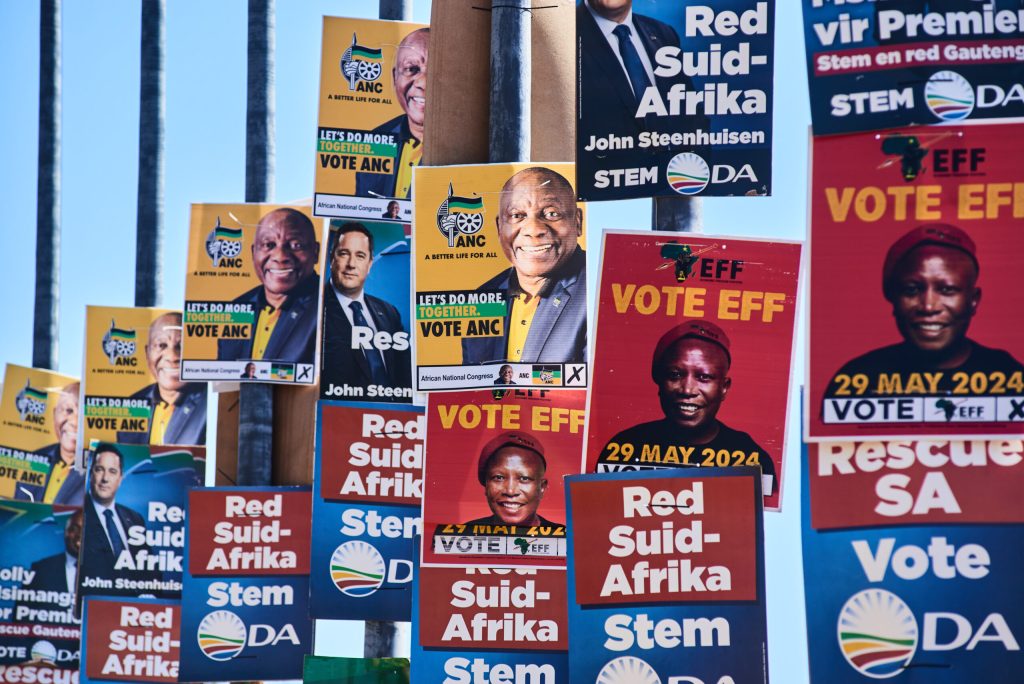
As South Africa moves further into an era defined by coalition politics, the implications for governance and societal stability are becoming increasingly evident. The recent insights shared by political writer Tara Roos in her new book, “Where to from Here?” shed light on the evolving dynamics of the nation’s political scene. With a focus on identity politics, populism, and the weaknesses of existing coalition structures, Roos argues that South Africa is entering a phase of uncertainty that could redefine its future.
The shift from a historically dominant party system, primarily led by the African National Congress (ANC), to a more fragmented political environment is noteworthy. For decades, the ANC was the cornerstone of South African politics, and its decisions dictated the course of governance. However, that certainty has dissipated, giving way to a complex landscape where coalitions are not just a temporary experiment but a fixture of political life. This transformation prompts critical questions about the implications for governance, citizen engagement, and the broader socio-economic landscape.
The rise of populism is a central theme in Roos’s analysis. It appears to be filling a void left by traditional political parties that have increasingly become disconnected from the concerns of ordinary citizens. The government’s struggle to effectively address pressing issues such as crime and economic stagnation has led to a surge in support for populist movements. These movements have successfully identified and exploited the grievances of various demographic groups, tailoring their messages to resonate with voters seeking solutions to their most pressing challenges.
For instance, issues surrounding crime have become a rallying point for many populist organizations. Groups like AfriForum and the Patriotic Alliance have each positioned themselves as champions of specific demographics, claiming that certain segments of the population are the most oppressed. This approach not only capitalizes on the public’s frustrations but also diverts attention from the overarching reality that crime affects all South Africans. In a country where an alarming number of murders occur daily, the ability of populist leaders to frame narratives around specific grievances demonstrates their adeptness in political maneuvering.
Key points to consider in this political landscape include the fragmentation of the electorate, the emergence of new political players, and the growing demand for accountability. Voters are increasingly disillusioned with traditional political parties, leading to an environment where new coalitions can form around shared interests and identities. This fragmentation presents both challenges and opportunities for governance, as coalitions must navigate diverse viewpoints and competing interests to create cohesive policies.
For traders and investors, the implications of these political shifts cannot be underestimated. The uncertainty surrounding coalition governments may lead to fluctuations in market confidence, influencing investment decisions both domestically and internationally. The perception of South Africa as a stable investment destination could be jeopardized if political instability continues to rise, as potential investors often seek environments where governance is predictable and reliable.
Moreover, the evolving political dynamics could have significant implications for key sectors of the economy. As populist parties gain traction, their policies may prioritize immediate social concerns, potentially at the expense of long-term economic strategies. Investors should remain vigilant and informed about the political climate, as shifts in power and policy direction can profoundly impact market performance and economic growth.
In conclusion, South Africa’s transition into a coalition-driven political landscape is reshaping the nation’s governance and societal fabric. The rise of populism, in response to the shortcomings of traditional parties, highlights the need for a political discourse that genuinely addresses the concerns of all citizens. As the electorate becomes more fragmented, the challenge for coalition governments will be to forge effective partnerships that promote stability and economic growth. For traders and investors, understanding the nuances of this shifting political environment will be crucial for making informed decisions in an increasingly complex market. The road ahead may be fraught with uncertainty, but it also offers opportunities for those who are prepared to adapt and respond to the changing dynamics of South Africa’s political landscape.