
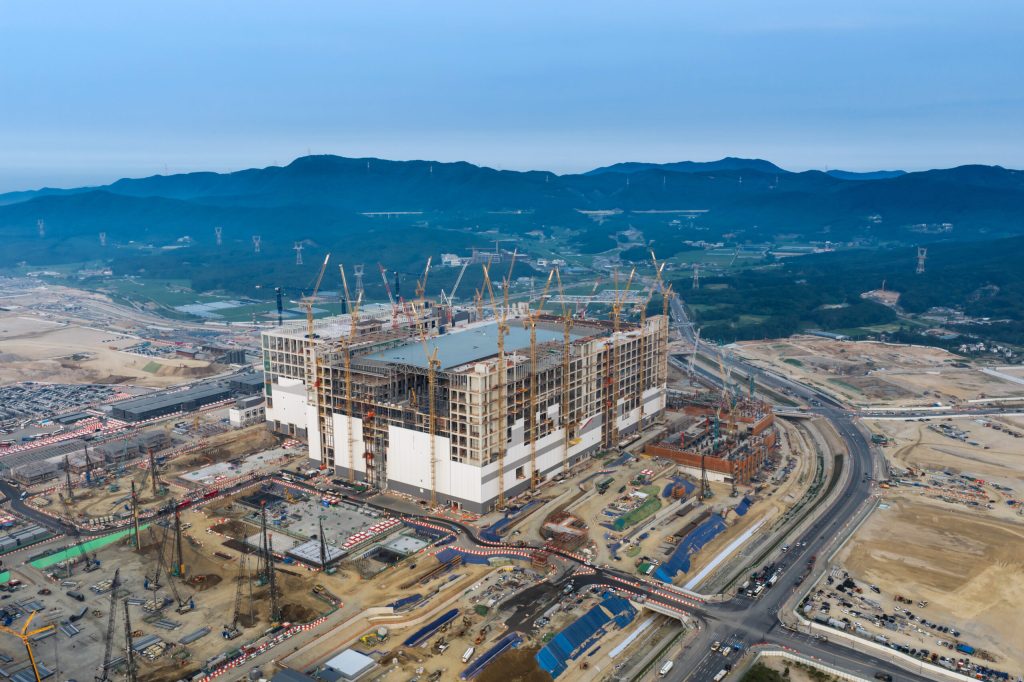
In the heart of Sejong, a city that stands as a symbol of South Korea’s administrative prowess, a pivotal transformation is taking place within a government facility known only as “the box.” This space, with its restricted access, is where finance ministry officials are grappling with the currency concerns that have recently plagued the nation. The South Korean won has experienced significant depreciation, reaching a 17-year low and earning the title of the worst-performing currency in Asia during the first half of the year. As of July 6, the stakes have risen; the won will now trade continuously for the first time, signaling a major shift in the country’s monetary policy.
This development is not merely a technical change; it embodies a substantial evolution in South Korea’s approach to its currency and global market integration. Historically, the nation has maintained strict controls over its currency trading hours, a policy initially established in the aftermath of the 1997 Asian financial crisis—a period that left deep scars on the economy. However, as South Korea strives for an upgrade to developed-market status by MSCI, the need for a more flexible trading environment has become apparent.
The decision to allow 24-hour trading is intertwined with the changing landscape of South Korea’s economy. Once primarily a manufacturing powerhouse focused on domestic exports, the country is now increasingly investing abroad. This shift has made it imperative to adapt to global financial norms, particularly when it comes to liquidity and trading volumes. “The extended trading hour is a necessary move to increase its presence in the global financial markets,” noted Claire Huang, a senior macro strategist at Amundi Asset Management. This statement captures the essence of the new policy; in order to compete with G10 currencies, South Korea must facilitate won transactions outside of traditional business hours.
However, this transition comes at a particularly sensitive time. With the won recently trading at levels last seen over a decade ago, the currency is now more susceptible to speculative trading. This has raised concerns among regulators who fear that a misstep could exacerbate currency volatility. The South Korean government has already taken steps to mitigate these risks, warning against speculative trading and conducting inspections on major banks for activities that could destabilize the market. Additionally, exporters have been urged to convert their proceeds to support the local currency, highlighting the urgency of stabilizing the won amid its recent downturn, which has seen it depreciate more than 6% this year.
Despite the currency’s struggles, the broader economic landscape paints a contrasting picture. South Korea’s economy is currently experiencing a boom, particularly in sectors driven by artificial intelligence advancements. The benchmark Kospi Index has surged nearly 90% this year, marking itself as one of the strongest performers globally. This paradox—an economy thriving while its currency falters—raises questions about the underlying dynamics at play.
Key takeaways from this situation illustrate the complexity of South Korea’s economic environment. First, the move to 24-hour trading reflects a broader strategy to enhance the country’s position in global financial markets. Second, ongoing currency depreciation, despite positive economic indicators, points to potential vulnerabilities within the market that could invite speculative behavior. Third, the duality of a strong stock market contrasted with a weakening currency suggests that investors should remain vigilant as they navigate these seemingly conflicting signals.
For traders and investors, the implications of these developments are multifaceted. On one hand, the introduction of continuous trading hours could lead to increased liquidity and more opportunities for profit. On the other hand, the specter of currency volatility looms large, necessitating a careful approach to risk management. The current economic landscape also suggests that sectors tied to technological advancements may present lucrative opportunities, but investors should remain cautious of the broader currency dynamics that could impact their positions.
In conclusion, the transition to 24-hour trading for the South Korean won represents a significant shift in the nation’s monetary policy, one that mirrors a changing economy and a desire for greater global integration. As South Korea navigates this complex landscape, both traders and investors must remain aware of the potential risks and opportunities that this new trading environment presents. The coming months will be critical as the country attempts to balance its currency stability with its ambitions on the global financial stage.