
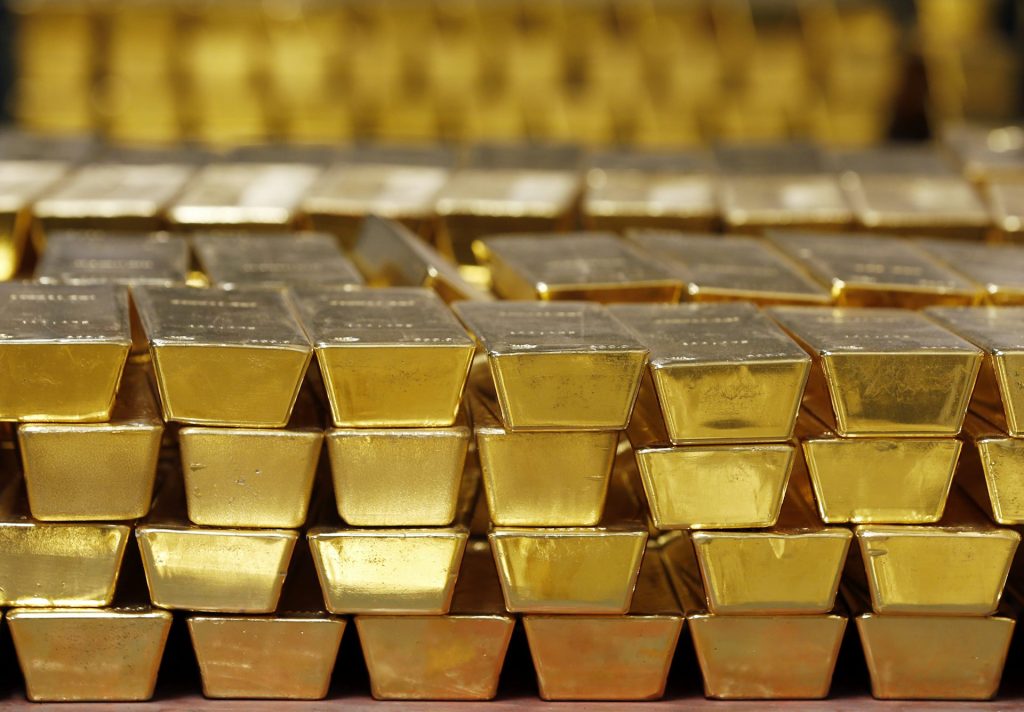
In recent years, a noticeable trend has emerged in global finance: central banks have significantly ramped up their gold acquisitions. This strategic shift has culminated in the highest recorded quantity of gold held by these institutions since 1975, with reserves surpassing an impressive 36,000 tonnes. As geopolitical tensions escalated, particularly following Russia’s invasion of Ukraine in 2022, central bank purchases of gold surged, reflecting a growing recognition of gold’s enduring value as a financial safeguard.
The World Gold Council has reported that central banks have averaged purchases of 1,000 tonnes of gold annually over the past four years—double the rate observed in the preceding decade. This increased demand has played a pivotal role in driving up gold prices, prompting investors and analysts to reconsider the implications of this trend for the broader market. Furthermore, a significant 45% of central banks surveyed express intentions to bolster their gold holdings over the next year, indicating a robust confidence in the asset’s stability and value.
Understanding the motivations behind this intensified interest in gold requires a closer examination of the roles that central banks play in global finance. Central banks maintain various assets as reserves, which serve as a buffer against financial crises. These reserves can be utilized to stabilize national currencies and intervene in financial markets when necessary. For instance, during times of economic turmoil, such as the Australian dollar’s dramatic decline to 47.75 US cents in April 2001, having reserves in gold and other secure assets allows a country to absorb shocks and maintain economic stability.
While the trend of increasing gold purchases is noteworthy, it is essential to recognize that this demand has primarily emanated from emerging markets and developing economies, particularly led by countries such as Russia, China, Turkey, India, and Kazakhstan. The World Gold Council’s surveys reveal that 90% of central banks cite gold’s performance during crises as a key reason for their purchases. Other contributing factors include gold’s reputation as a long-term store of value amidst rising inflation and its utility in diversifying investment portfolios to mitigate risks.
A particularly compelling reason for the heightened interest in gold has emerged in the context of financial sanctions. As governments worldwide have increasingly resorted to financial sanctions to exert pressure on nations, the ability of countries to access global financial systems has become increasingly precarious. Financial sanctions aim to limit a nation’s access to capital, financial services, and markets, thereby influencing its behavior on the international stage. This has prompted many emerging economies to turn to gold as a safeguard against such punitive measures.
The case of Russia serves as a poignant example of this trend. Following the annexation of Crimea in 2014 and the subsequent financial sanctions imposed by the West, Russia’s central bank accelerated its gold purchases, establishing itself as the world’s leading buyer of gold. The exclusion of Russia from the SWIFT international payments system in 2022, coupled with the freezing of approximately $300 billion of its foreign assets, further reinforced the nation’s reliance on gold as a strategic reserve.
For traders and investors, this shift in central bank behavior signals both opportunities and challenges in the gold market. Investors looking to hedge against inflation and currency fluctuations may find gold an attractive asset class. Additionally, as central banks continue to accumulate gold, the potential for price appreciation increases, making it an appealing option for long-term investors.
However, it is essential to approach the gold market with caution. The dynamics of global finance can be unpredictable, and while gold may serve as a safe haven during turbulent times, it is not immune to volatility. Traders should remain vigilant about geopolitical developments and shifts in monetary policy that could influence gold prices.
In conclusion, the growing trend of gold accumulation by central banks underscores a significant shift in the financial landscape, driven by a desire for stability amid uncertainty. As emerging markets lead the charge, the implications for traders and investors in the gold market are profound. Gold’s enduring reputation as a store of value, coupled with its role in protecting against financial sanctions, positions it as a critical asset for the future. Understanding these dynamics will be crucial for anyone looking to navigate the evolving landscape of global finance and investment strategies.