
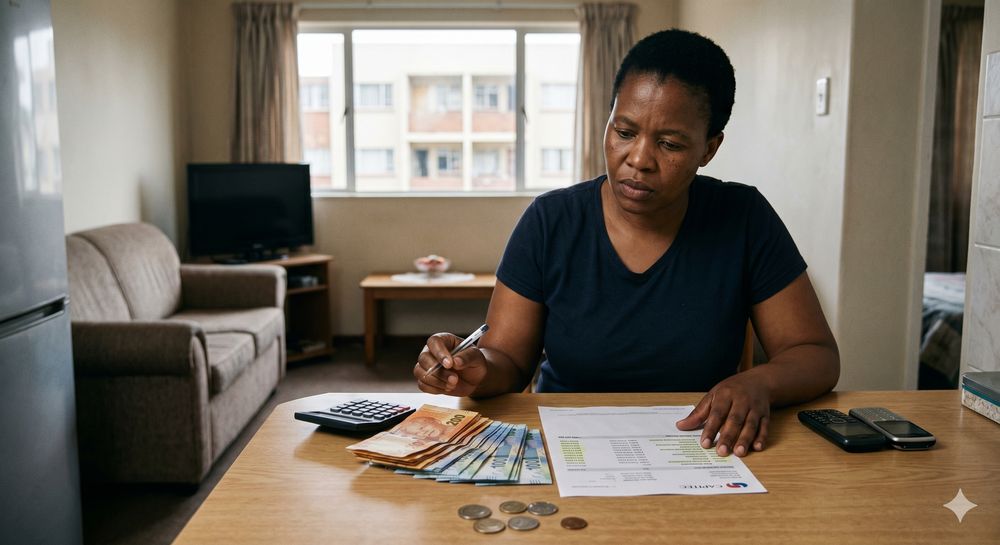
In South Africa, the average take-home salary of R21,228 paints a picture of financial stability for some, yet many individuals and families feel the weight of financial stress. This disparity raises questions about the true cost of living and the challenges that come with maintaining a middle-class lifestyle. As we explore the nuances behind household spending patterns, it becomes evident that while salaries may appear adequate at first glance, they often fall short when faced with the realities of everyday expenses.
To better understand the financial landscape, we can examine the average salary in the context of household expenditure patterns, as outlined by Statistics South Africa. This data provides valuable insights into the financial pressures faced by many South Africans, often leading them to feel financially stretched despite earning what is classified as a middle-class income.
When dissecting the average salary, we find that a significant portion of earnings goes towards essential categories of spending. In fact, a staggering 75.6% of all household expenditures are devoted to just four primary areas: housing and utilities, food and non-alcoholic beverages, transport, and insurance and financial services. Let’s break this down further.
For an average monthly salary of R21,228, housing and utilities typically consume around R7,366. Following closely, food and non-alcoholic beverages account for approximately R3,460, while transport costs an additional R3,248. Lastly, insurance and financial services take up R1,974. Altogether, these four categories absorb roughly R16,050 of the average salary, leaving households with merely R5,180 for other expenses.
This remaining amount, which constitutes about 24.4% of the average salary, must cover a range of additional costs. These include healthcare expenses not covered by medical aid, digital connectivity through cellphone and internet bills, clothing, education fees, and various household necessities. Moreover, there are costs associated with entertainment, personal care, savings, and unplanned emergencies such as appliance repairs or vehicle maintenance. It quickly becomes apparent that the leftover funds are barely enough to sustain a comfortable quality of life.
Further complicating the situation is the definition of the middle class in South Africa, which is categorized by households earning between R22,000 and R75,000 monthly. Ironically, the average take-home salary of R21,228 falls just below this threshold, leading many to question their classification as middle-class citizens. Despite this classification, the reality for millions is that their financial capabilities do not align with traditional expectations of what it means to live a middle-class lifestyle.
In light of these financial pressures, consumers are adapting their spending habits in response to a tightening budget. According to Discovery Bank’s SpendTrend report, households are increasingly turning to loyalty programs, promotions, and online shopping as strategies to stretch their limited resources. This shift highlights a growing trend where consumers are not just cutting back on spending but also seeking smarter ways to make their money go further.
Investors and traders should take note of these shifting consumer behaviors as they can indicate broader economic trends. For example, as households rely more on discounts and promotions, businesses that offer competitive pricing and loyalty rewards may see an uptick in customer engagement. Understanding these patterns can provide valuable insights for investment strategies in sectors such as retail, e-commerce, and consumer goods.
In conclusion, while the average salary in South Africa may suggest a certain level of economic comfort, the reality for many households is far more complex. With a significant portion of income devoted to essential expenses, the pathway to building wealth remains elusive for most. By examining these financial dynamics, both individuals and businesses can gain a better understanding of the economic landscape and the challenges that define the day-to-day lives of South African consumers. Ultimately, recognizing the delicate balance between income and expenditure is crucial for navigating the financial realities of today’s world.